Why F1’s 2026 Speed Limit Stifled Overtaking at the Mexican Grand Prix
A deployment rule cut power as pursuing cars gained speed in Mexico, blunting Hamilton and Norris’s attacks. The restriction is removed for 2027.
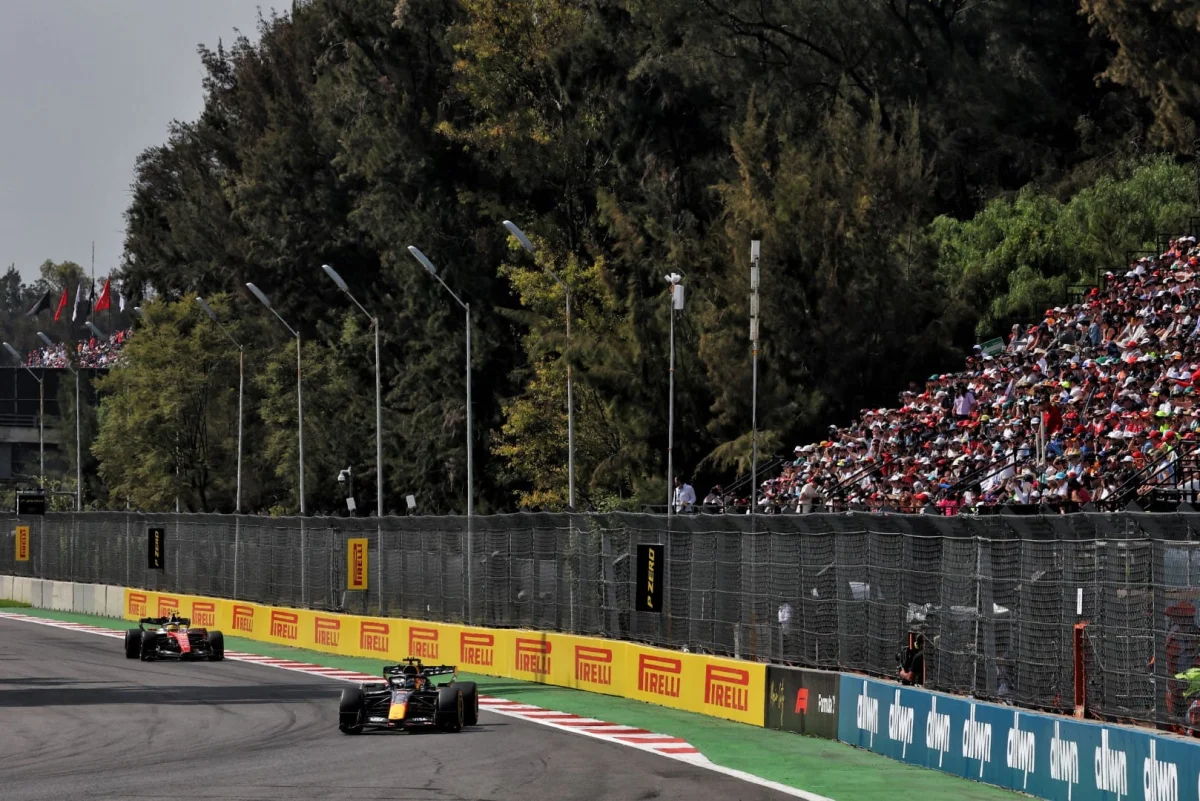
The Mexican Grand Prix exposed a problem with Formula 1’s 2026 energy rules: on the long run to Turn 1, gaining speed could make a pursuing car lose the power it needed to pass. Lewis Hamilton and Lando Norris both found themselves unable to turn a tow and extra energy into a sustained attack. The speed based deployment limit, intended to manage power on the straights, helped flatten their closing speed instead.
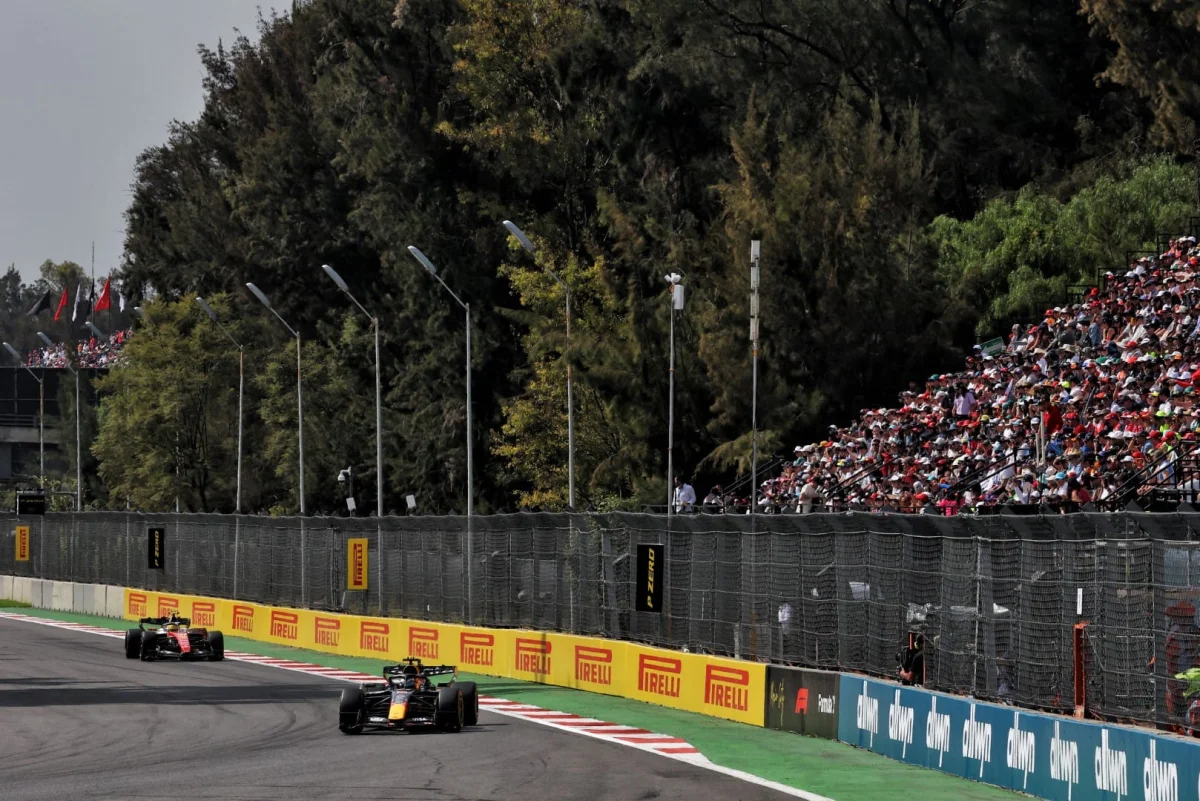
That mattered at a circuit where overtaking is already difficult. Mexico City’s thin air affects the aerodynamic and cooling compromises teams make, and the 2026 cars no longer give the trailing driver the previous DRS advantage. Even with the additional 0.5MJ available through overtake mode, Hamilton could not get close enough to challenge Max Verstappen, while Norris faced the same problem behind Charles Leclerc.
A speed threshold that cuts deployment
The restriction sits in section C5.2.8 of the 2026 technical rules. When a driver is not using overtake mode, the permitted electrical deployment begins to taper once the car passes 290km/h. It falls from a maximum of 350kW until battery deployment reaches zero at 345km/h.
For a driver using overtake mode, the taper starts at 337.5km/h and reaches zero at 355km/h. In the band below that top speed, the permitted power falls by 20kW for every additional 1km/h. The formulas differ across speed ranges, but the practical effect is straightforward: a car that accelerates into the limit automatically gives up some of its available electrical power.
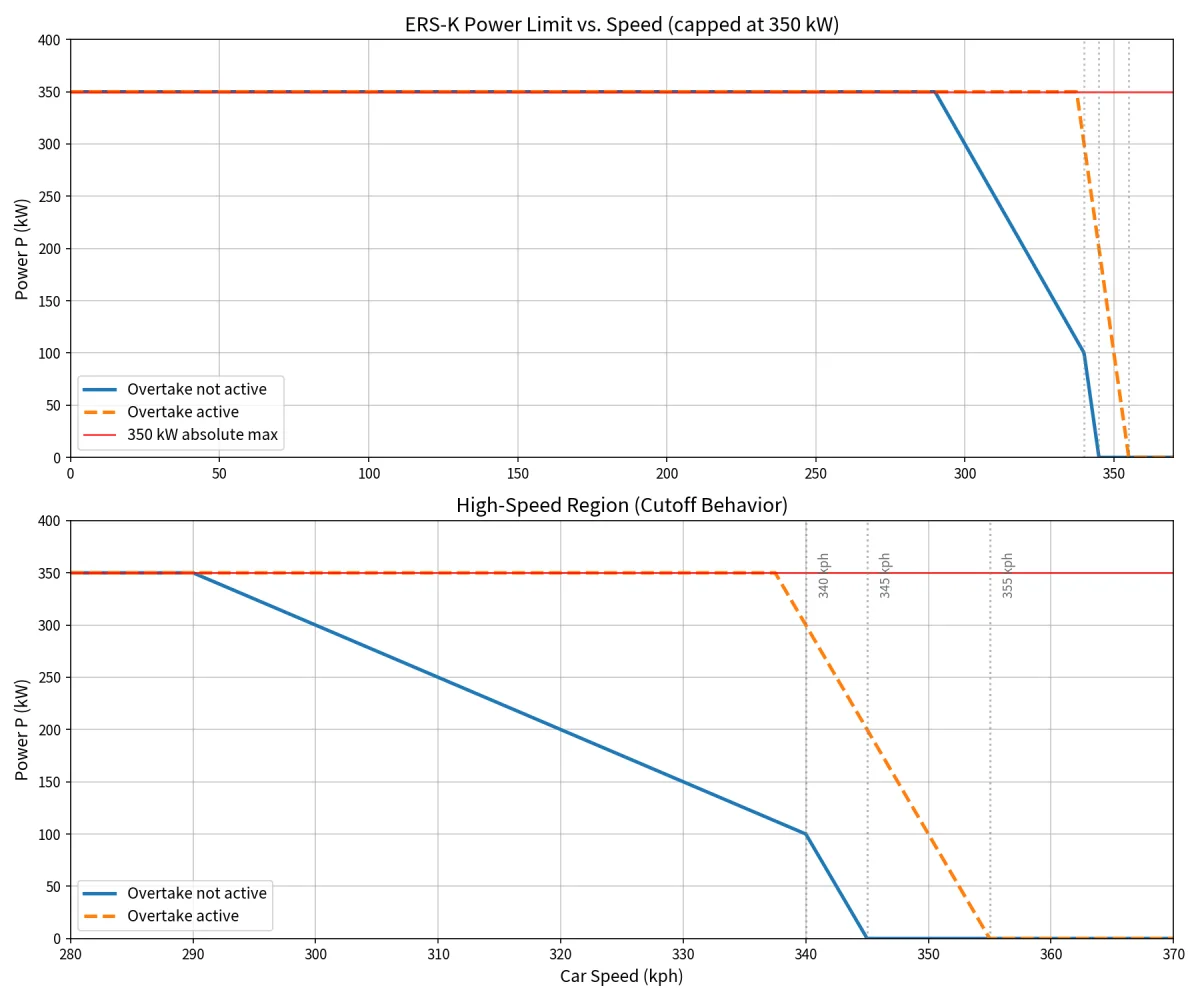
The rule was designed to manage how energy limited cars deliver power near the ends of straights. It was also expected to create a power difference that could help a driver using overtake mode attack. At many circuits, the restriction had little visible effect because cars did not reach the relevant speeds early, or had already used their available energy. Mexico’s layout brought the cars into the restricted range in a different way.
Why the Mexican straight exposed the issue
The stadium section comes just before the start finish straight, leaving cars with energy available as they accelerate out of the final corner. That meant drivers encountered the deployment taper early in the straight, rather than only near its end. A pursuer could start with a speed advantage from overtake mode and the slipstream, then lose power as that advantage pushed the car into the restriction.
The effect was visible in the telemetry from Hamilton and Verstappen on the penultimate lap. At 500 metres, Verstappen was travelling at 338km/h; Hamilton, helped by overtake mode and the tow, was at 349km/h and already subject to reduced deployment. By 900 metres, Verstappen had reached 342km/h and Hamilton 350km/h. Both were still at full throttle, but the speed gap had narrowed.
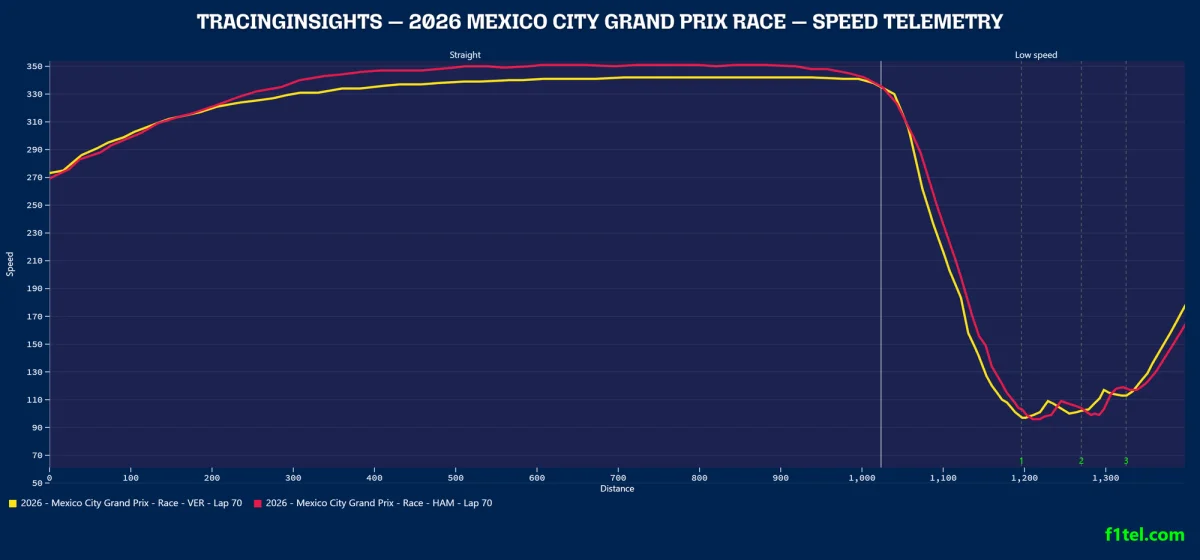
In other words, the faster Hamilton went, the less electrical power the rules allowed him to use. The resulting closing speed flattened out, and the gap between the cars stopped shrinking as the straight continued. The same basic problem faced Norris as he tried to close on Leclerc. Having a tow and extra energy did not guarantee that the following car could keep building speed relative to the car ahead.
Hamilton described the clipping as “stupid” in the cooldown room after the race. Later, he argued that a driver should be able to use the extra power from a slipstream to draw alongside. The engine, he said, could go faster, but the deployment cut prevented that. He called the engine profile setting the worst he could remember in the sport and said it had contributed to a lack of overtaking.
Norris made a similar point, saying the limiter meant the pursuing driver could not exceed the same speed threshold as the car ahead. From his perspective, that removed the benefit of arriving behind another car with more power available. He said the restriction “ruins racing” and should be improved for the following season.
The change planned for 2027
The speed based deployment limits described here have been deleted from the 2027 rules. The planned increase in fuel flow and turbo boost pressure, together with a greater allowance for energy harvesting, is intended to leave cars less constrained by available energy. In races, the deployment limits are set at 300kW without overtake mode and 350kW when it is active, for as long as the cars can sustain those levels.
Some speed related restrictions will remain in specified track sectors where maximum deployment is not permitted. The change therefore does not remove every constraint on electrical power. It does remove the end of straight speed taper that cut into the advantage a pursuing driver could build under the 2026 rules.
For buyers, the mechanics are specific to racing, but the issue matters to anyone following how Formula 1’s new power units shape the on track product. Mexico showed that a rule meant to manage energy can also cap the very speed difference an overtaking aid is supposed to create. The key question for 2027 is whether the revised energy allowances let drivers carry an attack down the straight without the same automatic loss of power.