What F1’s 2026 Mexican Grand Prix Revealed About the Title Fight and Teams
Antonelli sealed the title as Ferrari’s tactics, McLaren’s qualifying form and reliability problems shaped a revealing Mexican Grand Prix.
Kimi Antonelli’s first Formula 1 title was the headline from Mexico, but the weekend exposed issues that could shape the rest of the season. Ferrari’s drivers undermined a likely one-two, McLaren’s qualifying struggles left race pace stranded, and new limits on electrical power narrowed overtaking opportunities. Cadillac and Aston Martin, meanwhile, left with reliability questions to answer.
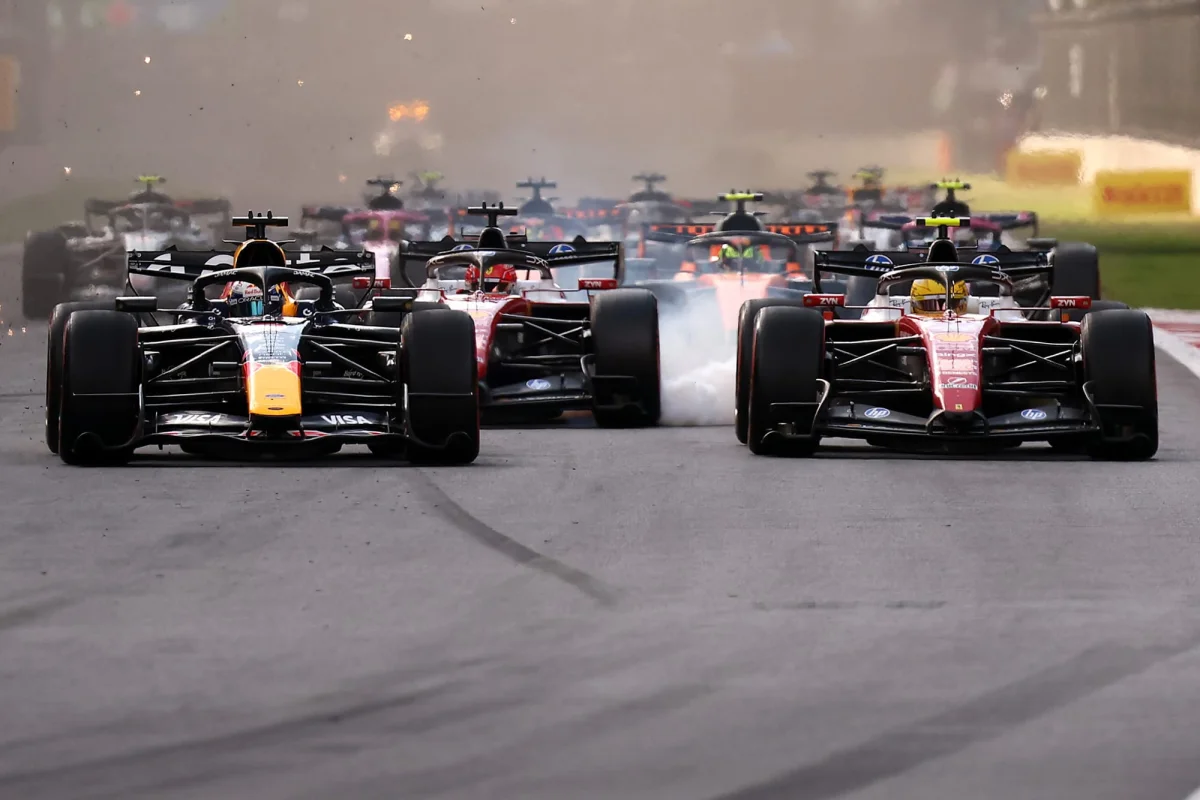
Ferrari’s drivers turned a likely one-two into a dispute
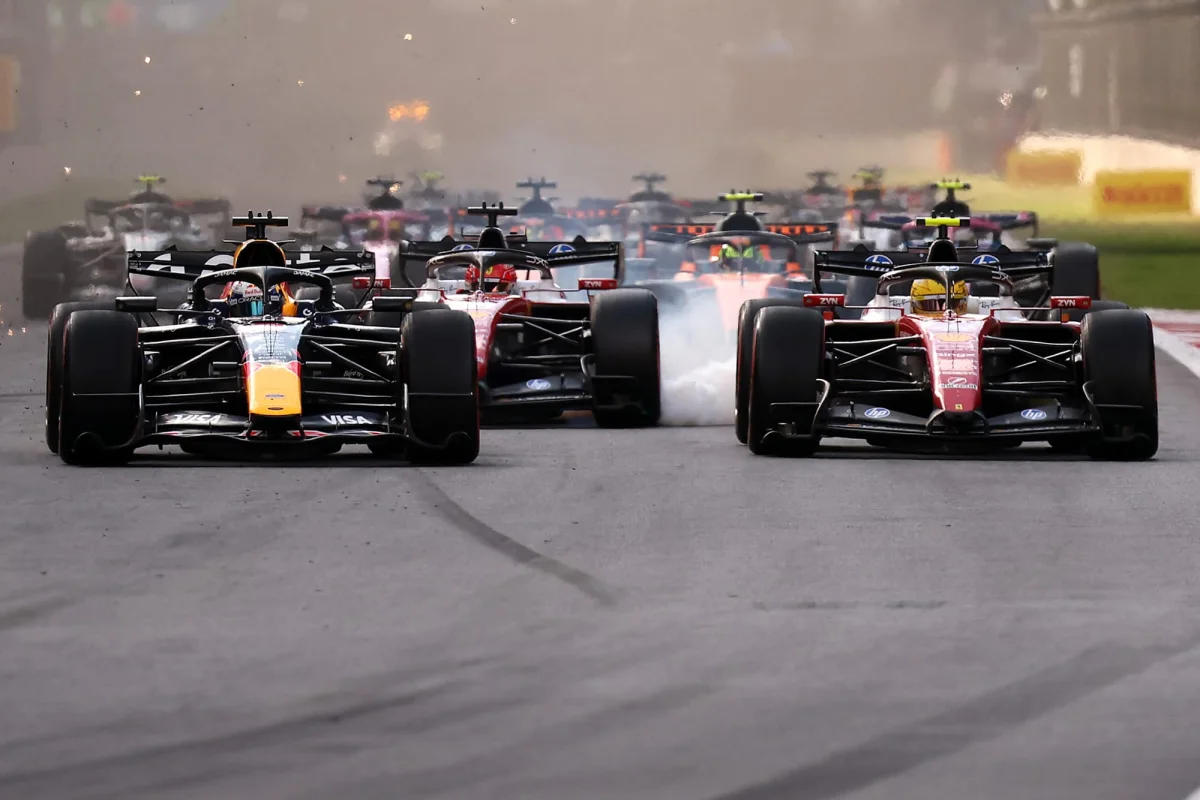
Ferrari had the pace to target a one-two, yet Charles Leclerc and Lewis Hamilton focused on beating each other at the start. Leclerc attacked on lap one; Hamilton responded, and both ran deep while contesting the position. Max Verstappen capitalized on the opening.
The clash became a team trust problem as much as a race result. Team boss Fred Vasseur sounded increasingly exasperated in post-race interviews, while Hamilton’s criticism of Leclerc grew more direct. “I think it’s a mentality thing. It’s like ‘do or die - either I win or none of us do’, and it shouldn’t be that. It should be us getting that 1-2,” Hamilton said.
Hamilton had also asked the stewards to penalize Leclerc during the race, even though Red Bull stood to benefit. Both drivers had overbraked while trying to get ahead of one another, and Leclerc played down the intra-team element afterward, pointing instead to the circuit layout. The result was a public disagreement over responsibility and little sign that either driver trusted the other to put Ferrari’s result first.
Guidelines or a private conversation may help manage the next clash, but Ferrari needs more than a rulebook. The drivers’ decisions gave the team reason to doubt that they can race each other without putting the wider result at risk.
Track limits left the stewards’ penalty looking ineffective
Leclerc took the lead by cutting the track, then received a penalty that did not put him behind the driver he had passed. That outcome put Formula 1 in an awkward position: had Leclerc been fast enough to build a gap of more than five seconds to Verstappen, he might have kept the lead despite gaining it off-track.
Verstappen stayed within five seconds, and Red Bull pitted him as soon as Leclerc served his penalty. That timing secured track position and helped prevent a result that would have highlighted the weakness in the rules. The stewards halved Leclerc’s penalty because Hamilton had also gone off-track and because it was the opening lap. They did not penalize Hamilton, but clearly judged Leclerc’s move to have crossed a line.
The episode points to a practical problem: when a driver can gain a place off-track and use pace to absorb the penalty, the rules may reward the move they are meant to discourage. Ordering a position swap would have addressed the immediate case, even if Verstappen also gained a place as a result.
The circuit’s corner sequence may change next year. The Race reported that proposals for a revised layout had been put to drivers. But the same issue can arise elsewhere, so a track redesign alone would not settle the broader question of how penalties should restore positions.
Antonelli’s title drew respect across the paddock
Antonelli’s rise from rookie to champion has been matched by a quick surge in popularity. He has finished on the podium in all but three grands prix, and crowds at Monaco, Monza and Mexico have embraced him. At Monza, he won over the Italian crowd even on a difficult day for Ferrari.
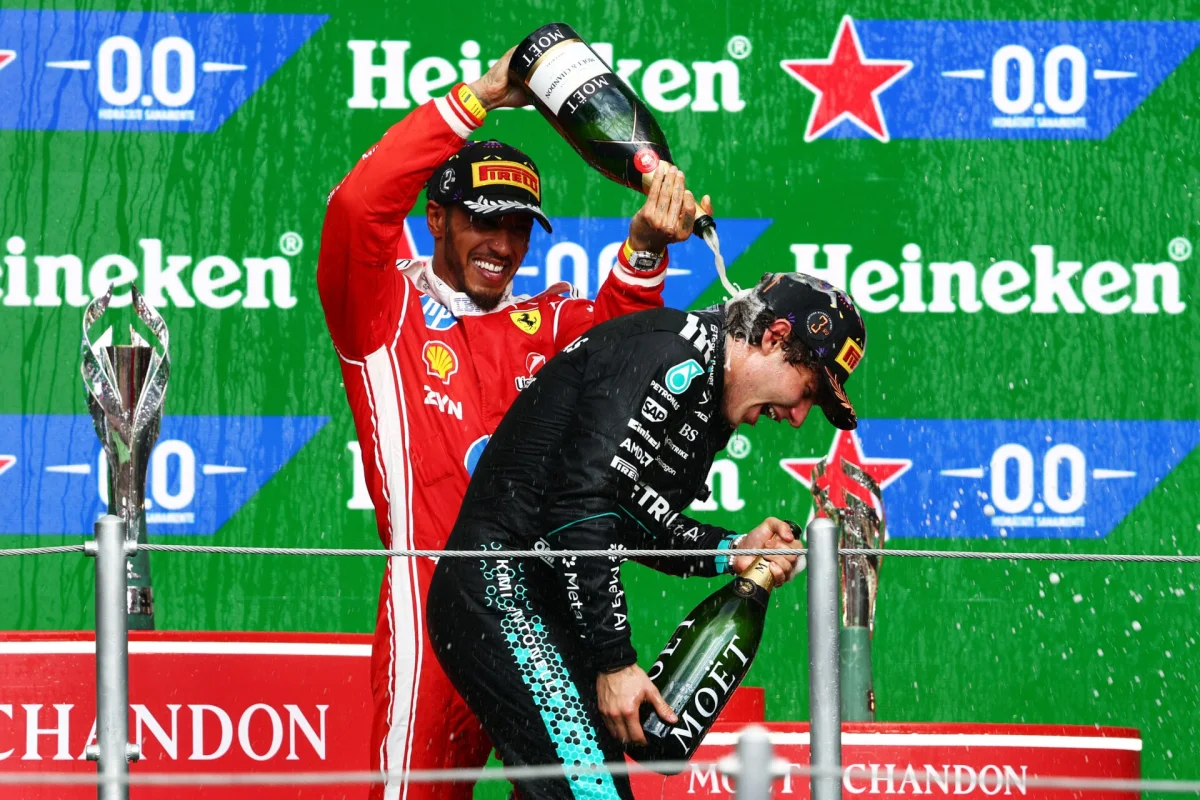
In Mexico, the title brought warm praise from rivals who know what it takes to sustain a season at the front. Verstappen said he was “proud” of Antonelli’s achievement. Hamilton said he was “so grateful to be in the race to witness” the title being secured. Lando Norris called Antonelli’s season “unbelievable” and said he had “made everyone look silly.”
Mercedes teammate George Russell also congratulated him quickly, despite having been fined for missing post-race media duties. Russell has repeatedly acknowledged that Antonelli has done the better job this season. When the new champion arrived in the media pen, broadcasters from around the world greeted him with applause, and he took time to thank them.
Winning a first title without a public feud or major controversy is a notable achievement at this level, especially alongside such consistent results. Antonelli’s rivals now have a longer-term challenge: finding a way to stop him repeating the success.
Electrical power limits narrowed the passing window
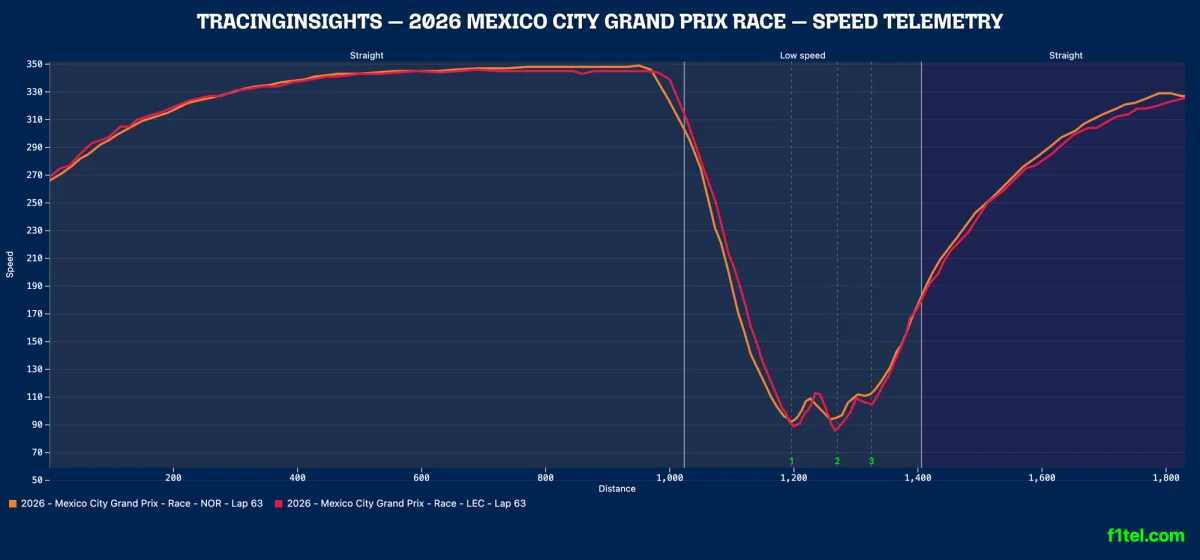
The Mexican race also exposed a less visible feature of the 2026 rules: circuit-specific limits on maximum electrical power can flatten speed differences on a straight. There is no fixed speed cap for every car, but the FIA can restrict electrical output at particular circuits. Article B7.2 of the sporting regulations says teams receive information about those limits no less than four weeks before a race weekend. The stated aim is to keep car speeds compatible with each circuit’s design and construction.
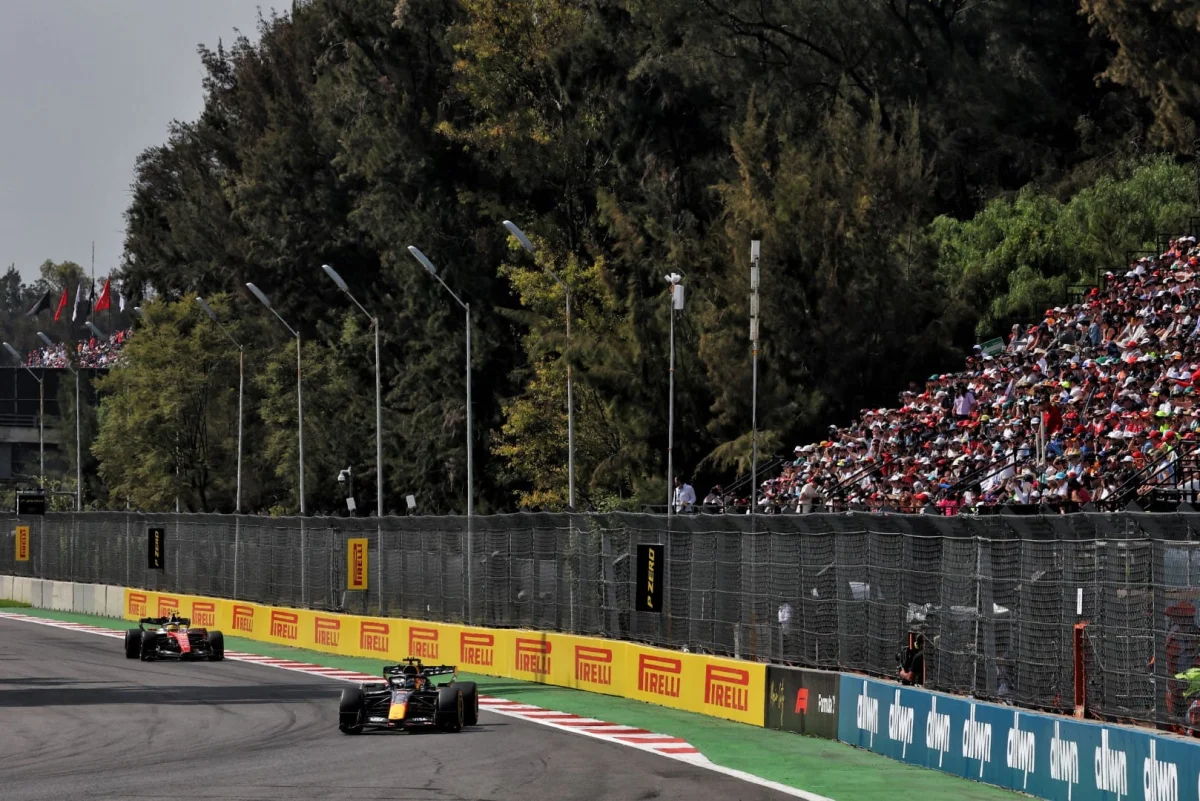
Mexico’s layout makes the effect especially noticeable. The cars have plenty of opportunities to recharge, but only one long straight on which to deploy energy. Limits intended to control speeds into Turn 1 can leave cars reaching similar speeds at the end of that straight, even when one has the benefit of following another.
Norris described a limiter that stopped a car exceeding a set speed, saying it made it difficult to attack even when close behind at the final corner. Hamilton, unable to pass Verstappen late in the race, said the cars could have used extra power from the slipstream but were held to a similar top speed. The speed trace of Norris behind Leclerc showed the cars’ speeds leveling off on the approach to Turn 1.
The complaints are about the racing effect, not simply outright speed. When the following car cannot turn a power advantage into a closing speed difference, the main straight offers fewer chances to overtake. Norris and Hamilton both want the system improved for next season.
McLaren’s qualifying form is costing it results
Norris believed McLaren could have fought for the win in Mexico, but qualifying sixth left him with too much work to do. His frustration after Saturday’s session showed how narrow the car’s operating window feels. He said a strong lap in Q2 had left him knowing that repeating it in Q3 would be close to impossible.
Team principal Andrea Stella said the car was capable of better than sixth and 13th on the grid, while also pointing to the risk the drivers were taking with a knife-edge package. He said the team and drivers had a responsibility to deliver what the car could offer. Stella suggested the underlying characteristic would not be fixed before 2027 at the earliest.
There are signs that McLaren’s race pace is stronger than its grid positions suggest. Oscar Piastri’s third place in qualifying at Baku is the team’s only top-three starting position in the five races since it had been the team to beat in Madrid. McLaren has slipped to fourth overall during that stretch, but flashes of better performance on Sundays point to qualifying as a costly weakness. Norris could not pass Leclerc in Mexico, with the electrical power limit adding another obstacle, but the more basic problem began on Saturday.
Cadillac needs answers after Bottas’s suspension failure
Valtteri Bottas’s crash into the Turn 1 barriers followed a front-left suspension failure, leaving Cadillac with a serious mechanical question. The team had not identified the cause by Sunday night and said it would investigate the failure thoroughly.
The concern is that this was not an isolated type of problem: Sergio Perez had suffered a sudden front-right suspension failure in Montreal. Cadillac was not worried about an immediate repeat on Perez’s car in Mexico, but multiple suspension failures in one season raise questions the team needs to resolve.
Bottas was checked at the medical centre and discharged. “It was a big impact going into Turn 1, but thankfully I’m okay,” he said. He thanked the medical team and those who helped at the scene, then called for the team to establish exactly what happened and learn from it.
The crash added to a difficult run for Bottas: he has failed to finish four of the last five races and is vulnerable as Cadillac considers its seat for next year. Reliability is now a pressing concern for both the team’s results and its driver line-up.
Hirakawa made the most of a last-minute debut
Ryo Hirakawa’s first F1 start came with little preparation. He learned at 6 a.m. on Saturday that he would race in Mexico, after getting up for a morning run. The 32-year-old needed penalties for three other drivers to claim a point, becoming the oldest debutant to score in F1 in the 21st century, but the result reflected a composed weekend.
In qualifying, Hirakawa was within three tenths of teammate Ollie Bearman before traffic disrupted his final lap and left him eight tenths behind. He found the opening stages of the race “a little bit overwhelming with the others” and chose caution through Turn 1. As he settled in, his pace improved: he passed both Williams cars in the closing laps and set his personal best lap on the final tour.
Post-race penalties for Piastri and the Alpine drivers helped turn that performance into a point. All three had made racing or yellow-flag errors that Hirakawa avoided. His path to F1 has been unusual, without the European junior single-seater experience held by every current F1 driver, making the result a strong return on a very short preparation window.
Haas had not settled its driver line-up for Brazil. If Mexico is Hirakawa’s only F1 appearance, he has given the team a credible case to remember it as a capable stand-in drive.
Aston Martin’s ERS cooling problem erased its points chance
Aston Martin left Mexico with the sort of “hard lessons” its staff had repeated throughout the weekend. Its energy recovery system cooling circuit could not cope with the strain of the high altitude, and both cars retired within the opening laps of the race.
Fernando Alonso had been running well in Friday practice and was 12th in FP2 before the car stopped. He looked capable of reaching Q2, but another failure forced him to pull over on Saturday. He was furious, striking the steering wheel, and the double retirement on Sunday ended any chance of converting the weekend’s pace into points.
The reliability problem lands harder because Aston Martin’s chassis is now competitive, potentially among the midfield’s strongest at a circuit like Mexico. Earlier in the season, repeated technical trouble could be easier to absorb when the car itself was not a points contender. Now the engine-related issue is holding back a package that might otherwise challenge.
Honda chief engineer Shintaro Orihara said the ERS cooling circuit faced heavier stress than expected, forcing the team to stop the car in multiple sessions. Alonso noted that the team completed plenty of laps in practice but failed to do enough when qualifying and the race arrived. His message was that the team must learn from the failure; the practical test is whether it can keep the cooling system working when the next points opportunity comes.