Martin Brundle Ranks Kimi Antonelli Second Only to Max Verstappen in F1
Brundle says Antonelli’s consistency, including a faultless Monaco weekend, puts him second on the grid behind Verstappen.
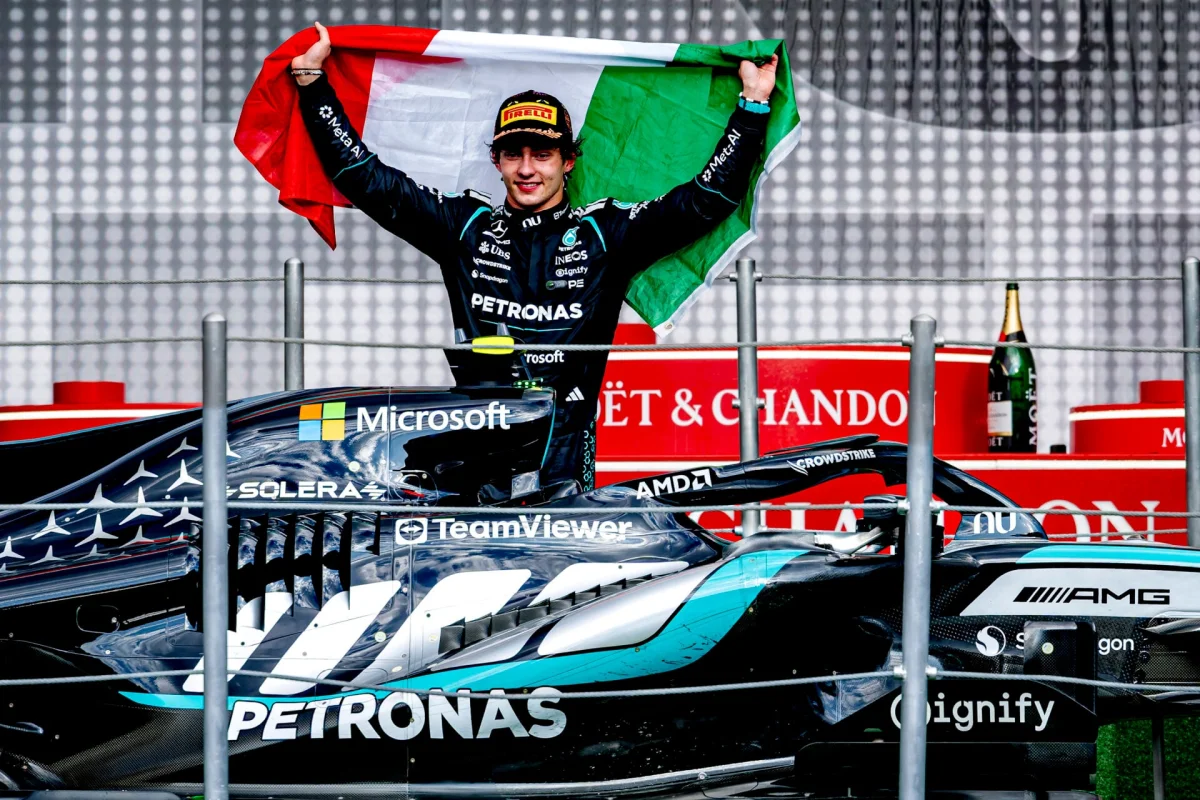
Martin Brundle’s case for Kimi Antonelli as Formula 1’s second-best driver rests on more than a run of wins in a quick Mercedes. He points to the rookie’s ability to keep delivering as the car’s advantage faded, and to a Monaco weekend that demanded precision across practice, qualifying and the Grand Prix.
Mercedes won the first six Grands Prix of the season, with Antonelli taking five victories. The team had eight wins from the first 11 races before the summer break, giving its drivers a strong platform. But Brundle argues that George Russell had access to the same machinery during that early stretch, while Antonelli made more of the opportunity.
The points gap between the teammates has since become a central part of the comparison: Russell trails Antonelli by 130 points. The Mercedes W17 has also stopped looking like the dominant package it was earlier in the year. Since the break, Antonelli has still scored more points than any other driver, a run that strengthens Brundle’s view that his season cannot be explained by the car alone.
Why Monaco stands out
Brundle singled out Antonelli’s Monaco performance as a concise example of his approach. He took pole ahead of Max Verstappen, then built a lead of half a minute before the race was stopped by a red flag. The result made Antonelli the youngest driver to achieve a Grand Slam.
Monaco is a particularly revealing test because the narrow circuit leaves little margin for error. A driver has to manage the car through practice, deliver a clean qualifying lap and maintain control over a long race. Brundle described Antonelli’s weekend as faultless, and rejected the idea that it came down to luck or recklessness.
“I don’t think he was just lucky, I don’t think he was wild or brave, I think he was just relentlessly delivering,” Brundle told Sky Sports. His point is that Antonelli combined speed with discipline: the pole position mattered, but so did keeping the car intact and converting that pace into a commanding lead.
Brundle acknowledged that Mercedes had a strong car during the first half of the season. His comparison with Russell is therefore important to his assessment. The two drivers shared the same team and broad competitive conditions, yet Antonelli opened a substantial points advantage. As Mercedes lost some of its edge, Antonelli continued to produce the strongest points return.
Verstappen remains the benchmark
Brundle still places Verstappen above Antonelli. The four-time champion ranks second for points scored in the second half of the season, and Brundle believes he would have won the title in the Mercedes. That is a judgment about the relative strength of the drivers, rather than a claim that the season provided a direct comparison in identical cars.
“Kimi would have run him close and given him a hard time, harder than any other teammate that Max has had,” Brundle said. He continues to regard Verstappen as the grid’s benchmark, while noting that the Dutchman is still in his late 20s and has room to keep developing over the course of his career.
Even with Verstappen first in his ranking, Brundle says Antonelli now belongs in second place. He credits the young Mercedes driver with making the most of the chances available to him and says his performances have earned that standing. Antonelli has become F1’s youngest title winner, by a margin of three years, giving the season a record-setting marker alongside his points advantage over Russell.
A season shaped by changing pace
Verstappen’s early results provide context for how the contest developed. Red Bull began the season off the pace, and he did not reach the podium until the fifth round in Canada. By then he was 88 points behind. He did not win a race until Singapore, and the gap grew by 31 points after Montreal.
That early deficit helps explain why Brundle’s view leaves room for both sides of the argument. Antonelli benefited from Mercedes’ early strength while Verstappen and Red Bull were struggling to match it. At the same time, Antonelli’s results after the summer break and his lead over Russell make it harder to dismiss his season as a product of the car alone.
Antonelli, Verstappen, Lewis Hamilton and Lando Norris have been among the standout drivers in 2026, according to the source’s assessment. Fernando Alonso is also a former champion in that group, but his performances have been harder to judge while Aston Martin has been near the back of the grid. That contrast underlines the limits of comparing drivers across teams: results reflect both individual execution and the machinery available.
Brundle’s ranking is ultimately a measured endorsement. Verstappen remains the driver he expects to prevail in equal machinery, while Antonelli has done enough to be considered his closest rival on the grid this season. The key question for future comparisons is whether Antonelli can sustain this level when the competitive balance shifts again.