2025 Ford Mustang EcoBoost Convertible Review: A Rare Four-Seat Drop-Top With Daily-Driver Appeal
The Mustang EcoBoost convertible pairs useful space and everyday comfort with open-air character, though its options, manual roof latch and relaxed handling have quirks.
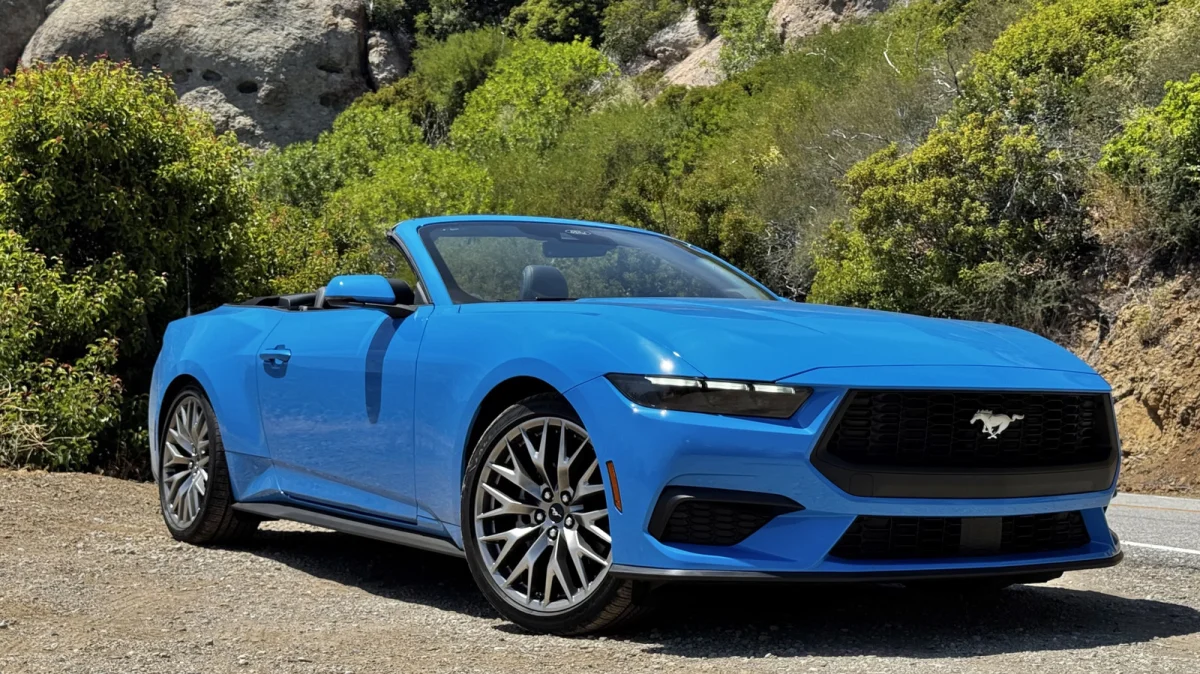
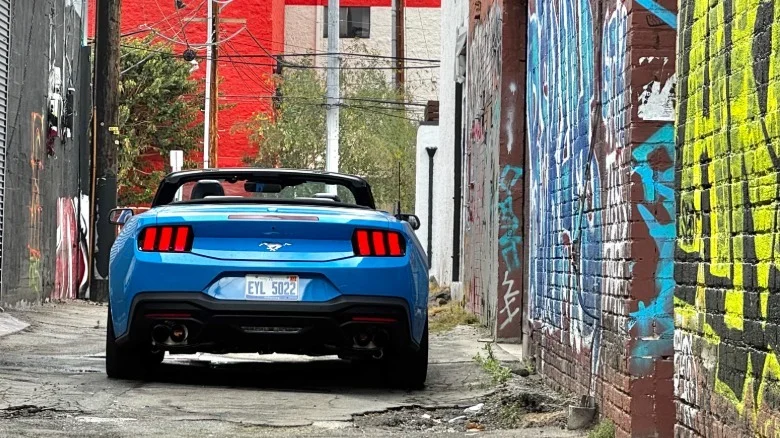
The 2025 Ford Mustang EcoBoost Convertible makes a persuasive case for a body style that’s becoming hard to find: an affordable, relatively practical four-seat convertible with unmistakable character. It’s not the sharpest car for a twisty road, and some details feel dated for a car that can cost more than $50,000. But as a daily driver that can turn a routine trip into a top-down cruise, it has a clear appeal.
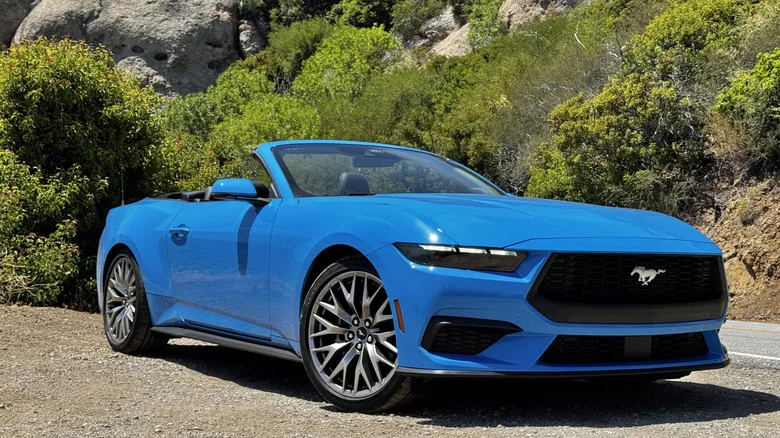
I spent a week with a Mustang EcoBoost Premium Convertible supplied by Ford. The car was a 2025 model; the source review says few changes were made to the 2026 lineup, so its impressions should apply there as well. The Mustang’s reputation can invite assumptions about its drivers, while the EcoBoost badge may draw its own dismissive reaction from enthusiasts. Neither tells the whole story of a convertible that proved enjoyable in everyday use and won over the reviewer’s initially skeptical friends.
Turbo power, plus a costly options list
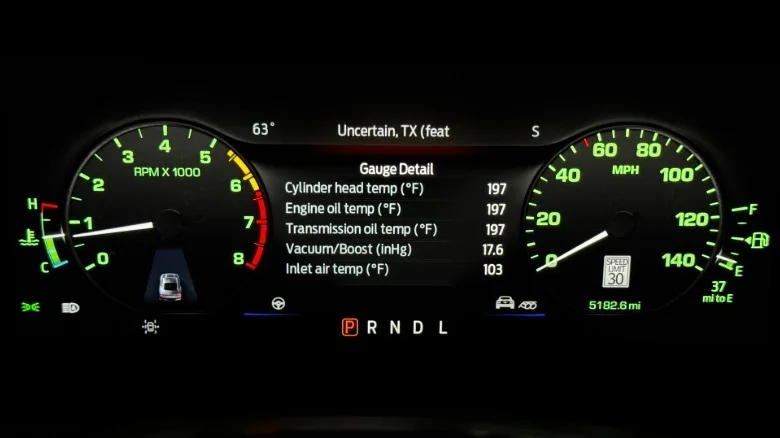
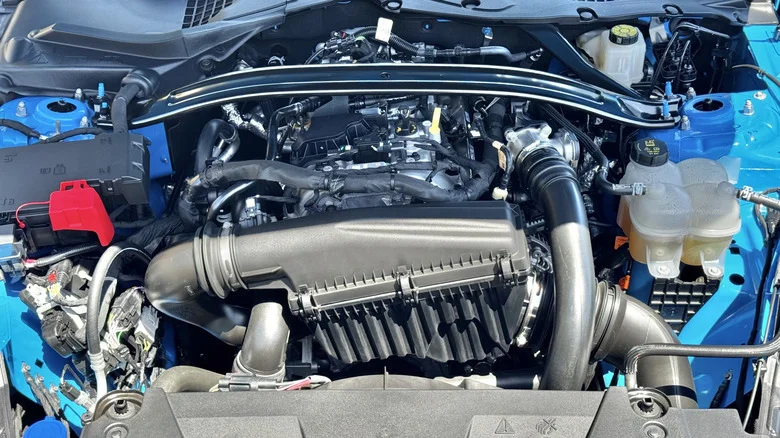
The EcoBoost uses a turbocharged 2.3-liter inline-four rated at 310 horsepower and 350 pound-feet of torque. A 10-speed automatic sends power to the rear wheels. Ford lists the convertible’s weight at 3,741 pounds; Edmunds recorded a 5.4-second run from zero to 60 mph in its testing. Those figures make the Mustang respectably quick, but they don’t turn this version into a dedicated sports car. Its appeal lies more in the mix of usable power, open-air driving and everyday comfort.
The 2025 EcoBoost Convertible Premium started at $44,640, including $1,595 for destination. The review car’s options added $7,265, bringing its total to $51,905. A comparably equipped 2026 model would cost about the same, according to the review, while 2027 pricing had not been announced at the time.
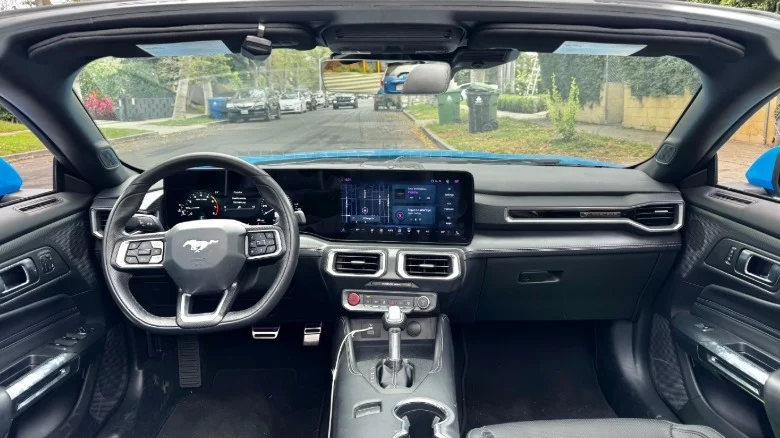
The largest addition was the $3,000 Equipment Group 201A package. It brought leather seats, a curved display, aluminum pedals, a memory function for the driver’s seat, heated mirrors and a heated leather-wrapped steering wheel. It also included a perimeter alarm and Ford Co-Pilot360 Assist+, with features such as adaptive cruise control with lane centering and blind spot assist.
Other options included $1,450 20-inch aluminum wheels, a $1,225 active performance exhaust, a $995 12-speaker B&O sound system, $395 Grabber Blue Metallic paint and $200 premium floor liners with mats. That’s a long list of add-ons for a car pitched as a relatively accessible convertible. The reviewer found most of the equipment worthwhile, but the optional exhaust was a miss: at low revs, it made the four-cylinder sound unpleasantly flatulent.
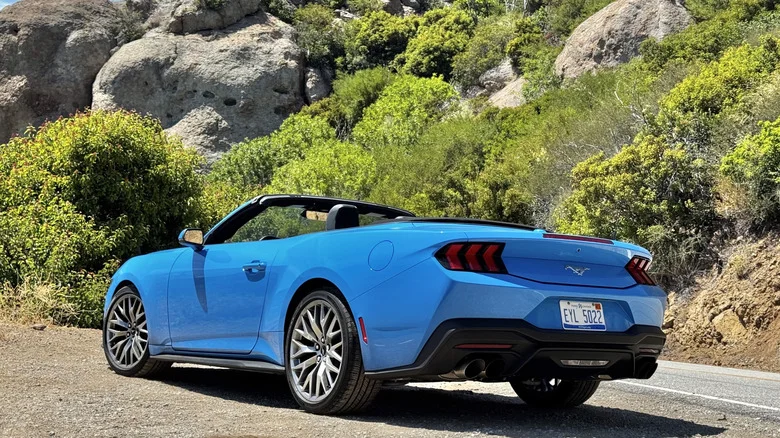
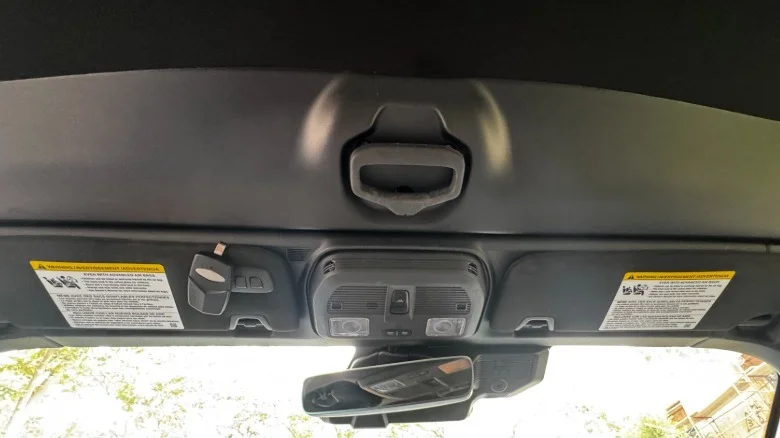
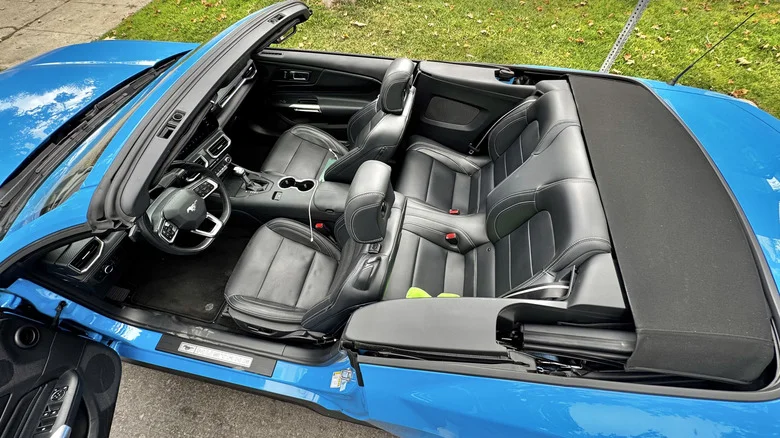
The cabin felt better finished than expected. Soft-touch material on the center console helps it feel less stark than older Mustangs, though the interior doesn’t try to be luxurious. One old-fashioned detail was harder to excuse: the convertible top uses a manual latch. It’s straightforward to operate, but the reviewer found it surprising in a car costing more than $50,000.
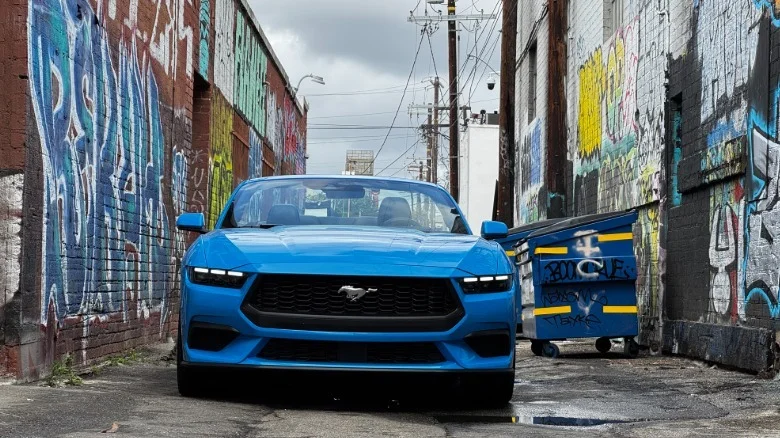
That roof mechanism is one quirk in a car with few direct rivals. The Mini Cooper S Convertible starts just under $40,000 and is another retro-styled, four-seat option. The BMW 4 Series convertible and Mercedes-Benz CLE cabriolet offer similar seating arrangements, but start closer to $70,000. The Mustang therefore occupies a relatively accessible niche, even if options can push its price well beyond its starting figure.
More room than a Miata, less agility
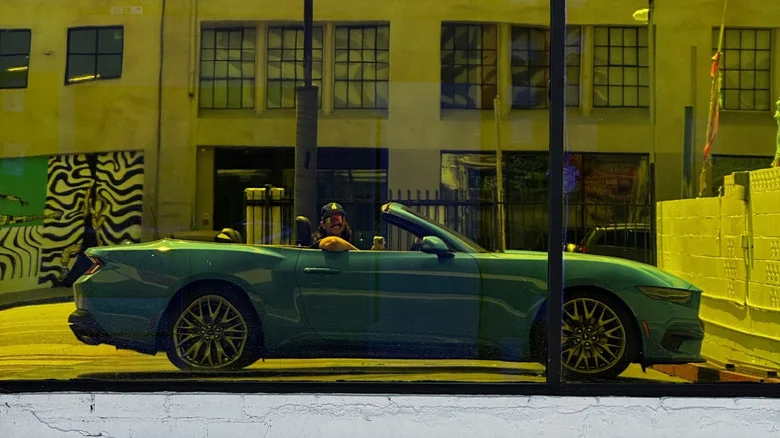
The Mazda MX-5 Miata is the more compelling pick for drivers who put nimble handling first. But it’s a much smaller two-seat roadster, and fit can be a deciding factor. At 6 feet 8 inches tall, the reviewer couldn’t sit comfortably behind the Miata’s wheel. The Mustang offered ample legroom and more space up front, making it a practical alternative for taller drivers.
It also adds two rear seats and 11.4 cubic feet of trunk space—more than twice the Miata’s cargo capacity, according to the review. Those rear seats aren’t generous, but they can handle occasional passengers. On a Pacific Coast Highway drive with two friends, one sat in the back and found it reasonably comfortable after the front passenger moved their seat forward. Anyone seated behind the driver’s position had a less inviting prospect, especially if they had long legs.
On a winding road, the Mustang’s size and weight become more apparent. It held together at a brisk pace, but pushing harder brought understeer and firm stability-control intervention. The test car lacked the optional Performance Package, and the reviewer missed having paddle shifters or a manual gear-selection mode on the shift lever.
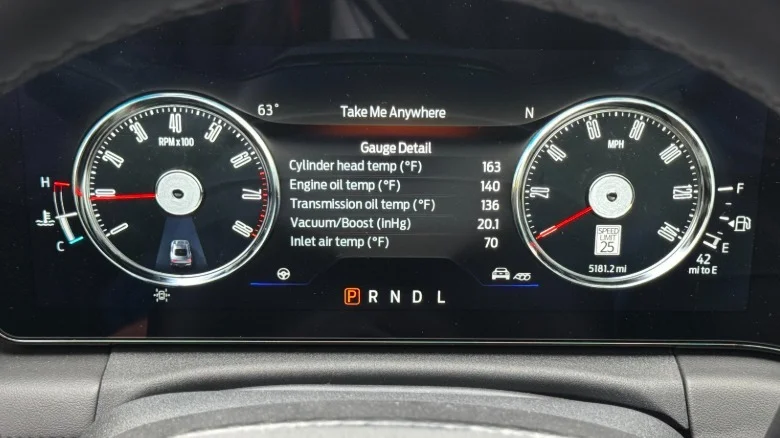
The transmission’s “L” mode was a useful workaround. It held lower gears well and made the turbocharged engine’s power easier to access during spirited driving. There’s fun in exploring the car’s limits, but it doesn’t have the precision of a smaller sports car. Think of it as an entertaining cruiser that can cope with a quick stretch of road, rather than a convertible built around canyon carving.
Comfortable cruising, with a livelier side
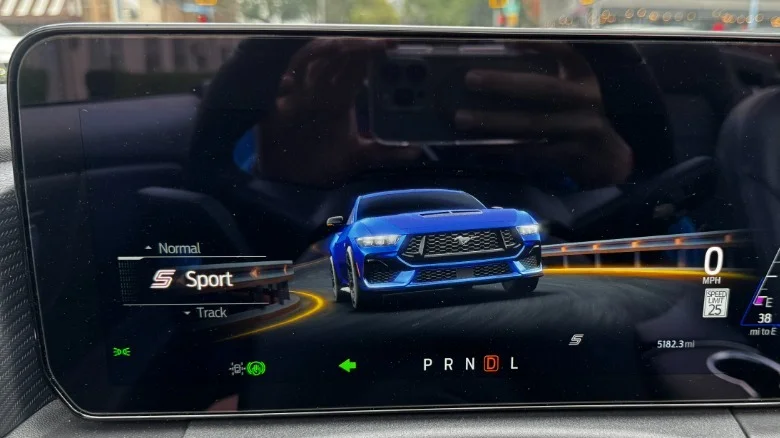
Normal mode suits commuting and routine errands, though its transmission behavior can feel too restrained for an enthusiast. It shifts up early, which can leave the engine waiting for boost until the driver presses deeper on the accelerator. For ordinary traffic, the power is sufficient; drivers who want a more immediate response can select Sport or use L mode.
The reviewer gravitated toward those livelier settings, even though they came with a fuel-economy tradeoff. During the week, fuel economy averaged about 20 mpg while driving in Sport and using L mode frequently. The stated EPA ratings are 22 mpg city, 33 mpg highway and 26 mpg combined. A lighter throttle and calmer driving should make the official ratings a more relevant guide than the review car’s week of spirited use.
The car’s two personalities are part of the draw. It can settle into a comfortable open-top cruise, then feel more eager when the driver asks for quicker responses. That flexibility doesn’t make it an outright sports car, but it gives the Mustang EcoBoost a broader role than a weekend-only toy.
Useful tech, with a few gaps
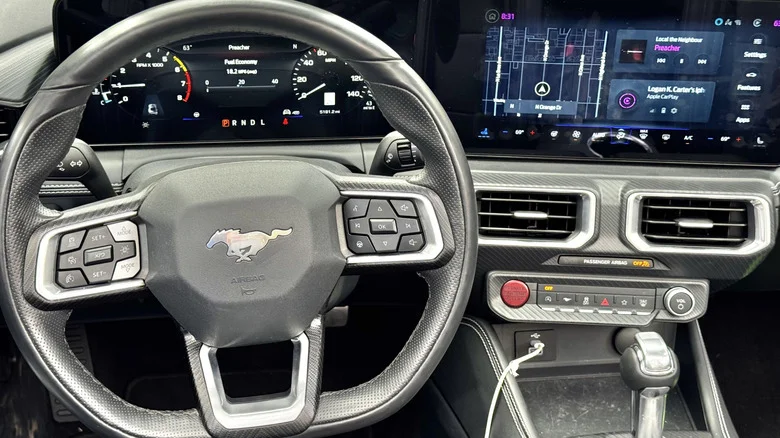
The technology mix is uneven. Climate controls sit on the 13.2-inch infotainment touchscreen, and the car lacks both a surround-view camera and a forward-facing camera. The long hood makes that missing front view particularly noticeable when maneuvering. Frequently used climate settings remain at the bottom of the display, but the screen sometimes took a moment to start after ignition. Once running, the system was responsive and easy to navigate.
Several details give the Mustang more personality than a list of screens and driver aids might suggest. The exterior is readily recognizable, and the digital gauge cluster offers three retro designs based on Mustang instruments from 1967 to 1968, the Fox Body era and the 1999 to 2001 SVT Cobra. The reviewer, who grew up riding in a 1986 Mustang SVO, found the Fox Body display especially evocative. All three designs looked convincing and sharp.
The optional B&O stereo remained clear with the roof down, and adaptive cruise control helped with Los Angeles traffic. Physical steering-wheel buttons made it easy to control the audio system and driver-assistance features. Those touches reinforce the car’s strengths as a daily driver, even as the touchscreen-dependent climate system and slow startup occasionally frustrate.
A characterful choice in a shrinking category
Four-seat convertibles are now uncommon, and affordable examples are rarer still. The Mustang and Mini Cooper S are the clearest choices for buyers seeking this combination of rear seats, a folding roof and a price below the larger luxury convertibles. The Mustang’s case rests on space, recognizable styling and a turbo engine that’s peppy without feeling excessive.
It has compromises: a manual roof latch, a long options list, limited rear-seat room and handling that favors relaxed fun over precision. Still, it can be efficient when driven gently, comfortable in everyday use and playful when the mood calls for a more responsive drivetrain. Buyers focused on sharper performance may prefer a Mustang coupe or a V8 model. For those who want four seats and open air at a lower starting price, the EcoBoost Convertible remains a distinctive option—and its everyday usability is as central to its appeal as the drive with the top down.