Tesla Emergency Drive Away Used by Mistake at Austin Supercharger
A Model Y driver pulled away with the cable attached, showing how Tesla’s emergency feature can damage the charge port and stall.
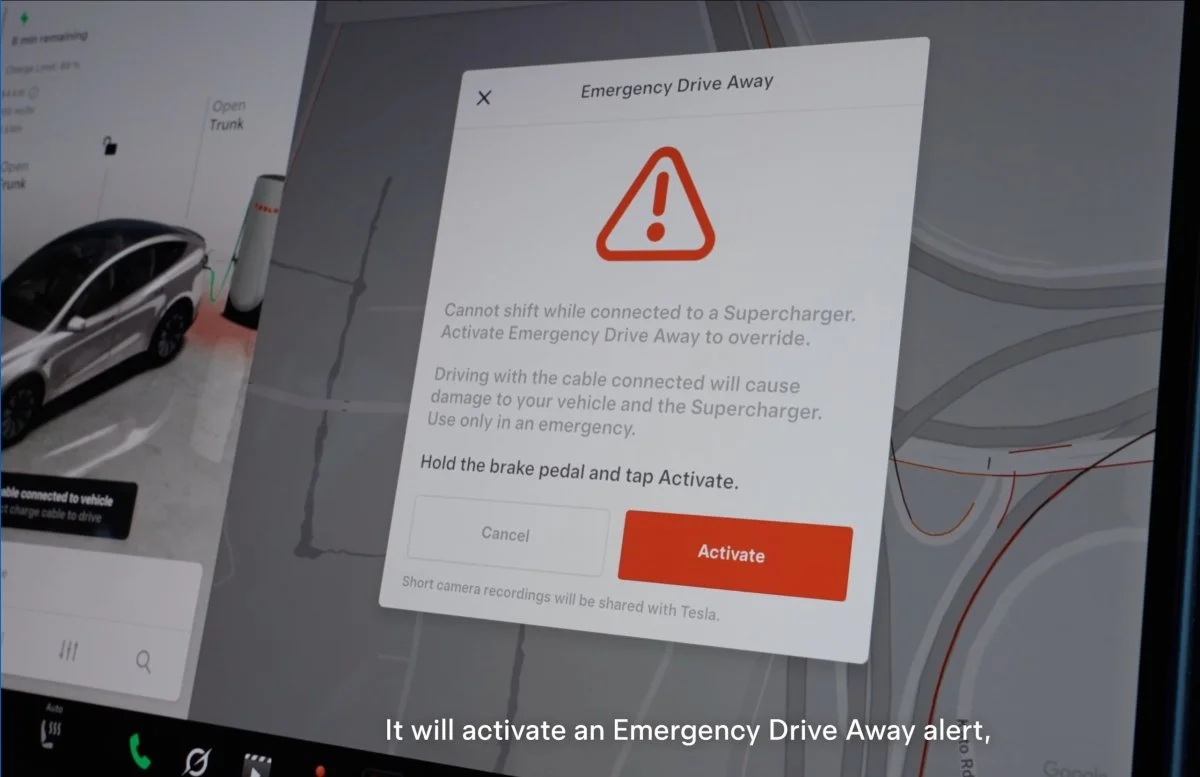
Tesla’s Emergency Drive Away feature has now been captured in use at a Supercharger, but the first reported incident appears to have been accidental. A video from an Austin charging site shows a Model Y pulling away with its cable still attached—a costly outcome that puts the feature’s warning design under scrutiny.

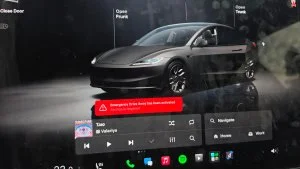
The clip was shared by Reddit user Joshua Leshnick, who said the incident happened early on a Sunday before an F1 race. Leshnick reported hearing a pop, then seeing the neighboring Tesla break away from its charging stall. The recording shows the driver tapping through messages on the center screen before moving forward. A few seconds later, he gets out and walks back toward the charger.
Leshnick said the driver looked tired and seemed to read only part of the prompts. That account is an observer’s impression, rather than a confirmed explanation of what the driver intended. The footage does, however, show the key sequence: the car was plugged in, the driver interacted with the touchscreen, and the vehicle left with the cable connected.

A deliberate breakaway with real repair costs
Tesla introduced Emergency Drive Away in software update 2026.38.3, released earlier this month. Normally, a Tesla won’t shift out of Park while connected to a charger. The feature creates an exception for a driver who needs to leave a Supercharger urgently, even if unplugging first isn’t possible.

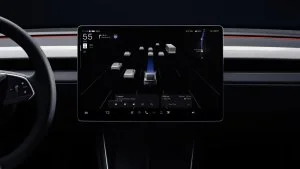
Using it is designed to take several deliberate actions. When a driver tries to shift out of Park while plugged in, the touchscreen displays a red warning. The driver must keep the brake pedal pressed and tap “Activate.” If the car then moves away, the charging handle separates from the vehicle. Tesla’s explanation of the feature is shown in a Tesla Charging post.
That separation protects the car from being held in place by the cable, but it isn’t a harmless disconnect. Tesla says the vehicle’s charge port will need service after a breakaway, and repair to the Supercharger stall can cost as much as $25,000. The actual cost would depend on the damage; the stated figure is an upper limit, not a bill reported for this incident.

Tesla also says short camera clips are sent to the company so it can check whether the driver faced a genuine emergency. Misuse can result in penalties. The report does not establish whether the Austin driver received one, or whether Tesla determined that the activation was intentional.
Availability and the warning challenge
Emergency Drive Away currently works only at U.S. Superchargers. It’s available on modern Tesla models, with Model S and Model X vehicles built before 2021 excluded. That leaves owners of older versions of those two nameplates without the feature, while eligible newer vehicles can use it at participating charging stalls.
Tesla has more than 85,000 Supercharger stalls across 9,000 locations worldwide, according to the company’s reported network count. The feature’s U.S.-only availability means its current reach is narrower than the network itself. The source report raises the possibility of an international rollout, but gives no timing or confirmation.
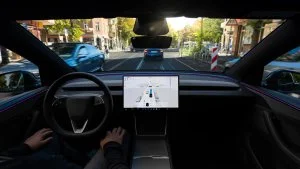
The Austin footage points to a familiar interface problem: safeguards can require multiple steps and still fail if a driver moves through them without absorbing the warning. The red screen, brake requirement and confirmation tap add friction, yet the feature is intended to remain usable when someone needs to leave quickly. Adding more steps could make accidental activation harder, while also slowing the very response the function is meant to provide.
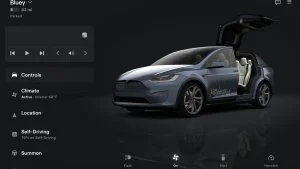
Leshnick suggested making the warning more forceful, with a flashing red screen and a loud alert similar to Tesla’s “take over immediately” prompt for its driver assistance system. Tesla Director of Charging Max de Zegher has previously said the company would refine Emergency Drive Away quickly in response to feedback. A clearer explanation of the charge port and charger damage, paired with an audible signal, could help drivers recognize the consequence before confirming.
The feature fills a narrow but understandable need: allowing a car to leave a charger when waiting to unplug could be unsafe or impossible. Its first reported use also shows why the confirmation sequence matters. For drivers, the practical takeaway is simple: treat the prompt as a last resort, since activating it can mean a service visit for the car and substantial damage to the charging equipment.