Tesla Semi Fire Shuts I-880 for About 10 Hours as Cause Remains Unknown
A Tesla Semi burned on I-880 near Hayward without a reported crash or injuries. The fire closed both directions, and its cause is still unconfirmed.
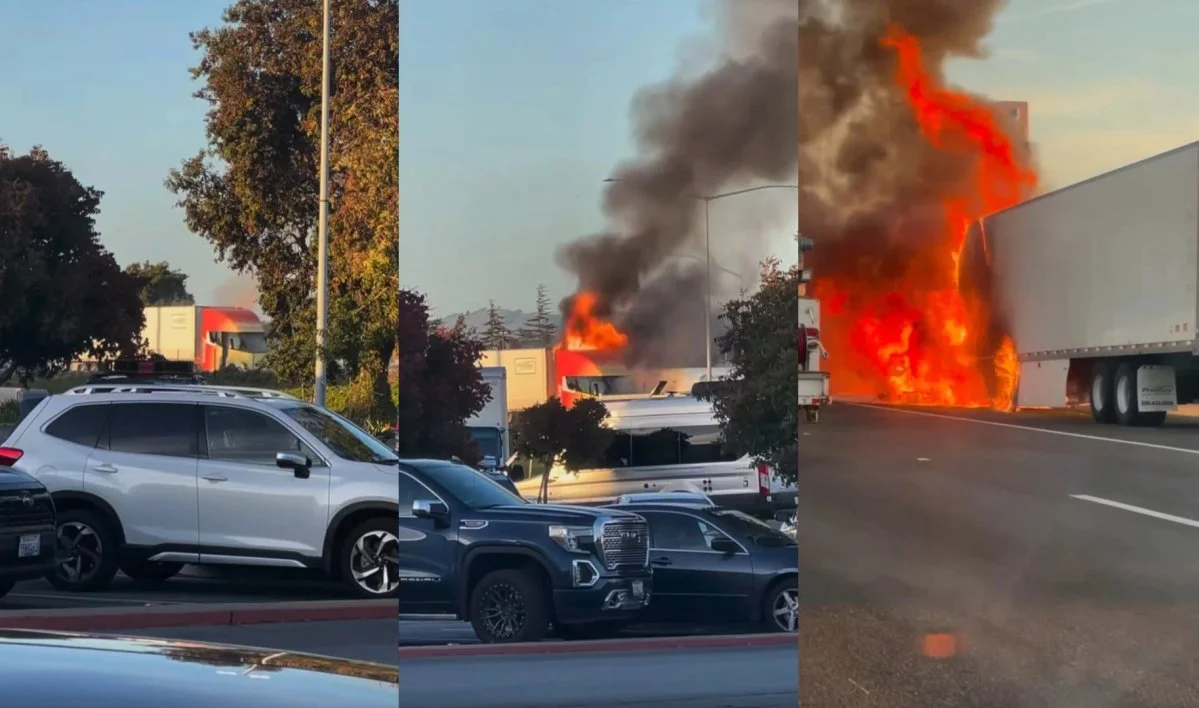
A Tesla Semi fire near Hayward, California, shut down both directions of Interstate 880 for hours, putting the truck’s operation in focus as Tesla expands production and more commercial fleets use the electric tractor. No one was hurt, and no other vehicles were involved. The cause has not been confirmed.

The fire began in the southbound lanes near Route 92 at about 5:35 p.m. Tuesday, October 28, 2026, according to ABC7 News. The California Highway Patrol closed both directions between Winton Avenue and Route 92 roughly 10 minutes later, citing the potential risk from smoke.
Fire kept the freeway closed overnight
Northbound traffic resumed at 8:40 p.m., but the southbound lanes remained closed much longer. The CHP described the lithium battery fire as difficult to extinguish and initially said it might burn for 15 to 18 hours. Crews reopened all southbound lanes at about 3:30 a.m. Wednesday, around 10 hours after the fire began.
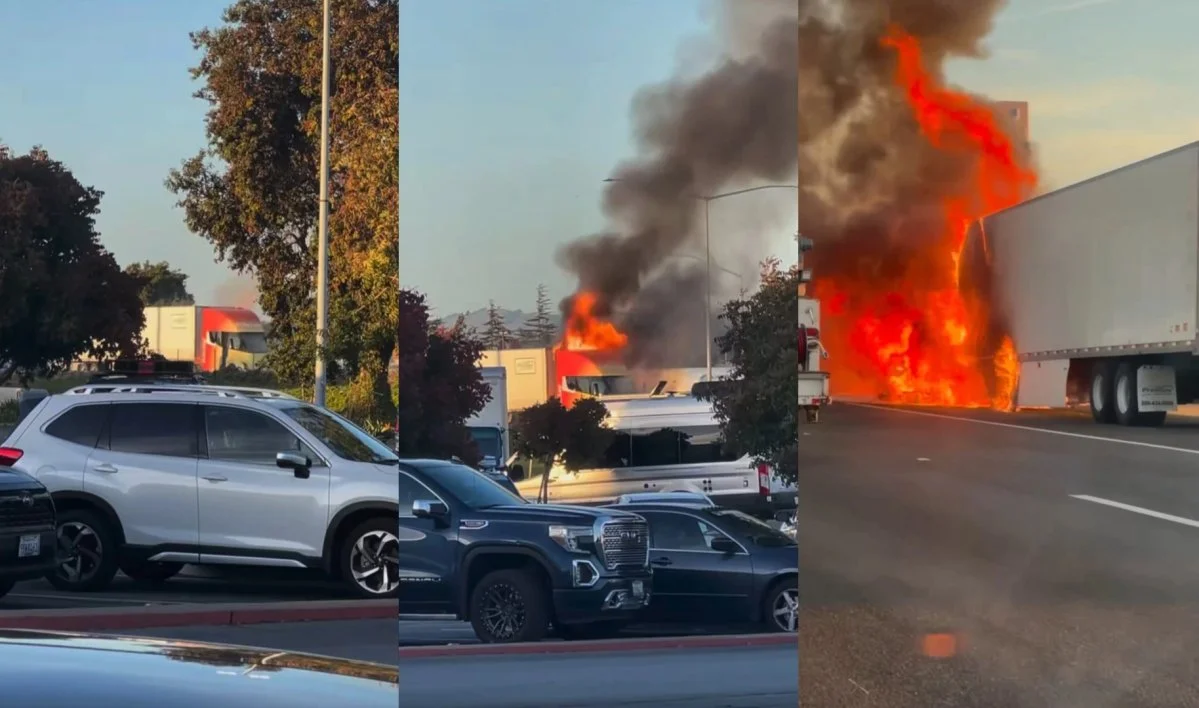
Videos posted online show heavy black smoke above the freeway and flames engulfing the tractor. The front of the white trailer behind it was also badly burned. The footage establishes the scale of the fire, but it doesn’t explain how it started or what part of the truck failed.
The driver told officers the truck had caught fire and that they did not know why. With no collision reported, the incident differs from the August 2024 fire involving a Tesla-operated Semi on I-80, which followed the truck leaving the road and hitting a tree. Here, the reported account contains no crash to explain the ignition.
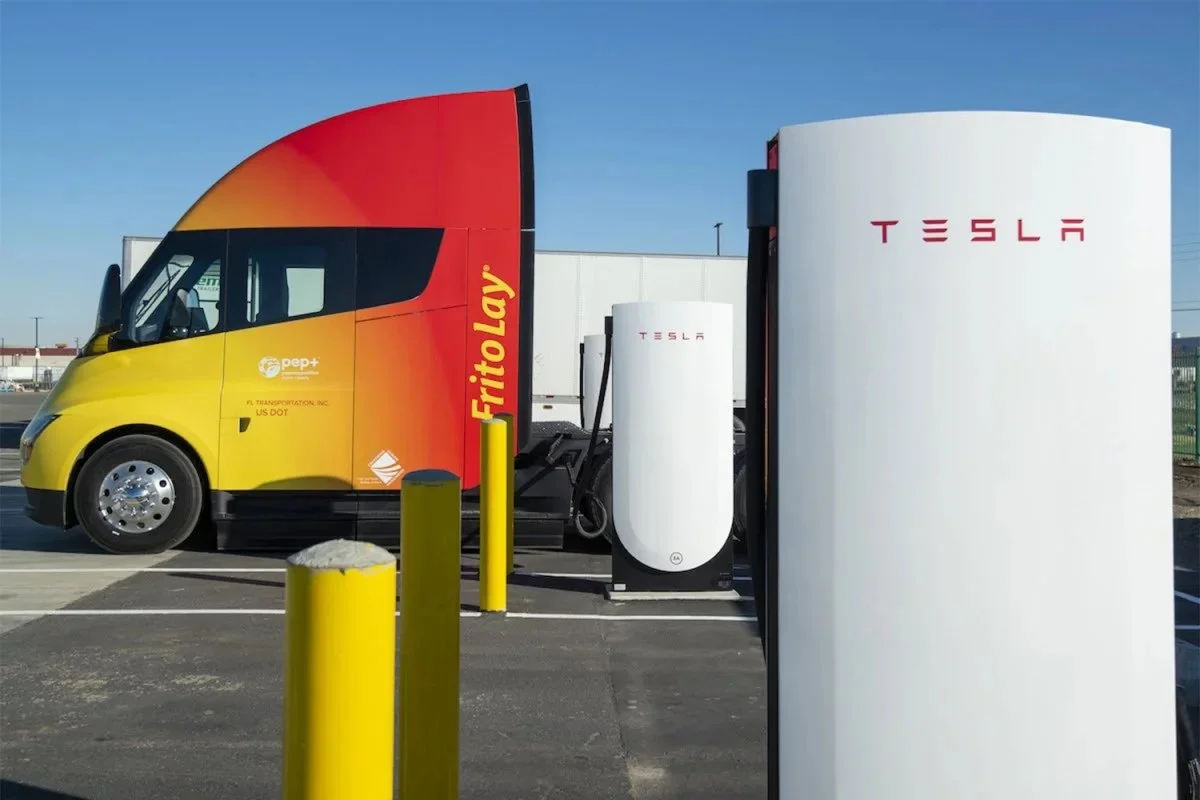
Truck appears to be part of PepsiCo fleet
The red and orange cab resembles the livery used on Frito-Lay Semis. Tesla has delivered trucks to PepsiCo since late 2022, as described in this account of PepsiCo’s use of the Semi. The available information doesn’t confirm the identity or operator of the burned truck, so its fleet assignment remains an inference based on its appearance.

That distinction matters for commercial operators: a vehicle in active service is part of a working fleet, where downtime can affect schedules as well as the truck itself. The immediate known impact here was a lengthy freeway closure. The source provides no information about damage costs, cargo, route plans or how long the truck will be out of service.
Incident involved the original Semi design
The truck appears to be Tesla’s original Semi design, rather than the refreshed model Tesla showed last fall. The updated truck is offered in Standard Range and Long Range versions, with Tesla citing up to 500 miles of range and peak charging power of 1.2 megawatts. Those are manufacturer figures for the refreshed model; they don’t describe the truck involved in this fire.
Tesla has started building the refreshed Semi at a new Nevada factory, which the company says can produce up to 50,000 trucks annually. That stated capacity signals an ambition to scale deliveries, while fleet operators will also be watching how vehicles perform in service and how Tesla responds when a serious technical incident occurs.
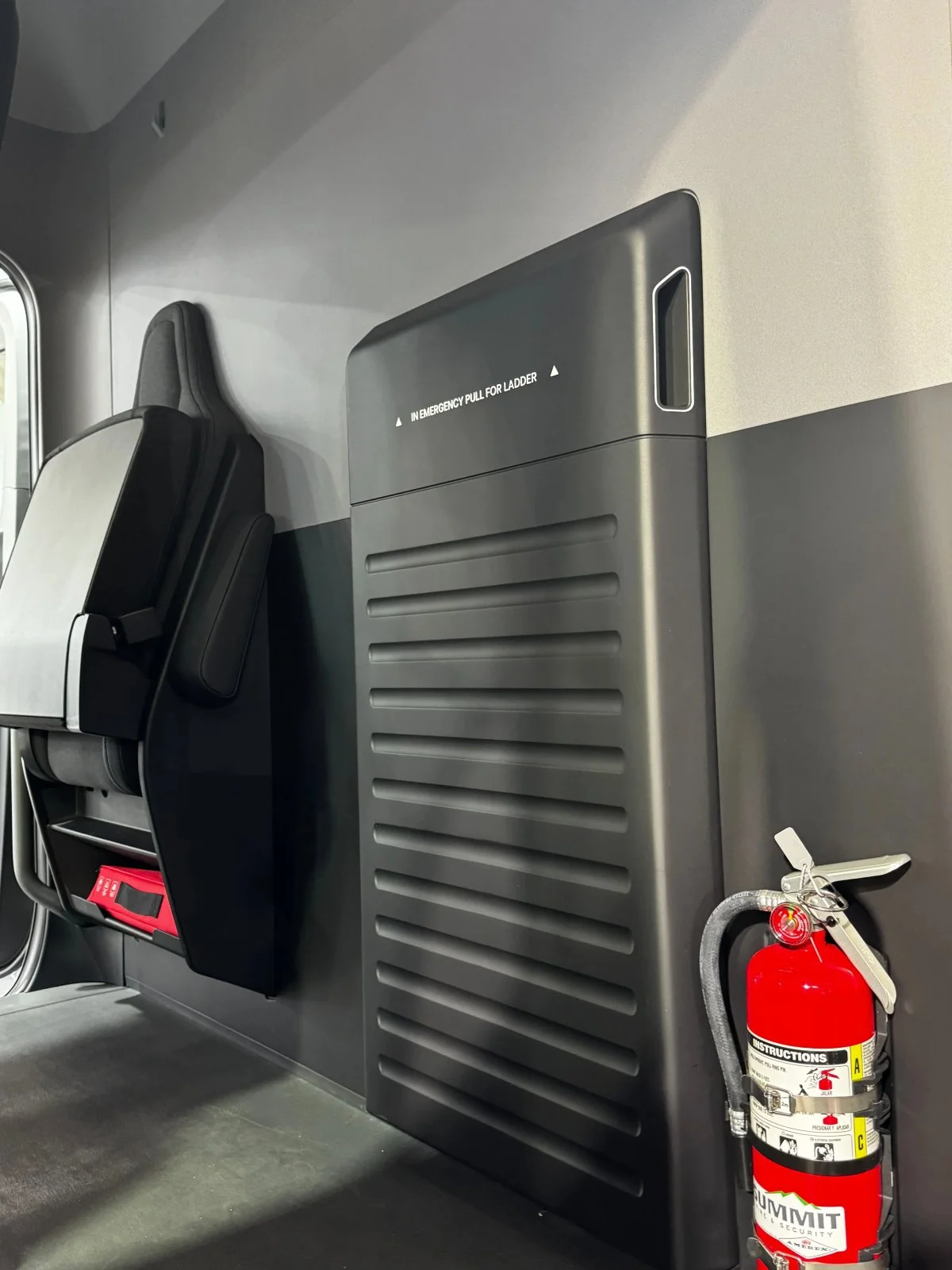
Tesla has also shown a European Semi configuration. One described difference is an escape ladder inside the cab, intended to provide an exit through an overhead hatch if the truck tips over. That feature is separate from the Hayward fire and offers no evidence about its cause.

Cause and battery details remain unknown
Tesla has not commented on the fire, and the CHP says the cause has yet to be confirmed. The source doesn’t identify a failed component, describe a battery inspection or provide findings from an examination of the truck. The absence of a reported collision makes the vehicle’s systems a natural area of attention, but it does not establish that the battery pack or high-voltage system caused the fire.
For buyers and fleet managers weighing electric heavy trucks, the practical questions are still open: what initiated the fire, what contributed to its duration, and what inspection or repair steps will follow? The answers could help operators understand the incident’s relevance to their own vehicles and routes. Until investigators confirm the cause, the Hayward fire is a serious event with an unresolved explanation—and the next details matter more than speculation.