Tesla Expands Houston Robotaxi Zone to 254 Square Miles, Outpacing Waymo’s Coverage
Tesla’s Houston Robotaxi zone now spans 254 square miles and about 1.2 million residents, though both major airports remain outside its reach.
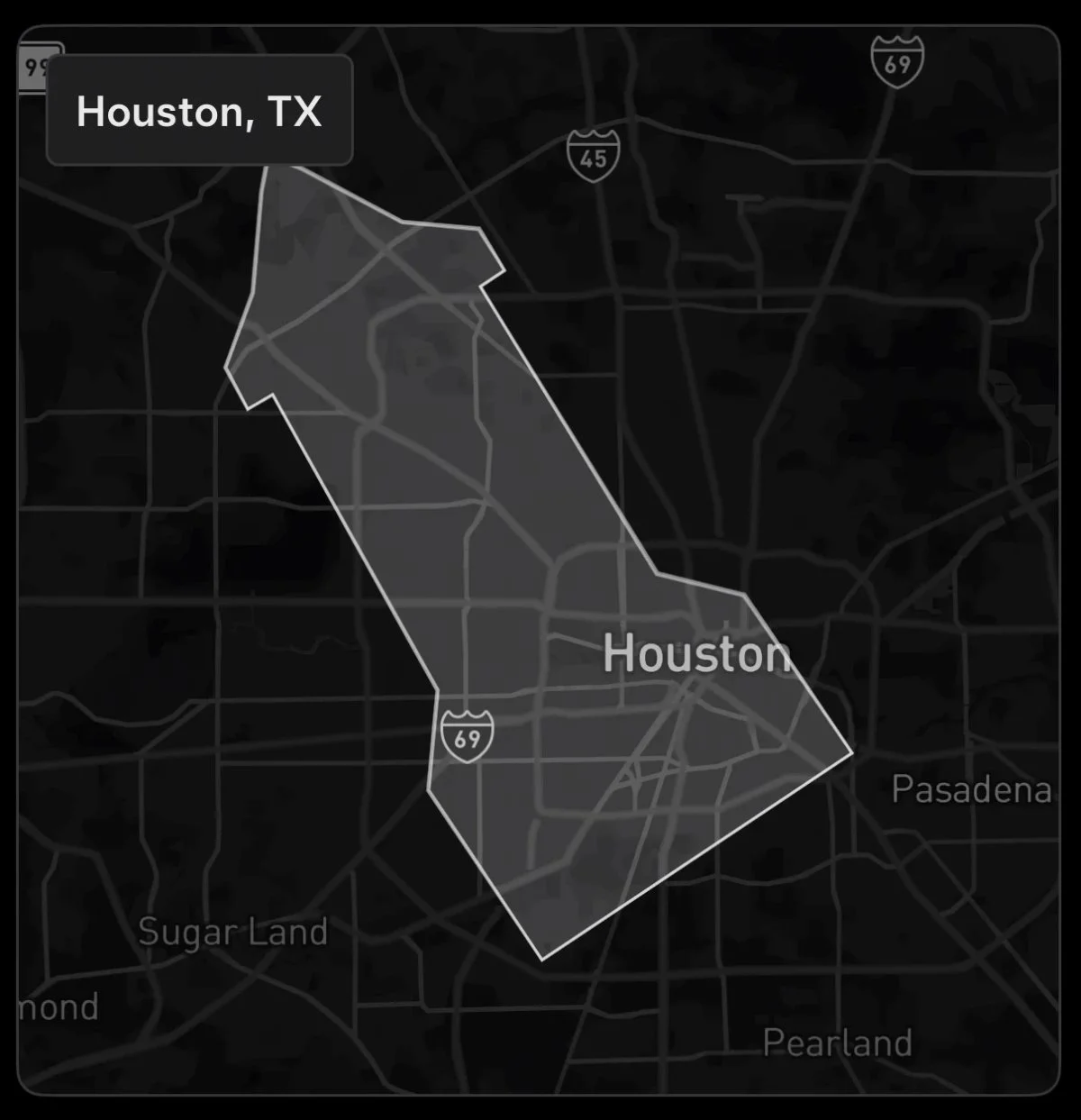
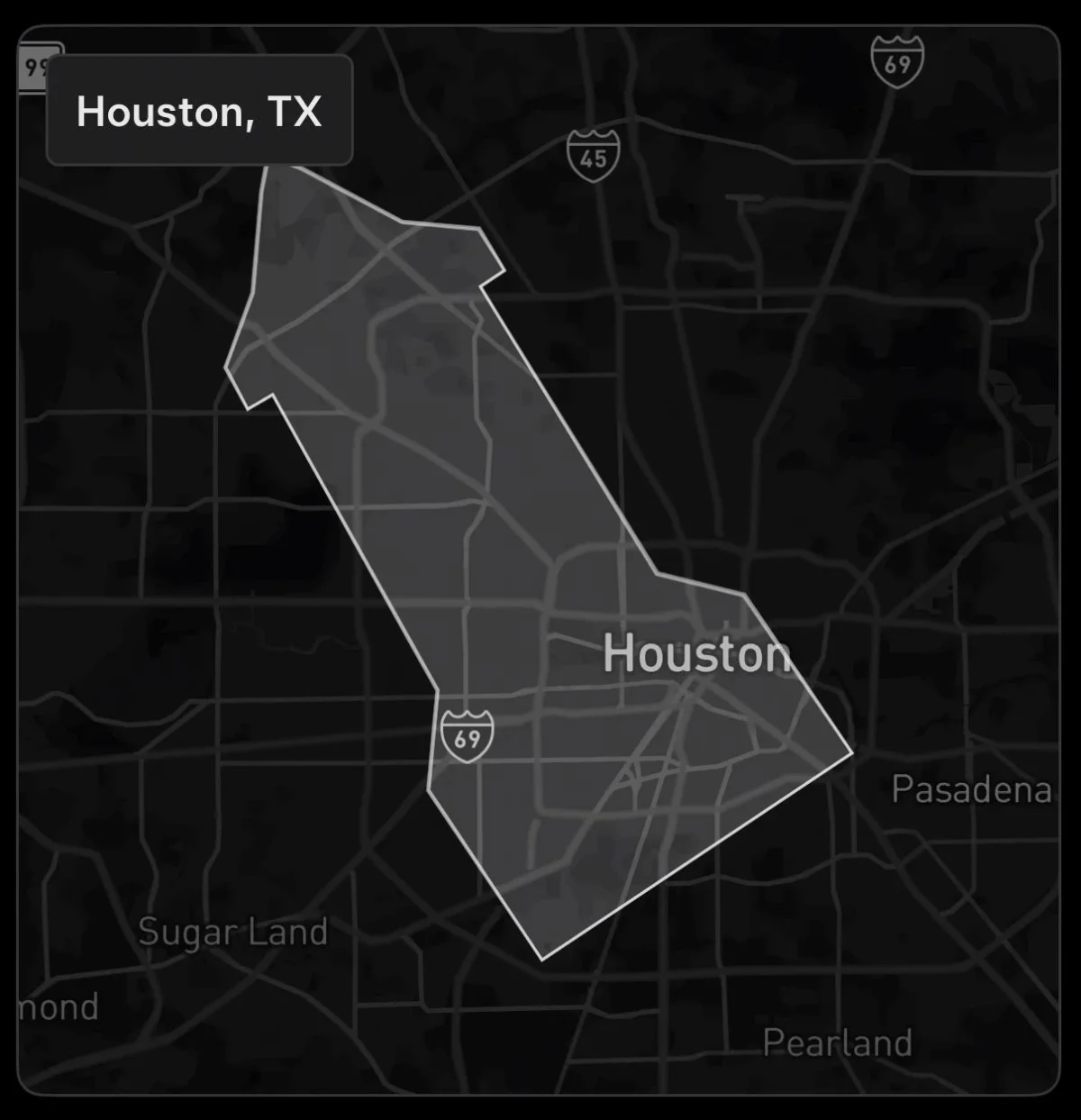
Tesla’s Houston Robotaxi expansion changes the scale of its service in the city: the operating zone has grown from about 25 square miles to roughly 254, reaching an estimated 1.2 million residents. The enlarged area is live, and its footprint now dwarfs Waymo’s reported Houston coverage. Yet the new boundary still leaves both major airports outside the service area.

The change is Tesla’s first Houston service-area expansion since unsupervised Robotaxi rides began there in April. Those rides use retrofitted Model Y vehicles. Tesla’s Robotaxi account announced the expansion on X, while the source article reports that riders can already request trips within the larger zone.
A wider zone, with clear limits
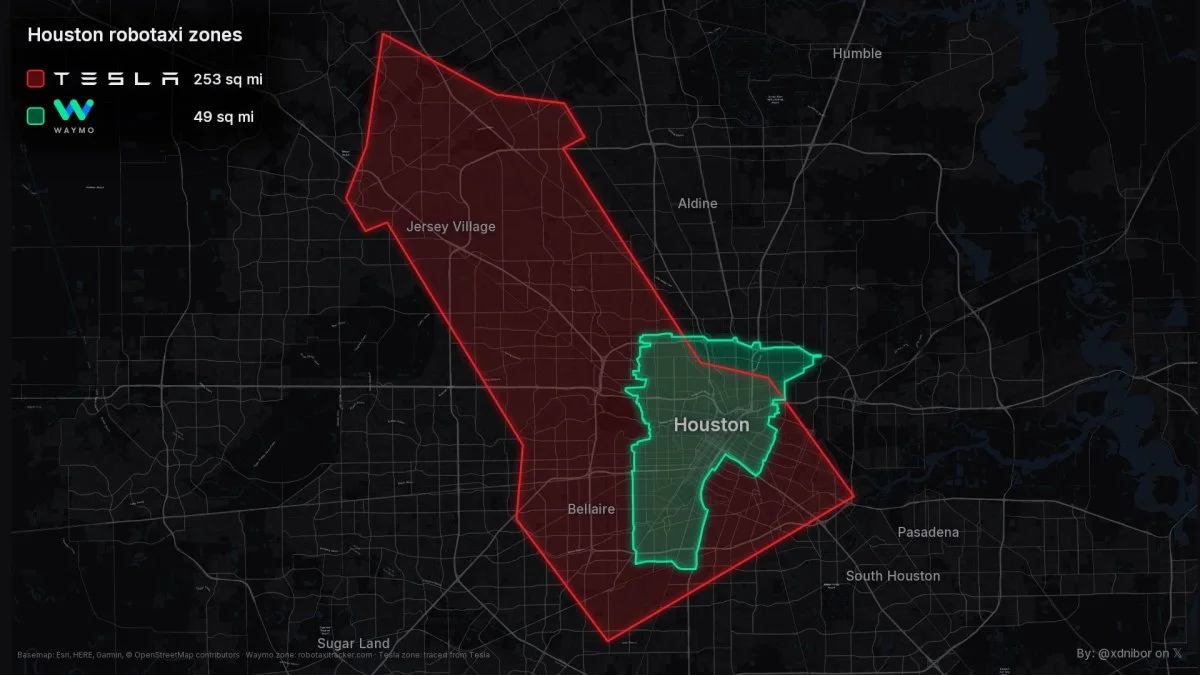
The geofence stretches northwest toward Copperfield and Jersey Village, runs through Downtown Houston and Bellaire, and reaches southwest toward Missouri City. On the eastern side, it stops just short of Pasadena and South Houston. George Bush Intercontinental Airport (IAH) and William P. Hobby Airport (HOU) remain beyond the boundary, a meaningful omission for travelers and anyone whose regular trips start or end at either airport.
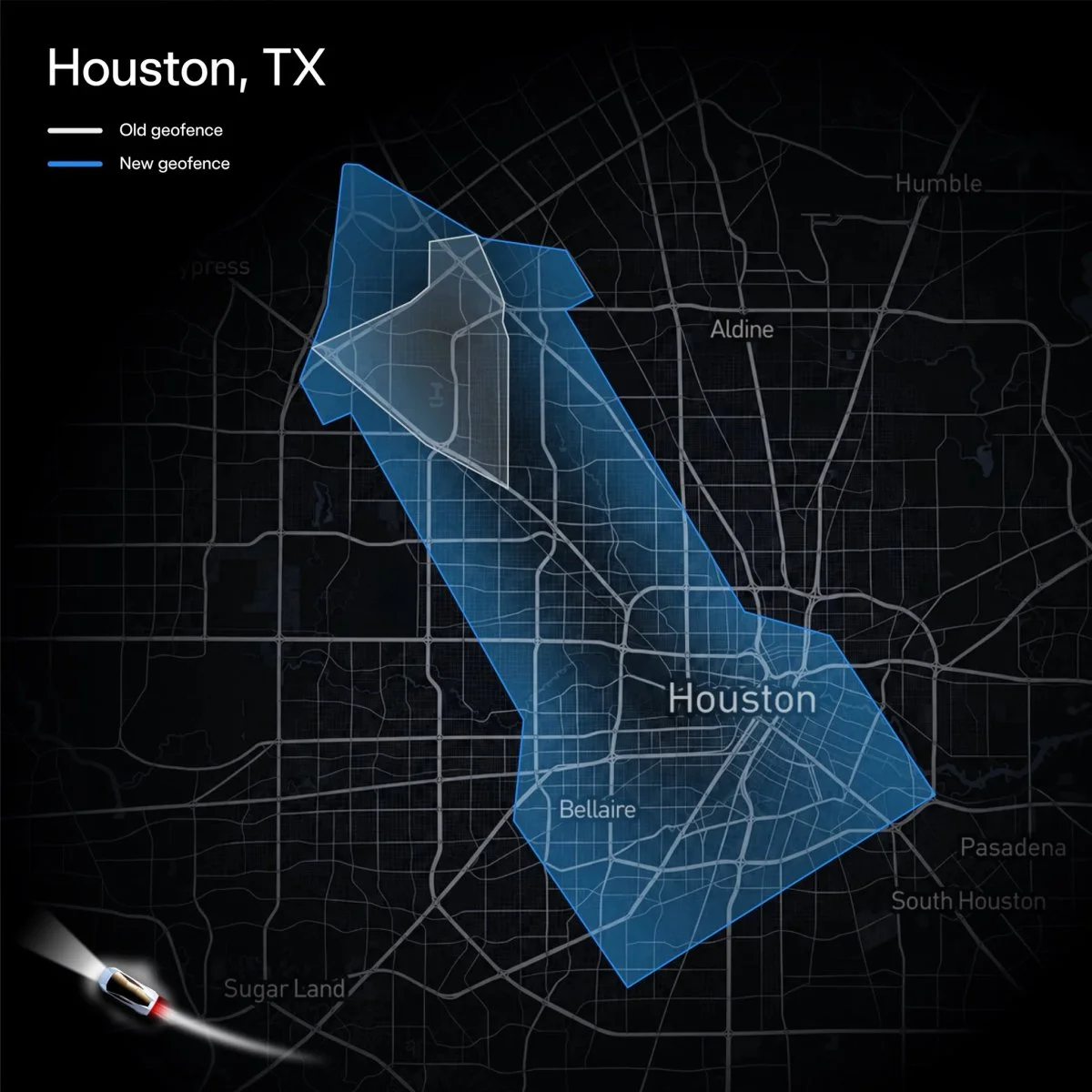
At about 254 square miles, the zone is roughly ten times its previous size, an increase of 916%. That larger footprint gives the service more room to connect neighborhoods and destinations across the city. It also makes the boundary itself part of the practical story: access depends on where a trip begins and ends, and the stated coverage does not include Houston’s two principal airports.
The map has an unusual outline that resembles a rocket. That shape may nod to Houston’s connection with human spaceflight through NASA’s Johnson Space Center and Mission Control, though the source offers that as a possibility rather than a confirmed explanation. For riders, the outline is a curiosity; the more useful measure is how much of the city falls inside the geofence.
Tesla’s coverage compared with Waymo
A comparison map shared by @xdNiBoR on X puts Waymo’s Houston service area at 49 square miles, concentrated mostly around Downtown. Tesla’s new zone is therefore roughly five times larger and surrounds most of Waymo’s mapped coverage. That is a striking difference in geographic reach, but area alone doesn’t establish how frequently vehicles are available, how quickly a ride arrives, or which destinations each service can reach in practice.
Houston had already become a substantial operating market for Tesla before this expansion. A recent Tesla safety report showed that the fleet had driven nearly 226,000 autonomous miles in the city as of mid-October. With a much larger area now open to service, that total could rise faster, although the report’s mileage figure is a snapshot and doesn’t show how those miles are distributed across the new zone.

Houston moves ahead of Tesla’s other plans
The size of the Houston change is notable because Dallas had appeared to be the more immediate expansion story. Tesla plans to launch Cybercab rides in Dallas next month, which would make it the second market after Austin to offer the vehicle. The Dallas geofence is currently 31 square miles, far smaller than Houston’s expanded footprint.
Cybercabs have also been spotted testing and parked in Houston, but commercial rides there aren’t scheduled to begin yet. For now, the city’s enlarged service continues to use retrofitted Model Y robotaxis. That makes Houston a useful point of comparison as Tesla adds another vehicle type and brings its ride network to more places.
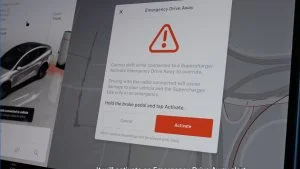
Tesla has named Las Vegas, Phoenix, Jacksonville and San Antonio as its next Robotaxi cities. Separately, Ashok Elluswamy said during the company’s Q3 2026 earnings call that Tesla owners could begin adding their own Model 3 and Model Y vehicles to the network in Q2 2027, after unsupervised FSD rolls out. Those plans suggest the service could expand through both new markets and additional vehicles, though the Houston change is the clearest near-term measure of increased coverage in an existing city.

For Houston riders, the immediate takeaway is straightforward: trips across a much broader part of the city are now within the stated service boundary, but airport journeys remain outside it. The next useful signs will be whether Tesla adds those destinations, grows the fleet to serve the larger area, or brings Cybercab rides to Houston.