Tesla FSD Reaches 1.74 Million Active Subscriptions as North American Take Rate Tops 75%
Tesla says FSD was included with more than 75% of North American deliveries in Q3, while active subscriptions reached a record 1.74 million.
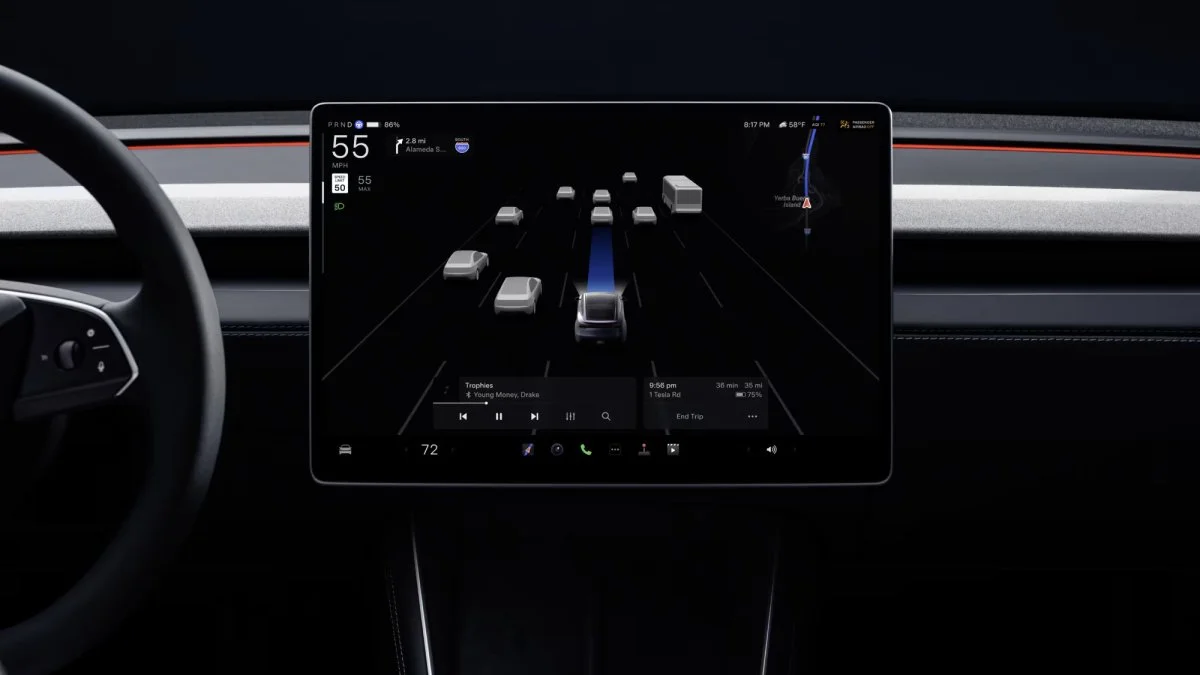
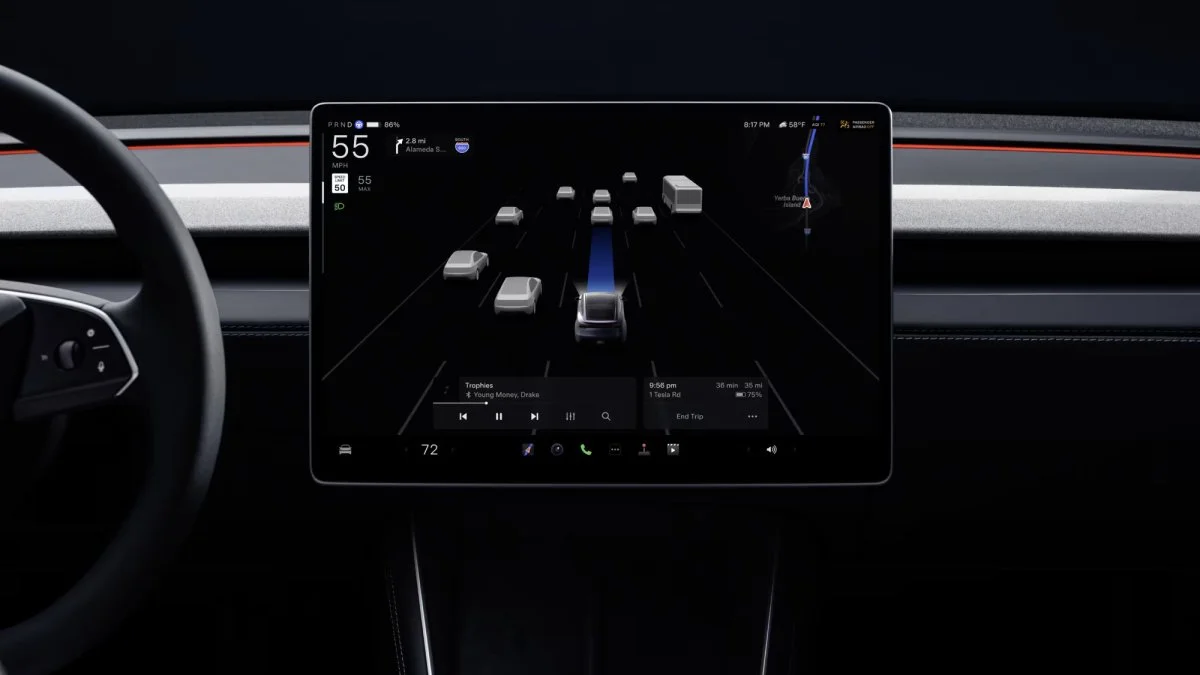
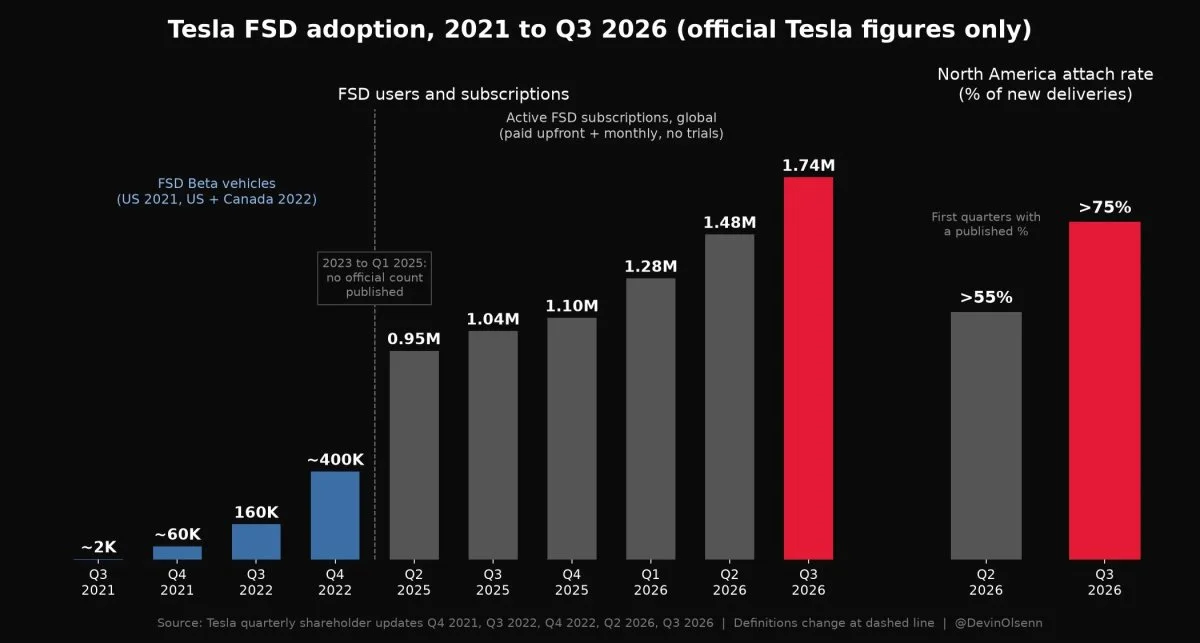
Tesla’s Full Self-Driving (Supervised) software is becoming a larger part of the company’s vehicle sales and recurring revenue. In Q3 2026, more than 75% of new Teslas delivered in North America included FSD, either through a purchase or subscription, and the active subscriber base reached a record 1.74 million.

The delivery figure is a sharp rise from the 55% reported for Q2, an increase of nearly 20 percentage points in a single quarter. Tesla says the software is helping drive demand in markets where it’s available. That makes the attach rate a useful measure of how buyers are responding to FSD at the point of delivery, though it combines customers who pay upfront with those who subscribe.
Elon Musk summed up Tesla’s interpretation of the trend in a post on X: “People are buying FSD with a car attached, not the other way around.” It’s a striking claim about the software’s role in the purchase decision. The reported attach rate supports the view that FSD is reaching a substantial share of new buyers, but it doesn’t show how many would have chosen a Tesla specifically because of the feature.
Subscriptions now carry more weight
Tesla reported 1.74 million active FSD subscriptions, up 67% from 1.04 million a year earlier. That’s about 260,000 more than the 1.48 million reported at the end of Q2, or a quarter-over-quarter increase of roughly 17.5%. The company says Q3 brought its largest net addition of subscribers to date.

The subscription count includes customers with legacy lifetime purchases, so it isn’t a count of monthly payers alone. Still, Tesla’s removal of the one-time purchase option in most markets gives subscriptions a larger role in how customers access the software. For drivers, that changes the ownership calculation: access can be paid for over time, while the usefulness of doing so depends on how often the driver uses the features and whether the software’s capabilities fit their needs.
The company has connected FSD’s growing reach with its software work. Navigation improvements and pothole detection are in development, including routing that can learn a driver’s preferred routes. Tesla has also said FSD v15 is expected later this year or early next year, with the neural network’s parameters set to rise from about 1 billion to 10 billion. Those are development plans, not a measure of how the current release performs in daily driving.
Software growth against a mixed quarter
FSD’s momentum arrived alongside mixed financial results. Tesla reported Q3 revenue of $28.05 billion, slightly below the $28.3 billion analysts expected and roughly flat year over year. Gross profit increased to $5.49 billion from $5.05 billion a year earlier, while gross margin rose to 19.6% from 18.0%. Tesla cited higher ancillary sales, driven mainly by FSD subscriptions, as one contributor.
Non-GAAP earnings per share were $0.48, above the $0.45 estimate, and adjusted EBITDA was $3.90 billion. The company reported GAAP net income of $787 million and free cash flow of $1.53 billion. Capital expenditure reached $4.73 billion, while cash and marketable securities increased 9% year over year to $45.45 billion. The figures give FSD a broader business context: subscriptions are growing quickly, but they sit within a quarter where revenue was nearly unchanged from a year earlier.
European reach remains a factor to watch
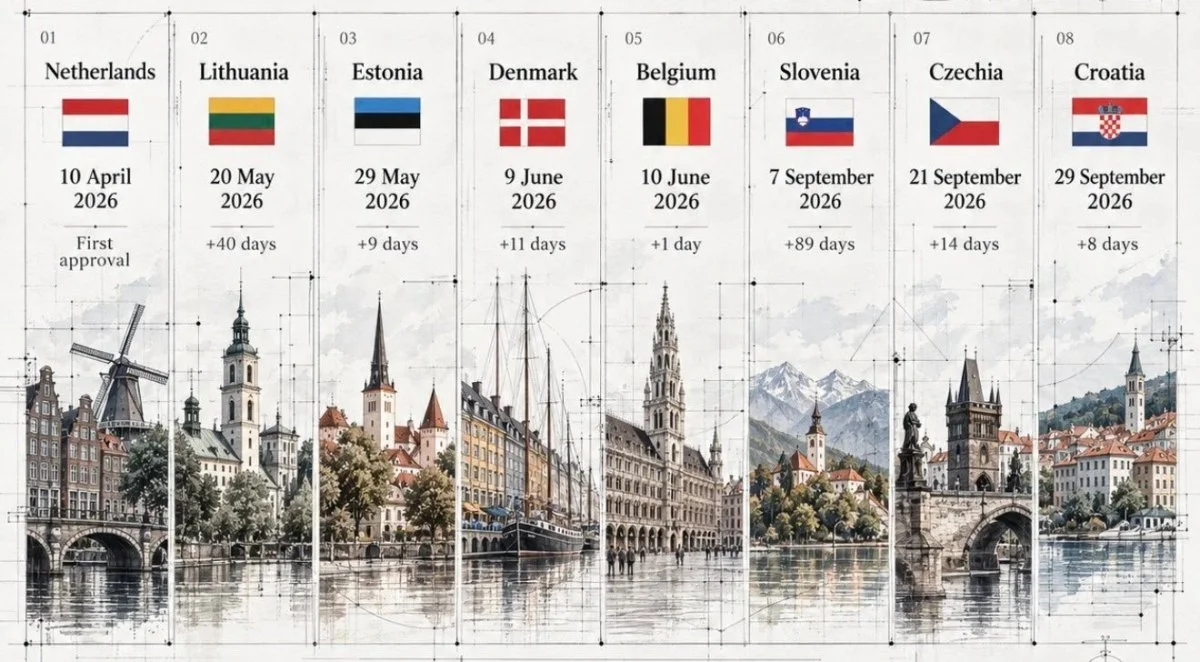
Tesla’s software is also being adapted for wider availability beyond North America. In Europe, the product is called Tesla Assisted Driving. Slovakia became the ninth European country to approve it independently, while Tesla continues to pursue broader access across the region.
The scale of the North American take rate sets a high bar for the next quarter. If FSD v15 arrives on the stated timetable and access expands in Europe, Q4 results could help show whether the software can keep gaining traction beyond its current markets. For now, Tesla’s figures point to a growing role for FSD in new deliveries and a subscription base that has added customers at a record pace.