Kimi Antonelli’s First F1 Title Brings Max Verstappen Comparisons and Toto Wolff’s Caution
Bernie Ecclestone sees Verstappen-like potential in Antonelli, while Toto Wolff and the new champion keep expectations in check.
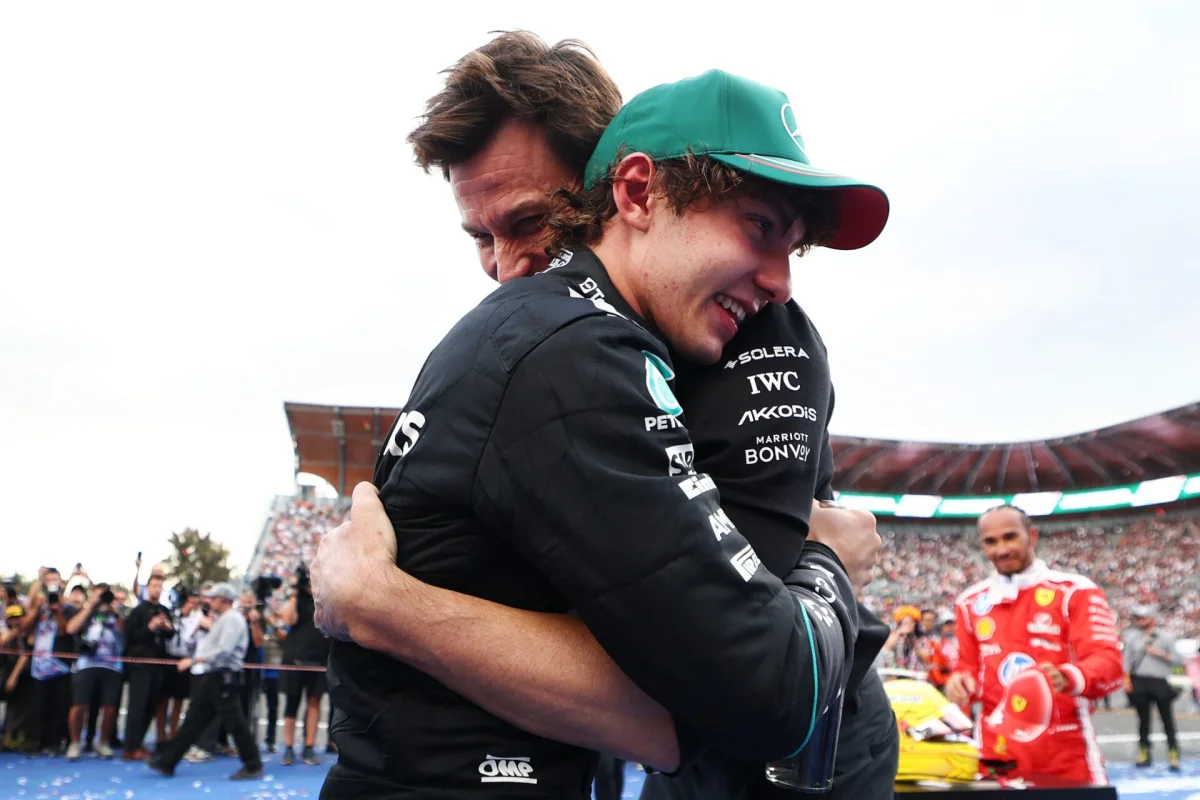
Kimi Antonelli’s first Formula 1 title has shifted the conversation from what the young Mercedes driver might achieve to how he’ll handle the expectations that come with winning. At 20, he has become the series’ youngest world champion, claiming the title at the Mexico City Grand Prix in only his second season. Former F1 boss Bernie Ecclestone already sees a future Max Verstappen in him. Mercedes team chief Toto Wolff has spent the season urging people to keep the praise measured.
That tension matters. A first title is a major achievement, but it doesn’t settle how a driver will perform over a long career, or how he’ll respond when results turn against him. Ecclestone’s prediction puts Antonelli’s potential in the brightest possible light. Wolff’s comments point to the less glamorous work that comes next: keeping a young champion focused while he continues to learn.
Ecclestone sees Verstappen’s winning instinct
Speaking to RacingNews365 after Antonelli’s title win, Ecclestone said he thinks the Italian will become “another Max.” His comparison is about the drive to win: Ecclestone described both men as getting into the car with a single aim and being prepared to do what it takes to achieve it.
Ecclestone also argued that Antonelli hasn’t yet shown his full ability. He expects the driver to improve over the next two to three years, after experiencing some difficult periods that, in his view, will help refine him. That prediction makes the title a starting point in Ecclestone’s account, rather than proof that Antonelli has already reached his ceiling.
The comparison is striking because Verstappen is a four-time world champion. But likenesses between drivers can flatten important differences: a shared appetite for victory doesn’t guarantee the same path, style or results. Antonelli will have to make his own record, with each season bringing new tests of pace, judgment and consistency.
Why Wolff is wary of early labels
Wolff’s concern has been the weight of the comparisons arriving around Antonelli. In June, after the young driver’s performance drew a comparison with Ayrton Senna, Wolff urged Italian media to keep their feet on the ground. He said he had already seen headlines likening one of Antonelli’s laps to Senna’s.
A month later, Wolff said Antonelli was exceeding Mercedes’ most optimistic expectations, but cautioned that he shouldn’t feel satisfied. He also asked people to maintain a sense of balance while praise was building around the driver.
Those remarks now read as more than an attempt to dampen excitement. Wolff is trying to leave room for Antonelli to develop without turning every performance into a verdict on whether he matches a legend. That can matter for any young driver, especially one who has reached the sport’s top prize before his third season. The comparisons may be flattering, but they can make ordinary setbacks look like evidence of failure.
The title is a result; the future remains open
Antonelli’s championship gives him a concrete achievement to build on. Talk of multiple titles, however, remains speculation. Winning once shows that he has reached the top in this season’s contest; repeating that result would require him and Mercedes to keep delivering across future seasons, with no guarantee that the same circumstances will hold.
For now, Antonelli’s own approach offers a useful counterweight to the grand predictions. He has decided to keep the No. 12 next season instead of taking the No. 1. Explaining the choice, he said it would help him “stay grounded” and “stay humble.” It’s a small but visible sign that he wants to retain a connection to his existing identity as the attention around him grows.
There’s a distinction between staying hungry and treating a first title as the start of an expected run of victories. Antonelli has said through his choice of number that humility matters to him; Wolff has stressed continued effort and balance. Ecclestone, meanwhile, expects the driver’s strongest years to be ahead. Those views can all be true at once: Antonelli can have exceptional potential and still have plenty to prove.
What to watch next
The next measure of Antonelli won’t be how closely he resembles Senna or Verstappen. It will be how he responds when a race weekend goes badly, whether he can turn speed into consistent results, and how he handles the pressure that follows a title. Ecclestone’s forecast depends on Antonelli continuing to develop through difficult moments, while Wolff’s approach gives that process breathing room.
His first championship has already put him among the sport’s most closely watched drivers. The practical takeaway for fans is to treat the title as evidence of what Antonelli has achieved, and the comparisons as predictions about what he might become. The next seasons will show whether his winning instinct can support the sustained results that those predictions imply.