Piastri’s Q2 Exit in Mexico Puts McLaren’s Tyre Strategy Under Scrutiny
Oscar Piastri starts the Mexican Grand Prix 13th after McLaren’s used-tyre approach left him one shot to reach Q3.
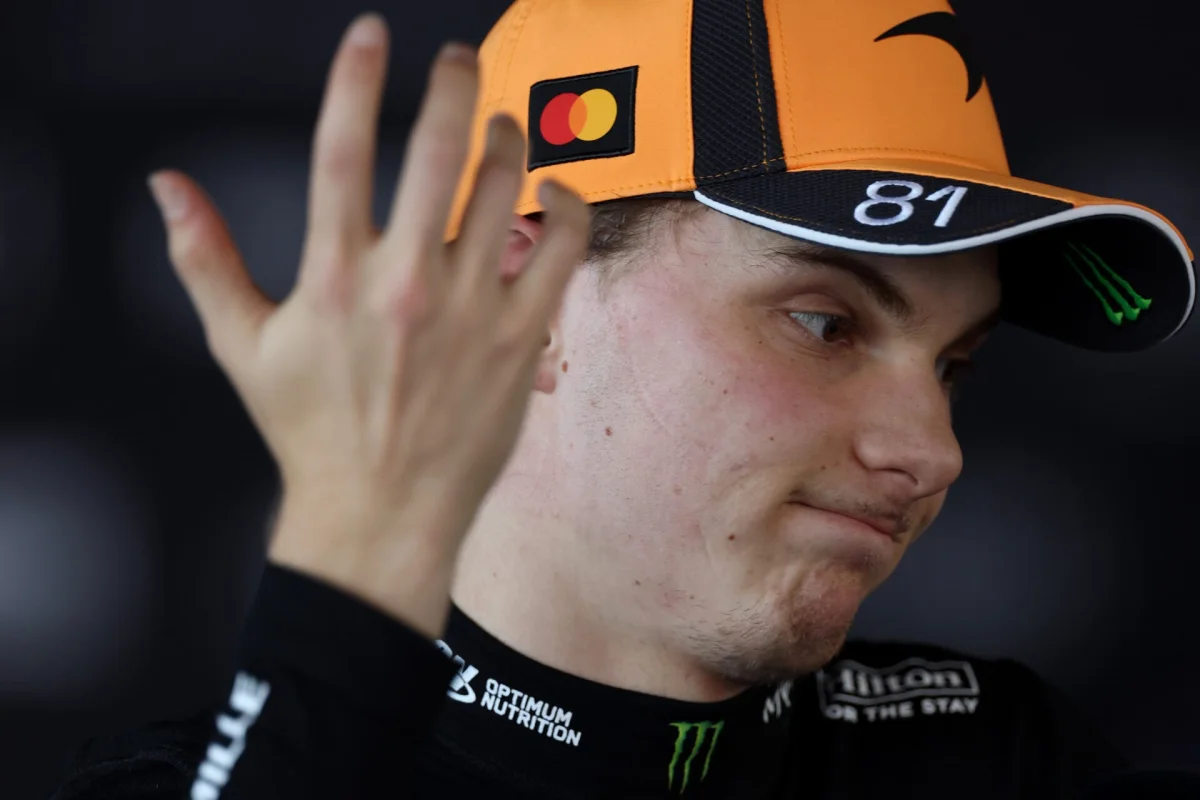
Oscar Piastri will start the Mexican Grand Prix from 13th after a Q2 session in which McLaren’s tyre plan left him with little room to recover. Lando Norris topped the timesheets, while Piastri finished nine-tenths of a second behind his teammate and was eliminated. Bernie Collins and Karun Chandhok both questioned McLaren’s decision to begin the session on used soft tyres.
The gap between the two McLaren drivers is striking, but it doesn’t explain the whole result. Piastri had been struggling for pace throughout the weekend, and Chandhok also saw signs of hesitation in his driving. McLaren’s tyre choice added another difficulty: when Piastri needed to deliver a strong lap, he had only one attempt on fresh rubber.
McLaren saved a fresh set at the cost of flexibility
Collins, speaking on Sky Sports, described a choice that differed from the approach taken by most of the other drivers. Each team entered the session with five sets of soft tyres. Most rivals used a new set for their first run, giving them an early benchmark before deciding how to handle the next attempt.
McLaren instead sent Piastri out on used tyres. The lap wasn’t quick enough, so he had to switch to a fresh set. Although there was time for two fast laps on that new set, Piastri was sent out first and had only one lap available to set a time that would take him through to Q3.
That sequence made the decision harder to recover from. A used-tyre run can preserve fresh rubber for later, but it also leaves less margin if the initial lap falls short. Starting first on a new set would have given Piastri a timed effort to assess, followed by the possibility of another push. Instead, his sole fresh-tyre lap had to count.
Collins said McLaren appeared to have kept a new set available in case Piastri reached the top 10 and needed it for the next stage, or to use at the start of the Grand Prix. But once he was out in Q2, the saved tyre couldn’t compensate for the lost opportunity to set a second time. “The first thing you need to do is go through,” she said.
The strategy depended on a lap Piastri didn’t find
McLaren’s approach may have rested on confidence that Piastri could go quickly enough on the first run to put himself in a safe position. The risk was that a merely adequate lap would force a change of plan, leaving too little time to make full use of the fresh set. That is how the session unfolded.
Collins called the choice a risk, while Chandhok judged it a poor decision in the balance between potential reward and the chance of elimination. Neither comment changes the fact that Piastri was already short of pace. But the tyre sequence gave the team less flexibility at the moment he needed it, and the result left him starting 13th rather than in the top 10.
The contrast with Norris sharpens the questions around Piastri’s weekend. Norris led the session; Piastri was nine-tenths slower. That gap points to a performance problem beyond one tyre call, but it also makes every strategic choice more consequential. When a driver is searching for confidence and speed, a plan that allows an extra attempt can matter.
Chandhok also saw hesitation behind the wheel
Chandhok’s criticism extended to what he saw in Piastri’s onboard footage. He described the Australian’s steering as tentative, with several corrections needed through corners. In Chandhok’s view, that looked unlike Piastri’s usual driving style. The observation offers a possible clue to the gap, though it doesn’t establish why Piastri was struggling or how much came from the car, the circuit or the driver.
The source article says Piastri’s driving style doesn’t suit the MCL40 or the new regulations, adding to the challenge he faces in a difficult weekend. That context makes support from the pit wall especially relevant: when a driver is not finding the pace naturally, tyre choices should give him the clearest chance to build a lap and respond to what the car is doing.
Piastri had qualified inside the top eight at every Grand Prix in 2026 before Mexico, according to the source. His 13th-place start is therefore a departure from that run. The team now has a fresh soft set available, but the immediate consequence of saving it is clear: it did not help him reach Q3. The practical takeaway from the session is that McLaren’s tyre allocation and Piastri’s lack of pace combined to leave no second chance when the first fresh-tyre lap had to deliver.