Piastri Says Hadjar’s Red Bull Battery Mapping Cost Him Time at COTA
Hadjar said the wrong battery mode cost up to a second per lap, while Piastri lost time catching him and then defended seventh from Russell.
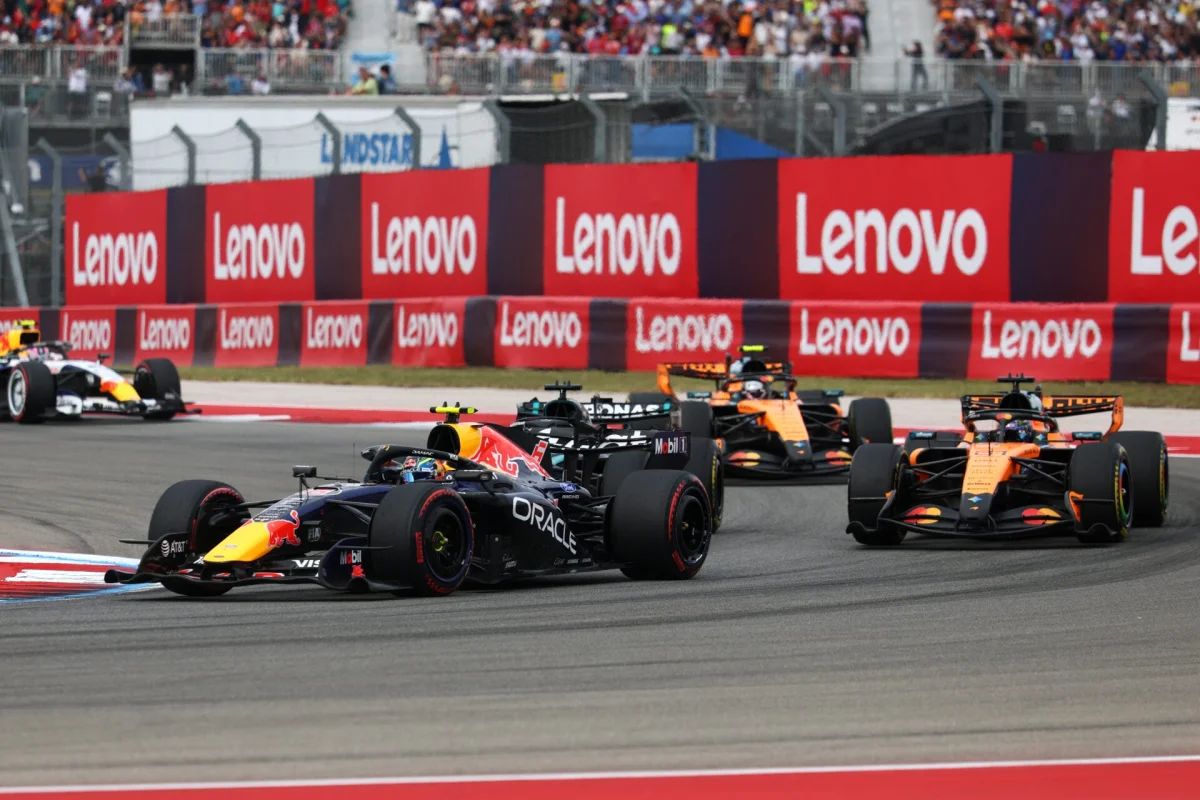
Oscar Piastri’s seventh place at the 2026 United States Grand Prix came with two contrasting takeaways: he couldn’t match Isack Hadjar over the full race, but a battery mode error on the Red Bull briefly kept the McLaren driver close enough to lose time in awkward parts of the track. Piastri ultimately held off George Russell by 1.629 seconds, while Hadjar finished 18.301 seconds ahead.
The race was round 18 of 23 at Circuit of the Americas in Austin, Texas. Hadjar took sixth for Red Bull; Piastri settled for seventh after McLaren brought him in early for his only stop. The Australian changed from C3 medium tyres to C2 hards on lap 15. Hadjar stopped on lap 25, switching from soft C4 tyres to a new set of hards.
A brief chance to stay with Hadjar
Hadjar rejoined ahead of Piastri, and the McLaren driver initially stayed within reach. Piastri said the Red Bull appeared to have an issue as it came out of the pits, with its battery deployment varying enough to affect where he could follow. That left him catching Hadjar in “awkward places” and, in Piastri’s account, costing him “a fair bit” of time.
“When Hadjar came out of the pits, he looked like he had an issue, and his deployment was a bit all over the place,” Piastri said, in comments reported by RacingNews365. “So, I was catching him in awkward places and lost a fair bit of time there.”
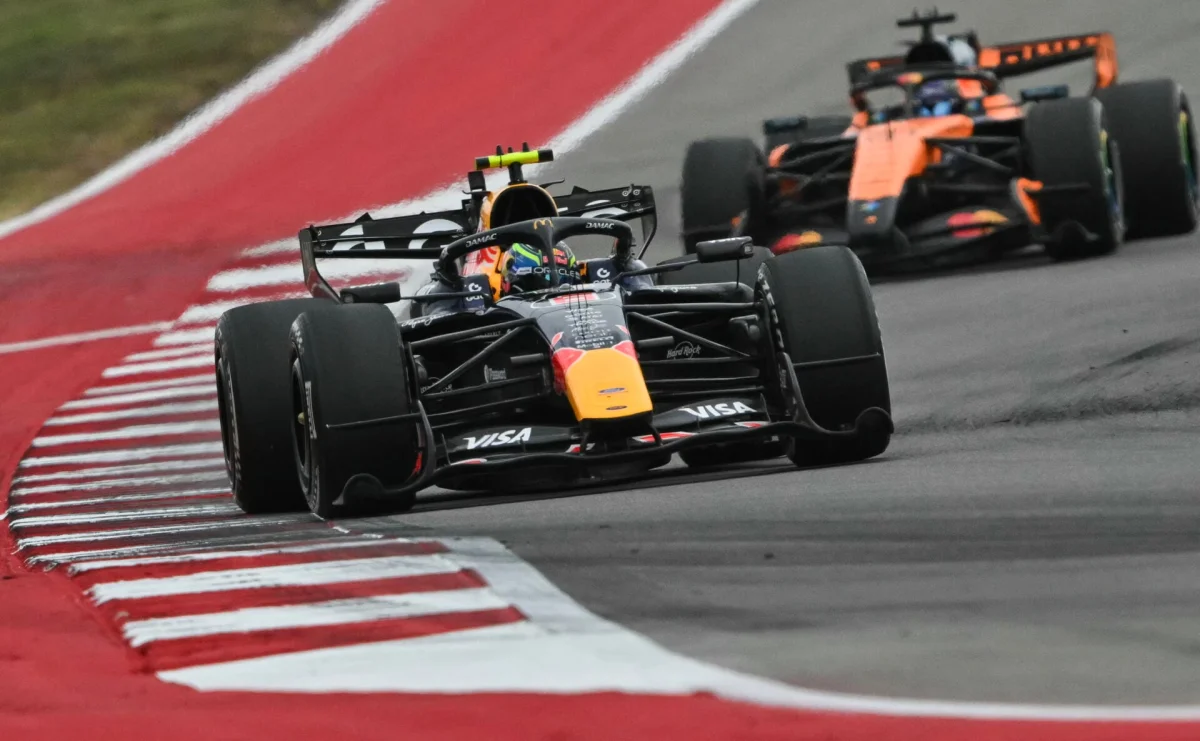
Hadjar later confirmed the source of the problem: he remained in the wrong battery management mode after his stop. He said he was still using the pit stop mapping, which he estimated cost him up to a second per lap. That delay in power delivery lasted through much of his second stint and explains why Piastri could remain close at first.
“I stuck with the pit stop mapping, which cost us a second per lap,” Hadjar said, in comments reported by the Italian edition of Motorsport.com. “That was the problem.” He added that changing tyres would not have fixed the driveability issue.
The mode error changed the stint, not the result
Once Hadjar found a stronger rhythm on the hard tyres, he began pulling away. The error therefore offered Piastri a temporary opportunity to stay in contention, rather than a sustained fight for sixth. Piastri acknowledged that his own pace was insufficient, even as Hadjar’s deployment problem affected the chase.
Hadjar said he could not change out of the pit stop mapping once he was on track, because engine modes could only be modified while the car was still in the pit lane. He had been discussing tyre choice with his race engineer over the radio and was still in that mode when he left the pits. The consequence was a compromised second stint, despite the tyre change itself.
For McLaren, Piastri’s account points to a race shaped by both traffic and pace. His early stop put him on the hard tyre ten laps before Hadjar’s, and the later convergence placed the two cars close together after the Red Bull’s stop. But Piastri didn’t have enough speed to turn the moment into a pass. He then spent the remainder of the race defending from Russell’s Mercedes.
“The pace clearly wasn’t very good, so there is plenty to try and understand,” Piastri said. He was surprised to keep Russell behind, but called that result a small positive in a difficult weekend. “I don’t think either of us really wants to be battling for seventh,” he added.
That makes the COTA result a mixed one for both drivers. Hadjar secured sixth despite losing time to an incorrect mode, while Piastri protected seventh but couldn’t translate Hadjar’s temporary loss of pace into a challenge. The clearest takeaway is that battery deployment shaped their brief on-track contest; the larger gap at the finish reflected how quickly Hadjar recovered and the pace Piastri said McLaren still needs to understand.