Nissan Sentra Spec-V Concept Pairs 300 Horsepower With a Six-Speed Manual
Nissan’s SEMA Sentra concept borrows performance parts from the Z and GT-R, but the 300-hp, manual-equipped sedan is a show build for now.
The Nissan Sentra Spec-V Concept sketches a more compelling role for the compact sedan: 300 horsepower, a six-speed manual and hardware drawn from Nissan’s performance catalog. It’s a SEMA show build, not a production model, but it puts the Sentra’s value-focused identity beside the kind of enthusiast equipment found in the Toyota GR Corolla, Honda Civic Type R and Hyundai Elantra N.

The current Sentra’s 2.0-liter engine makes 149 horsepower in standard form. Nissan keeps that engine’s displacement for the concept, then adds a turbocharger and upgraded internals to handle forced induction. The resulting 300 horsepower is more than twice the output of the regular car and brings the concept into the same power range as those three rivals. Nissan hasn’t provided a price, acceleration figures or a production plan, so the headline number describes the show car rather than a buyer-ready alternative.
A manual transmission and familiar Nissan hardware
The gearbox gives the concept a distinctly enthusiast-minded character. It uses a six-speed manual transmission from the Nissan Juke NISMO RS, paired with a lightweight flywheel and clutch kit. That combination makes the Spec-V stand apart from the ordinary Sentra’s value-oriented brief, though the source doesn’t specify whether the concept’s other mechanical changes would suit everyday driving or how its performance compares with the production versions of its rivals.
Chassis parts come from different points in Nissan’s recent performance history. The concept uses suspension from the 2019 Sentra NISMO, along with 19-inch LM-RS1 wheels from the Z NISMO. Yokohama Advan Neova AD09 tires measure 265 section width, giving the car a much wider footprint than its standard counterpart. The specification signals a serious hardware exercise, but Nissan hasn’t shared ride, handling or tire-noise assessments.
Braking hardware also comes from the R35 GT-R NISMO, with Brembo brakes listed among the borrowed parts. That mix of components from the Juke, Sentra, Z and GT-R makes the project read like a parts-bin showcase as much as a preview of a possible model. Whether those pieces could move into a road-going Sentra as a coherent package remains unanswered.
Widebody styling built around the turbo setup
The exterior makes the concept’s intent obvious. A BOMEX widebody kit adds bulk to the bumpers, fenders and side skirts, while the front bumper is shaped to accommodate the intercooler. Side-exit exhausts, a rear diffuser and a large rear wing take the car well beyond a subtle trim upgrade. The wing itself comes from the R35 GT-R NISMO.
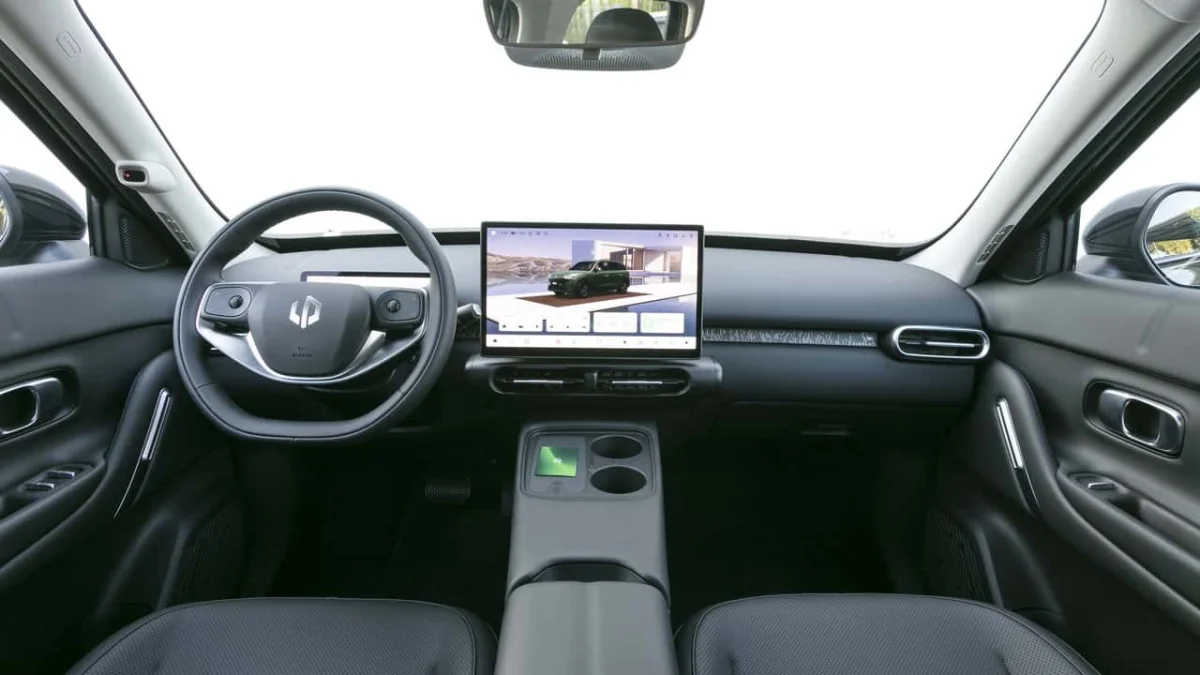
Inside, the parts list includes two Recaro seats and harnesses sourced from the R35, plus a NISMO steering wheel and custom trim accents. The six-speed shifter and clutch pedal complete the cabin’s performance theme. Nissan hasn’t described changes to passenger space, cargo capacity or daily-use features, so the concept offers little evidence yet about how much practicality would remain if this equipment reached a production sedan.
A tuner name with a question mark over production
Spec-V revives a familiar performance name for Sentra fans and nods to the older SE-R models that built a following among tuners. Nissan says the SEMA project is intended to connect with that community. For buyers, the more consequential question is whether the company sees enough demand to turn any part of the concept into a showroom offering.
The source expects production to be unlikely, while suggesting that some sportier elements could eventually reach the Sentra through NISMO. That leaves a wide gap between a 300-horsepower concept and a confirmed road car: Nissan hasn’t announced a production version, an availability window or pricing. The GR Corolla, Elantra N, Civic Type R, WRX and Golf GTI show that performance-focused compact cars remain part of the market, but the concept alone doesn’t establish that Nissan will join them.
There’s also a broader opening in Nissan’s sedan range. The source points to the end of the Maxima’s big 300-horsepower V6 and the absence of a turbo Altima as reasons the brand has fewer performance-oriented sedan talking points. A sharper Sentra could give enthusiasts a new entry point and restore some of the nameplate’s tuner appeal, if Nissan chose to develop one.
For now, the Spec-V is best read as a show-car proposal: a manual Sentra with a turbocharged 2.0-liter engine, major chassis changes and parts from Nissan’s performance models. What matters next is whether any of that specification survives beyond the SEMA display.