2027 Mercedes-AMG GLS63 Review: 603 HP, Launch Control and a $156,800 Starting Price
The refreshed GLS63 keeps its 603-hp V8 and adds launch control. It’s brutally quick, though its size and touch-heavy cabin still impose compromises.
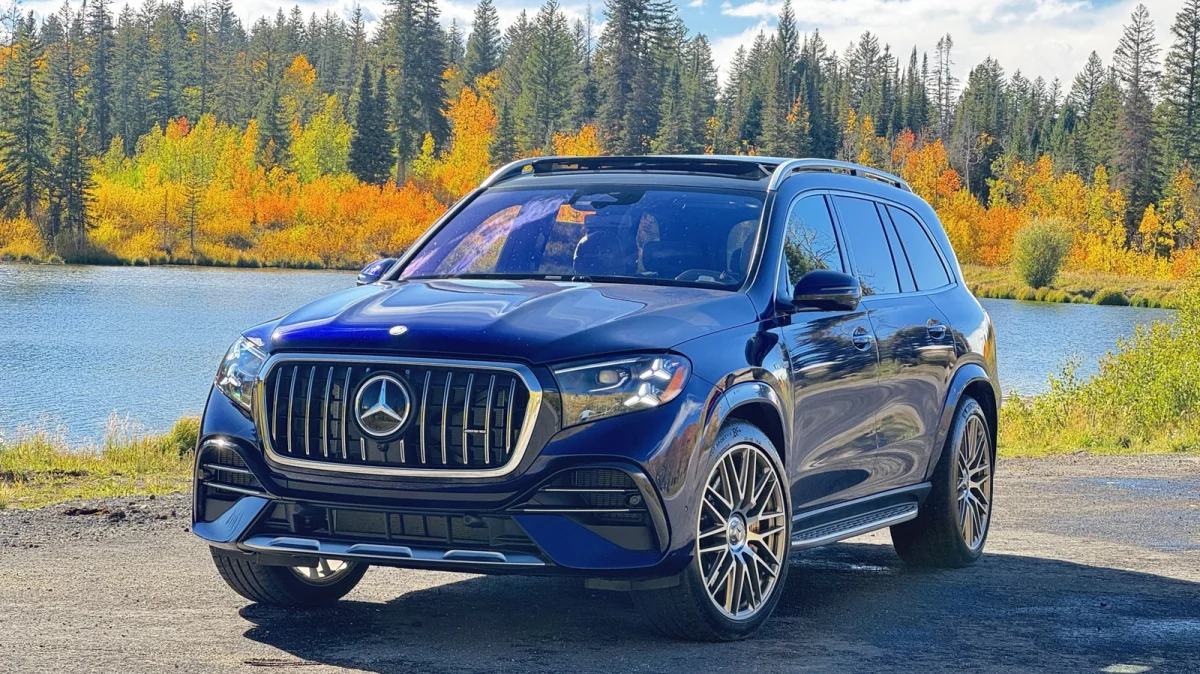
The 2027 Mercedes-AMG GLS63 makes its case with a 603-horsepower V8, a new launch-control function and the sort of straight-line speed that feels surreal in a three-row SUV. The second facelift brings updated styling and cabin technology, but the biggest change to the AMG experience is a feature that makes an already excessive family hauler even more entertaining.
There are practical limits to the appeal. The GLS63 weighs 6,118 pounds, starts at $156,800 before options and can feel its mass on tight, wet roads. Its refreshed dashboard also combines a broad glass panel with a center display the reviewer found cramped and awkward to use. This is a niche choice built around spectacle, with space and performance that few buyers need but some will find hard to resist.
A second facelift for Mercedes’ largest SUV
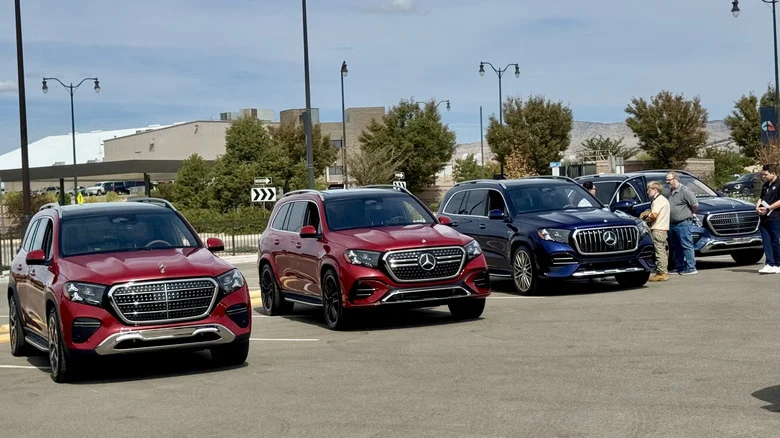
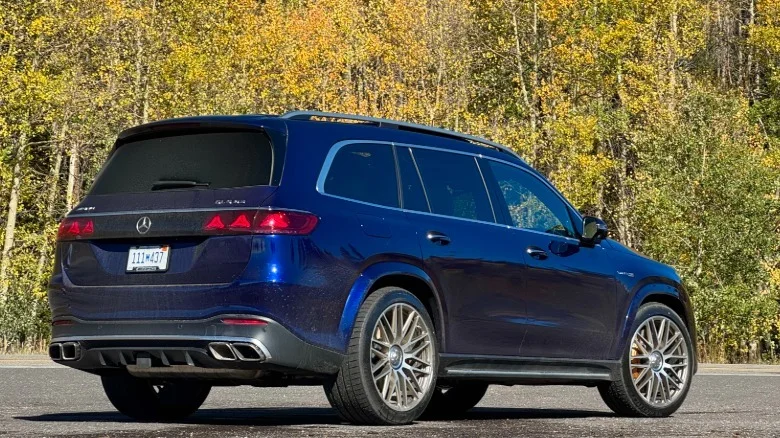
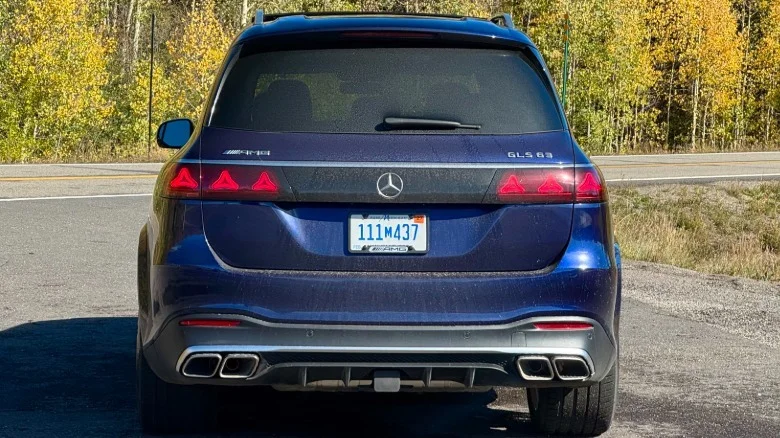
The GLS is Mercedes’ biggest SUV, positioned as the high-riding counterpart to the S-Class. This update is its second facelift, following changes to the S-Class and the smaller GLE. The GLS’s revised appearance brings the latest Mercedes styling cues: two three-pointed stars sit inside each headlight, while the taillights each contain three more. Black trim frames the grille and connects the rear lights. The reviewer preferred the cleaner look of the outgoing model, though the styling will come down to taste.
The non-AMG models also gain changes that mirror the refreshed GLE. The GLS450 retains its turbocharged 3.0-liter inline-six and 375 horsepower, but a more powerful mild-hybrid system and electric auxiliary compressor lift torque by 44 pound-feet, to 413 lb-ft. It starts at $95,500, including destination, and was already available at dealerships when the review was written.
The GLS580 moves to the M177 Evo twin-turbocharged 4.0-liter V8 with a flat-plane crank. Mercedes lists output at 530 hp and 553 lb-ft, with a claimed 0-to-60-mph time of 4.5 seconds. Its starting price is $122,500, and it was also expected to be at dealerships already. The reviewer especially liked the related GLE580’s powertrain and driving character, suggesting the GLS580 could be a strong middle ground for buyers who want a V8 without stepping up to the AMG.
Across the range, equipment updates include cloud-based air-suspension damper controls, optional E-Active Body Control air suspension and standard micro-LED Digital Light headlights. Mercedes also fits its next-generation driver-assistance equipment; the company says an over-the-air update will eventually enable point-to-point, hands-free “Level 2++” driving. The cabin gains the same broad technology update as the GLE.
The cabin mixes new screens with familiar controls
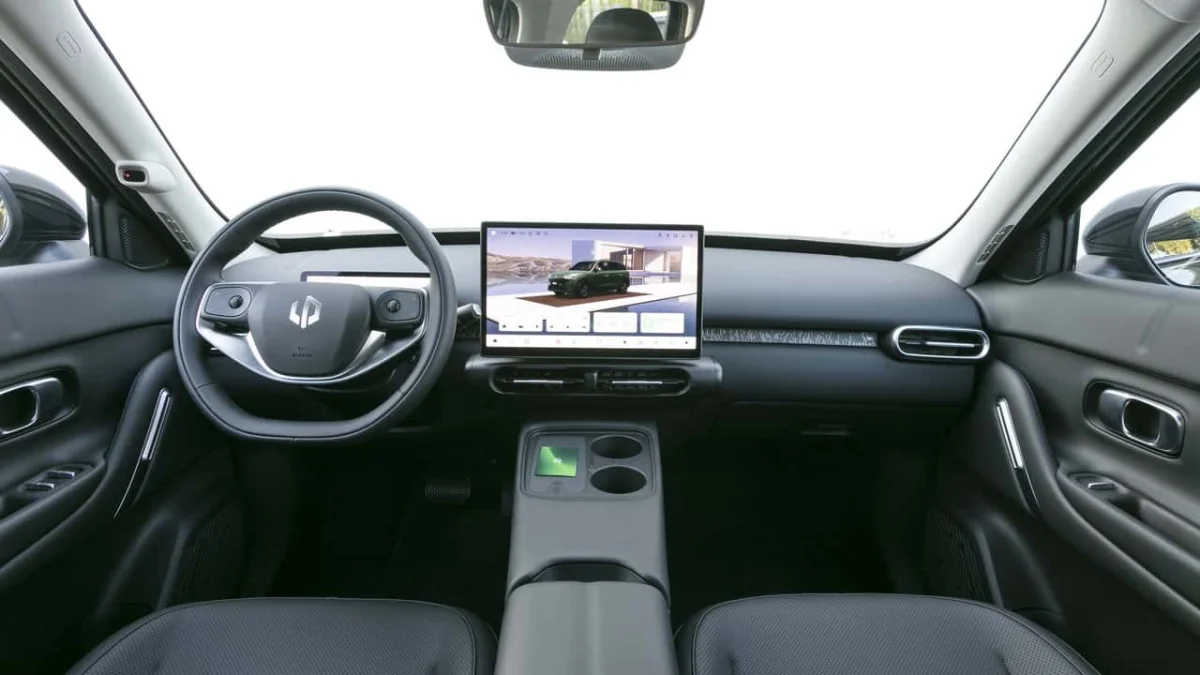
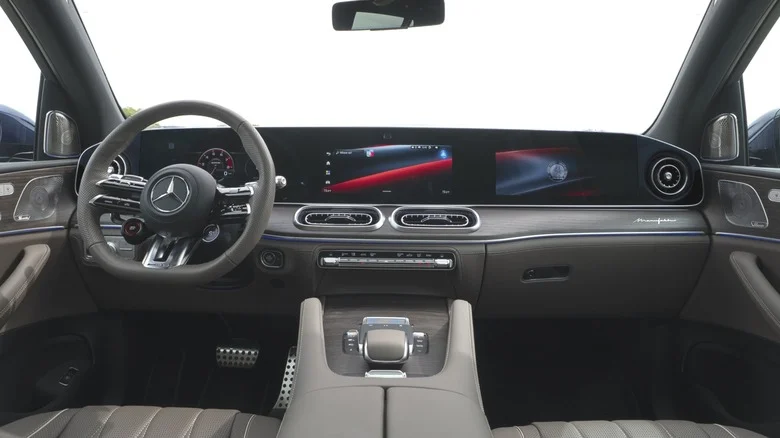
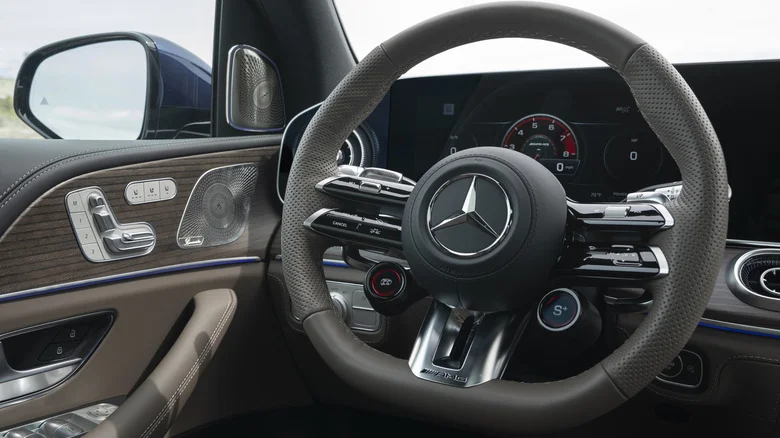
The dashboard’s centerpiece is Mercedes’ Superscreen: three separate 12.3-inch displays beneath one piece of glass that stretches across the cabin. The driver’s display looked good to the reviewer, and the AMG steering wheel gains a physical volume roller and cruise-control toggle. Most other steering-wheel controls remain touch-sensitive, however, and the reviewer found them frustrating to operate.
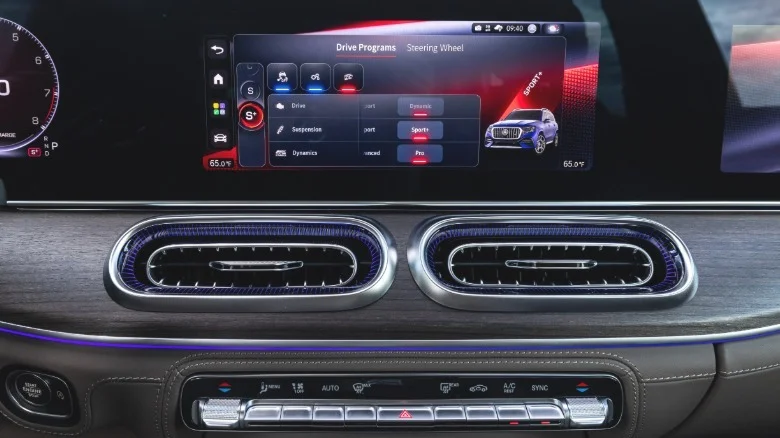
The center infotainment display drew sharper criticism. Its squat shape makes it feel small relative to the surrounding glass, and wide black bezels add to the sense that the screen doesn’t make full use of the space. Mercedes’ new MB.OS interface also takes time to learn. A console-mounted touchpad offers another way to navigate its menus, while physical climate controls remain on the center stack—useful carryovers from the platform’s earlier design.
AMG models give the front passenger a dedicated touchscreen that can display powertrain information, including how much horsepower the SUV is using. That data is a fun fit for the GLS63. The reviewer found the screen less useful for other tasks and pointed out a more basic omission: passengers can’t use it to adjust their seat’s massage function or expanded settings. They have to reach across to the center display instead.
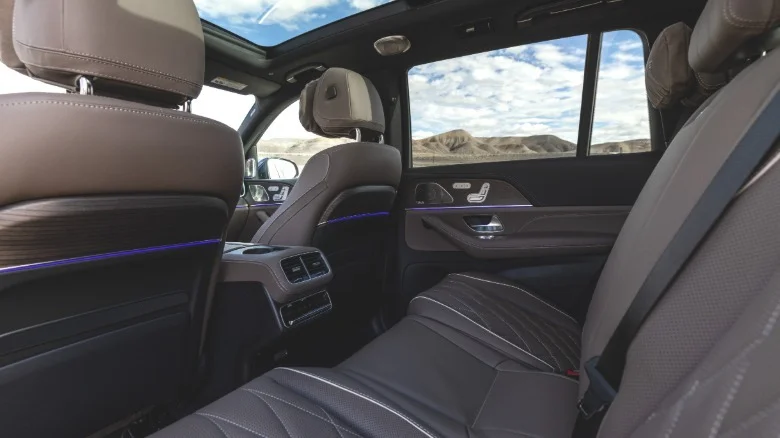
Storage is another everyday compromise. Despite the GLS’s size and family role, the front cabin offers few convenient places to put items beyond the split center armrest. The platform dates to 2020, and its mix of newer screens, retained physical controls and limited storage makes that age apparent.
Launch control gives the V8 a new party trick
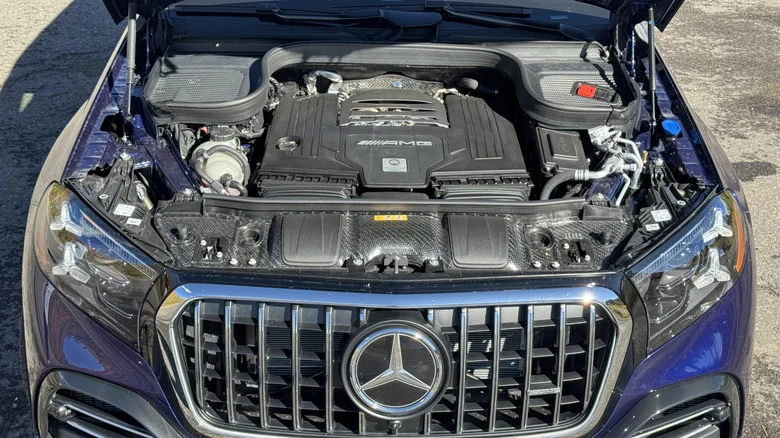
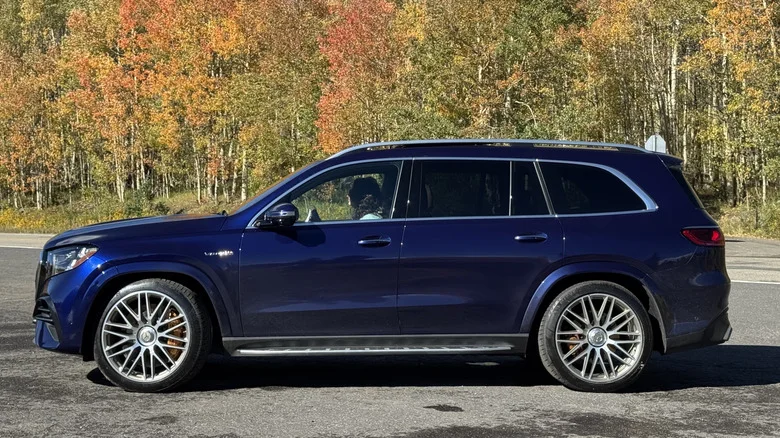
The GLS63 keeps its hand-built twin-turbocharged V8, rated at 603 hp and 627 lb-ft—the same output as last year. Mercedes says the engine has been revised, but the review didn’t identify a change to its headline figures. What’s new is launch control, which turns the three-row SUV’s acceleration into a carefully staged event.
To activate it, the driver selects Sport+, presses the brake and accelerator together, then releases the brake. The reviewer describes the seatbelts tightening before the SUV surges forward. Mercedes estimates a 0-to-60-mph run of 3.9 seconds. In a brief drive, the GLS63 felt close to that pace and particularly forceful in a straight line.
The Cadillac Escalade-V is a useful comparison for the GLS63’s over-the-top character. Its supercharged 6.4-liter LT4 V8 produces 682 hp and 653 lb-ft, exceeding the Mercedes’ output, while the source describes the AMG as the quicker vehicle. The Escalade-V introduced launch control when it arrived in 2023, four years after the current-generation GLS63 first appeared. Mercedes’ addition gives its flagship SUV a similar acceleration feature, although the AMG’s appeal rests on more than a number: its V8’s startup snarl and deep sound under full throttle were highlights of the drive.
Quick on a straight, heavy in a corner
The test vehicle paired Manufaktur Mystic Blue Metallic paint with Truffle Brown Nappa leather. It also had optional 23-inch AMG forged multi-spoke wheels and optional carbon-ceramic brakes measuring 15.8 inches at the front and 14.2 inches at the rear. The brakes delivered formidable stopping power, but their response felt too grabby to the reviewer: small pedal inputs repeatedly produced sharp deceleration. For everyday use, that option may be difficult to modulate.
On Colorado’s winding mountain roads, the GLS63’s size was impossible to ignore. Standard AMG Ride Control+ air suspension with active roll stabilization kept body roll in check, and Michelin Pilot Sport 4S tires—285/40 at the front and 325/35 at the rear—helped the SUV tackle sporty driving. But neither hardware nor grip could hide its roughly 6,100-pound mass. In tight corners it pushed wide, and on wet pavement it could move around under braking. The reviewer didn’t feel comfortable pressing hard on the greasy, leaf-strewn road.
The drive was too brief to compare the GLS63 directly with the GLS450 or GLS580, and the conditions made it hard to judge the AMG’s limits on dry tarmac. Even so, it proved more capable on a twisting road than a vehicle this large might suggest. Its strengths are clearest in acceleration and sound; its weight remains part of the driving experience.
A fast, expensive expression of excess
The 2027 GLS63 is a 603-hp luxury SUV with three rows, a 3.9-second claimed sprint to 60 mph and a starting price of $156,800 before options. Its launch control makes the performance easier to access, while the updated cabin and styling bring the model into line with Mercedes’ recent changes. Yet the screen layout, sparse front storage and heavy-handed optional brakes are real ownership considerations, and mountain-road handling can’t make a vehicle this big feel small.
For buyers considering the GLS range, the choice is straightforward in character even if the price gap isn’t: the GLS450 offers more modest power at a lower entry price, while the GLS580 adds a V8 and a claimed 4.5-second 0-to-60 time. The AMG sits above them for drivers who want maximum acceleration and theater. It’s an extravagant way to move a family, but the V8 and launch control make clear that practicality was never the whole point.
The refreshed Mercedes-Benz GLS arrives as the brand updates its larger SUV lineup, following the S-Class refresh and the 2027 GLE. The AMG GLS63’s closest in-house context is the AMG GLE53, while its high-output SUV comparison includes the Cadillac Escalade-V. For now, the GLS63’s defining trade is clear: huge performance and presence, with the mass and cabin quirks that come with a very large SUV.