Off-Road Miata Buddy Wins NORRA 500 Vintage Stock Sedan Class
Buddy became the first Miata to race in Baja and won its class at the NORRA 500, overcoming mechanical failures, penalties and a tropical storm.
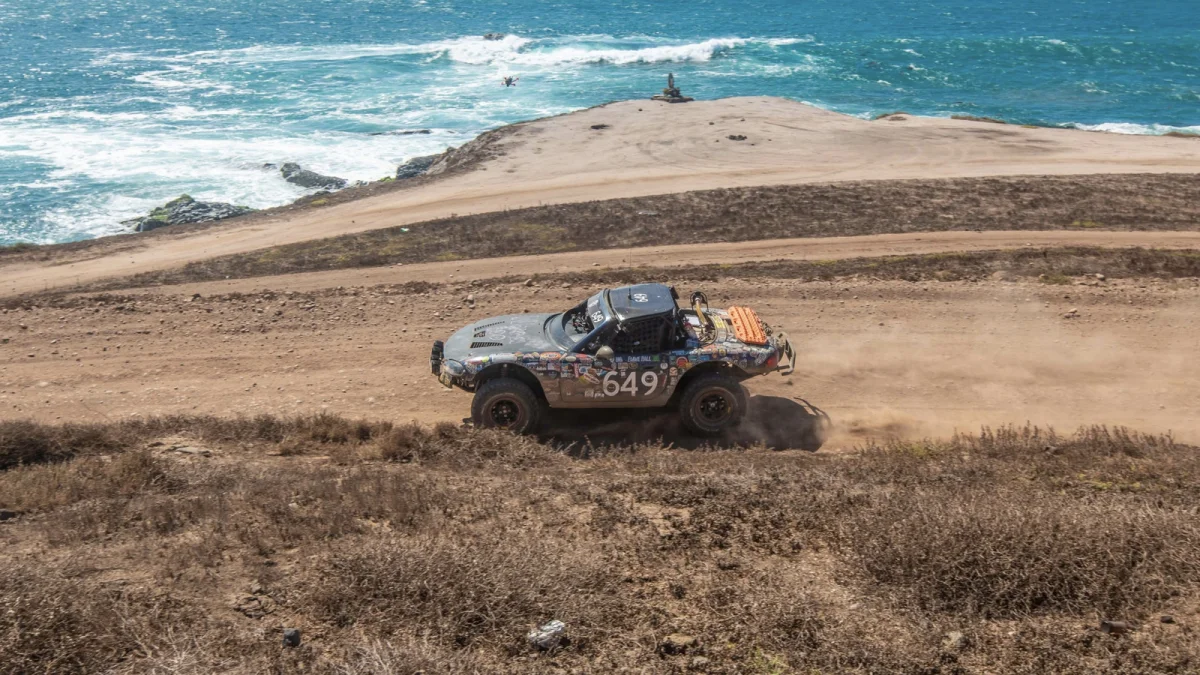
A lifted Mazda Miata has claimed a class win at the NORRA 500, showing how far a small roadster can be pushed when the route turns rocky, muddy and remote. Driver Emme Hall and navigator Robbob Stewart finished first in Vintage Stock Sedan, with Buddy averaging 23.55 mph across the dirt and reaching a best-stage average of nearly 33 mph. The result also made Buddy the first Miata to race in Baja.
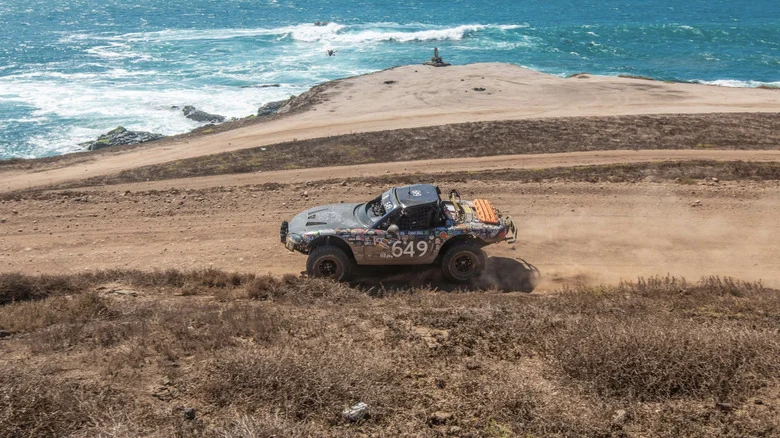
The win came with asterisks familiar to anyone who has raced a long off-road event: penalties, incomplete stages and repairs made under pressure. Hall and Stewart’s main aim was to finish. They did, though the car and crew had to work through a broken fuel-pump relay, a damaged rear alignment setup and a final road section that Hall describes as the scariest part of the race.
A rally format in Baja
NORRA’s 500-mile event runs more like a stage rally than a continuous sprint. Crews follow a roadbook that marks hazards and use GPS to navigate, while check-in times, waypoints and paved transit sections add their own demands. There’s no pre-running, so competitors meet the course as they go. In the dark, Hall and Stewart found themselves climbing steep, rocky hills without knowing whether the section would end in minutes or keep going for much longer.
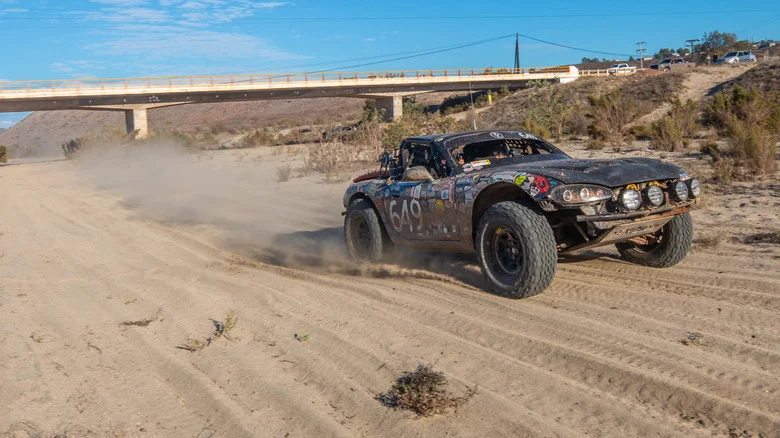
Buddy’s setup helped on the rough ground. A 5.38 final drive and turbocharged engine let Hall keep the car moving in first gear, while a welded differential and 29-inch BFGoodrich KO2 tires helped it climb over rocks and through ruts. The lights did not all cooperate: three Rigid LED pods illuminated the track, while a fourth pointed skyward.
Hall and Stewart also had to keep track of the event’s logistics. Early check-ins and a missed stage finish line brought penalties. Both had raced NORRA before, but they hadn’t kept every detail under control this time. Their priority was simply to get Buddy to the finish.
Breakdowns reshape the first day
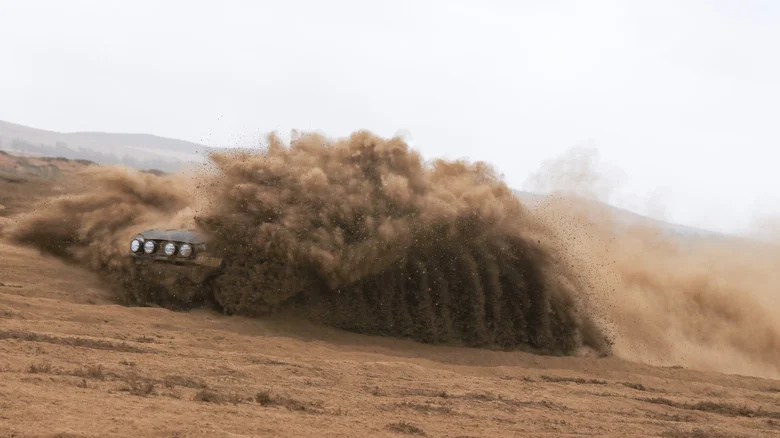
Starting toward the back of the pack in Ensenada, the team began Stage 1 on familiar roads near Erendira, where Hall has a house. The first major obstacle was a beach crossing strewn with smooth stones ranging from tennis-ball to soccer-ball size. The course climbed across the beach on an off-camber line, and Buddy lacked the momentum to make it through. A NORRA sweep vehicle pulled the car free.
Later, the fuel-pump relay broke loose from its mounting tabs, leaving Buddy stopped on the course. The crew of a 1976 International Harvester Scout Terra pushed the Miata far enough to clear the way, then towed it to a safe spot. Hall’s local chase crew arrived with a replacement relay, and the car was running again after the fault was diagnosed.
The delay cost time that the team couldn’t recover. They reached the dirt on Stages 2 and 3 but didn’t complete all the miles, bringing substantial penalties. At the end of the day, VETTS in Motorsports and Hall’s local chase crew serviced Buddy roadside in San Quintin. A bolt joining the lower ball joint to the control arm was missing, but the stock lower control arms, axles, steering rack, tie rods and transmission showed no cracks or bends.
Rain, a wandering rear end and a finish
Conditions deteriorated on day two as Tropical Storm Rachel followed the racers and the tide came in. Hall and Stewart took penalties to avoid muddy terrain, while some competitors sank in water crossings. Buddy made it through the rocky beach at Erendira without help, then crossed silt beds and mud, bounced through whoops and picked up speed on smooth farm roads. Hall says they reached up to 70 mph.
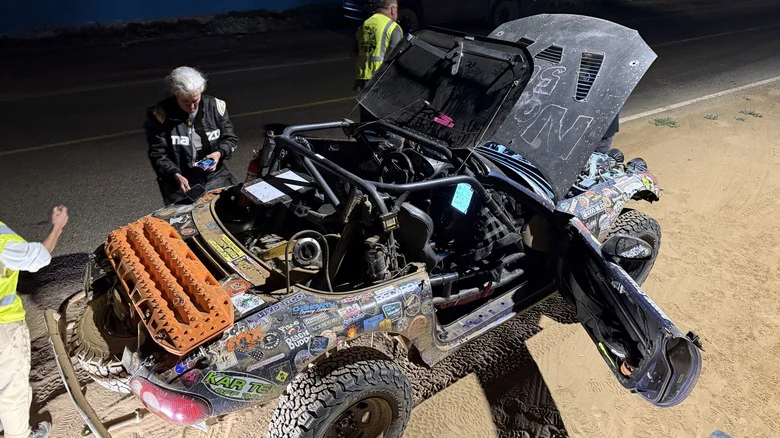
About 30 miles from the final stage finish, the adjustable rear alignment bolts failed. Buddy no longer tracked straight, so Hall slowed down and kept the car moving. The pair crossed the last special-stage finish just before the rain began.
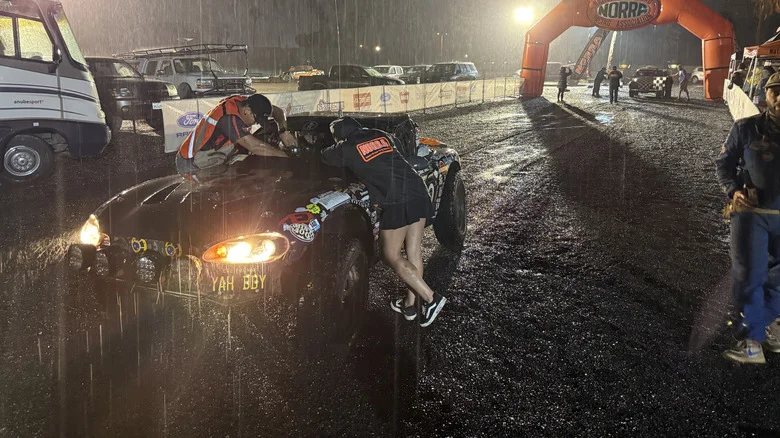
That left a 21-mile pavement run to Ensenada in darkness and heavy rain. With no windshield and the car threatening to drift toward oncoming traffic or off the road, the transfer was, in Hall’s account, more frightening than the racing itself. The crew took the final checkered flag in pouring rain, then waited out the storm in a bar.
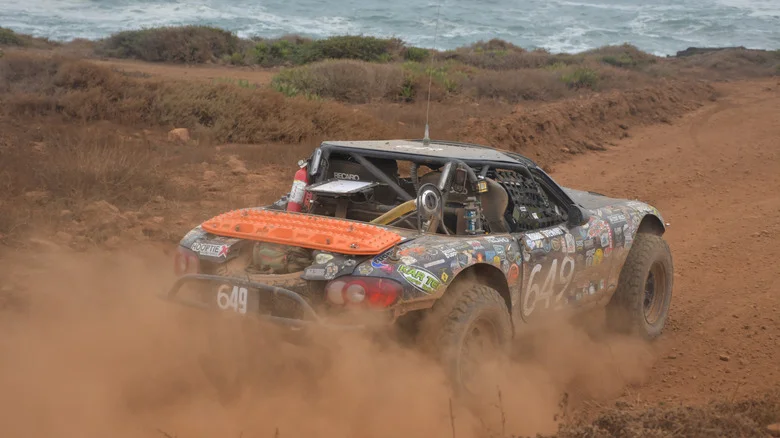
Hall received the class trophy and the Mary McGee trophy, awarded to the female driver who displays the most grit and determination. McGee raced the first Baja 1000 in 1967 in a Datsun 510 and later rode motorcycles solo in Baja races. For Hall, the award capped a two-day effort that asked as much of the crew’s judgment and persistence as it did of Buddy’s hardware.
The support behind the Miata
Hall credits John McMurrin of VETTS in Motorsports with helping make the run possible. The organization provides pit support to veterans who have a race car but need people and equipment to compete. McMurrin, a Navy veteran who has worked with Stewart for several years, said racing can give veterans a mission and an objective as they transition to civilian life. His role includes sharing racing knowledge and helping co-drivers learn tasks such as setting up radios and GPS units.
Off-road support requires a mobile setup that can move quickly and carry tools, fuel and repair gear. Hall’s own pit kit consisted of a five-gallon dump can, wrenches and a Harbor Freight jack. McMurrin arrived in a heavy-duty GMC with a 55-gallon fuel drum and electric pump, fueling mat, safety gear, welder, power and lighting, SAE and metric tools, and a heavy-duty floor jack. He programmed the GPS, scouted pit locations and added a Zello push-to-talk satellite communications system to Buddy.
McMurrin also helped Stewart get a racing suit from Impact Racing and a helmet from PCI Race Radios. Hall notes that those essential pieces of equipment can add thousands of dollars to a racer’s costs.
A long list of contributors
Hall thanked her chase crew—Rebecca Donaghe, Jim Jordan, John Adolph and VETTS—along with local support from Cesar Galleta and Robelonches. Advanced Engine Dynamix supplied the engine, which Hall says held up through the race, and BFGoodrich provided the KO2 tires. Rugged Radios handled communications between driver and navigator, while Fox Shocks helped control Buddy through the whoops despite only five inches of suspension travel.
Paco Motorsports supplied the rear upper control arms and gearing. The car also uses 3D-printed bump stops from Perry Parts and an aluminum radiator from Mishimoto. Hall says the race was livestreamed through Starstream, with interior and exterior cameras connected using Starlink, though poor wiring caused audio problems. The stream is available through her YouTube channel.
Buddy’s next race is scheduled for Laughlin, Nevada, in December. After a class win earned through repairs, penalties and two days of punishing terrain, the clearest measure of the Miata’s Baja debut is simple: it reached the finish under its own power, and took home the hardware.