2027 Polaris RZR Pro R Boost Review: 275 HP for Dunes and Rock Trails
A turbocharged 275-hp engine makes the Pro R Boost quicker and more versatile, but its $50,000 starting price and need for a trailer narrow its appeal.
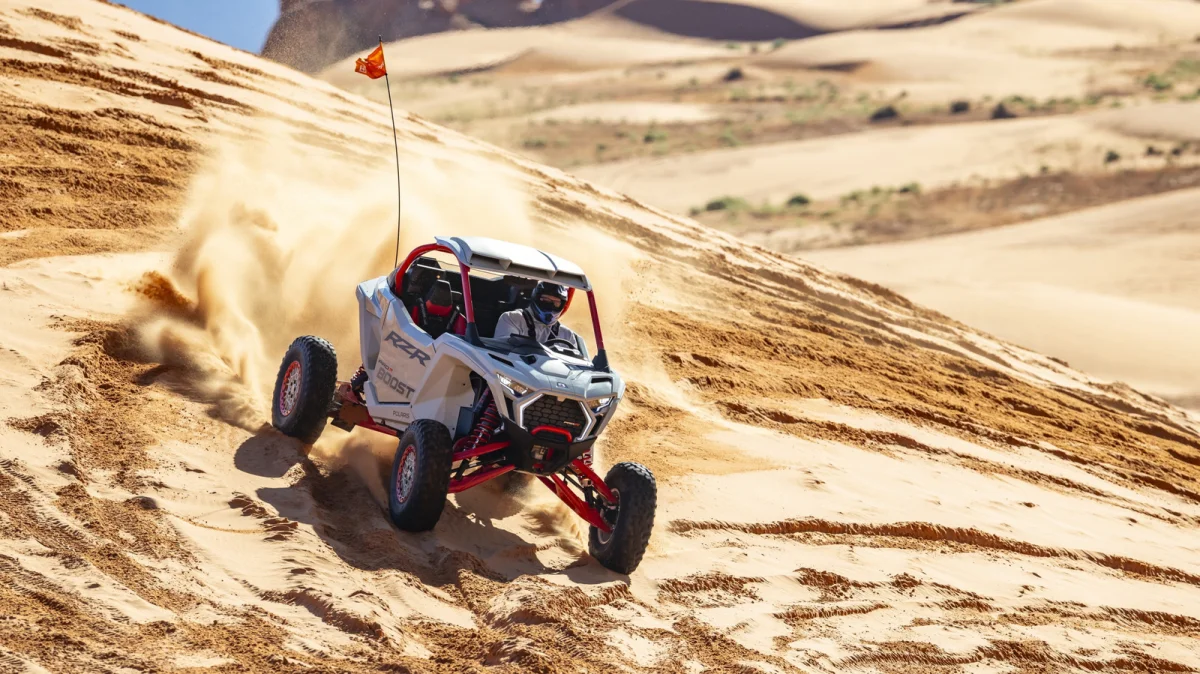
The 2027 Polaris RZR Pro R Boost turns extra horsepower into more than faster dune runs. Its turbocharged 2.0-liter engine makes 275 hp, while revised drivetrain parts and selectable settings help the machine tackle sand and rocky trails. After a day in southern Utah, my read is that it’s a remarkably capable, entertaining side-by-side—but at $50,000 to start, it’s a high-priced way to spend weekends off-road.
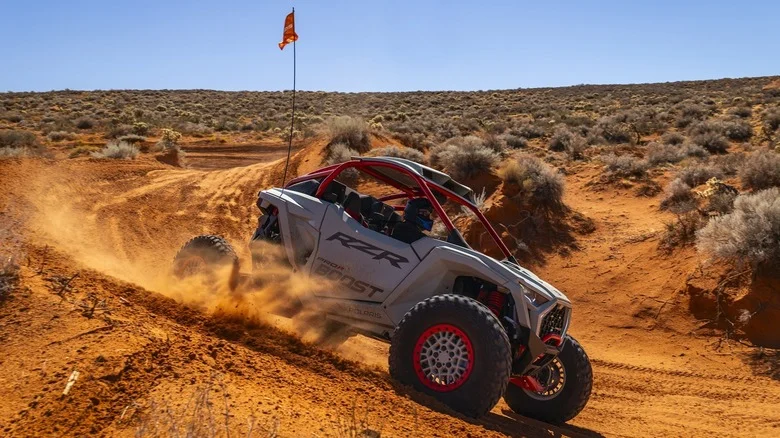
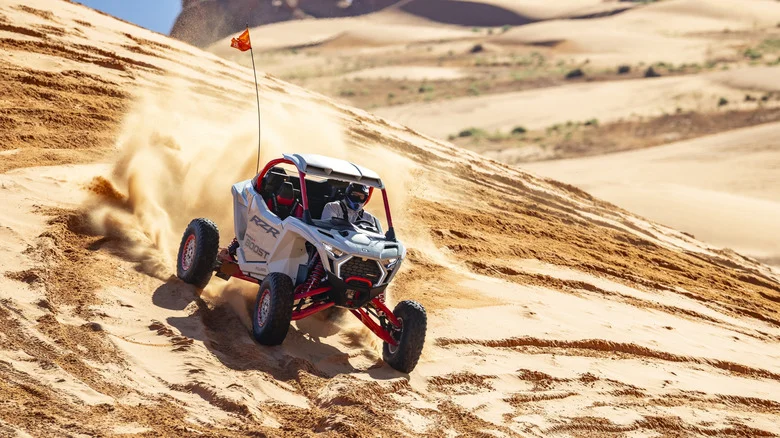
The conditions at Sand Mountain OHV Park played to the Boost’s strengths. Overnight rain left the dunes packed and grippy, while the cool air suited the turbocharged engine. The RZR dug in and accelerated hard, with the extra power easy to appreciate on climbs and across open sand.
Polaris invited me to St. George, Utah, for the drive, provided a hotel near the park, and covered meals and drinks. I’ve driven fast side-by-sides from Polaris, Can-Am and other makers. The naturally aspirated RZR Pro R arrived with 225 hp; since then, the Can-Am Maverick R has reached 240 hp and the Kawasaki Teryx H2 250 hp. The Boost’s 275 hp puts Polaris back ahead of those figures, a 22 percent increase over the standard Pro R.
Power you can use
Peak output makes an easy headline, but the engine’s torque delivery matters more when the surface gets steep or loose. The ProStar Fury 2.0-liter turbo four revs beyond 8,000 rpm and produces 223 lb-ft at 6,000 rpm. It makes 215 lb-ft from as low as 4,000 rpm, with strong torque available across much of the rev range. That broad delivery should help the Boost pull hard without demanding constant high revs.
Polaris worked with Garrett on the 60-millimeter turbocharger and its integration with the exhaust manifold. The company says the setup is designed to maintain peak power at elevations up to 10,000 feet and ambient temperatures up to 115 degrees, without derating. That claimed operating range could matter to owners riding in hot, high-altitude areas, where conditions put extra demands on an engine.
More power required changes beyond the engine. Polaris developed a heavy-duty clutch package and redesigned its housing with additional cooling fins and improved airflow. Those revisions are intended to manage heat and extend the expected service life of the clutch and drive belt. The front drive system, continuously variable transmission and halfshafts were also redesigned to handle the added output.
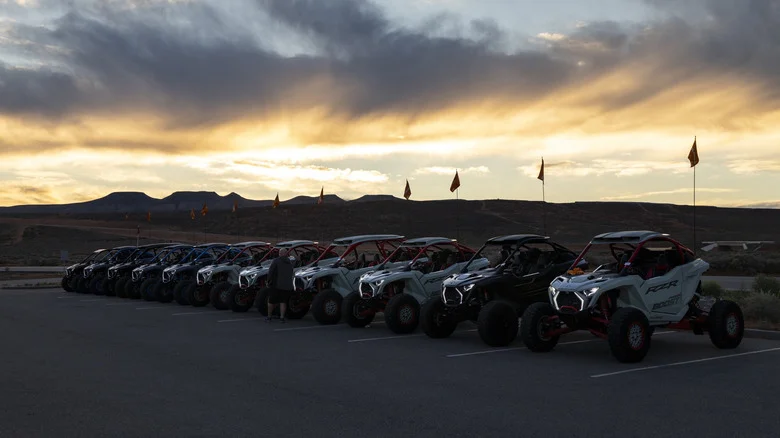
There’s also a scoop built into the roof. It isn’t connected directly to the engine intake or radiators; Polaris says it directs fast-moving air downward toward the rear-mounted radiators and engine intake. The arrangement avoids running a physical duct through the cabin, which would affect visibility and airflow around the occupants. I couldn’t measure what difference the scoop makes, but it’s a distinctive detail on a machine with plenty of more consequential hardware.
The turbo also brings a welcome change in sound. The Boost is still loud enough to feel like a serious off-road machine, but the turbine takes some edge off the engine compared with the naturally aspirated Pro R. After a full day, I didn’t have the ringing-ear feeling I’ve had after louder rides. Revised engine isolation also aims to improve responsiveness while reducing vibration in the cabin.
A familiar cockpit, with a tight spot
The cabin will feel familiar to anyone who’s been in an RZR. At 6 feet 2 inches and 290 pounds, I fit comfortably, though my right knee occasionally met the center console over rough ground. It also found the ignition key at times, an awkward contact point when the machine was bouncing. Some padding around the console would help.

On the move, the Boost feels immediate and responsive. Steering inputs, braking and throttle all contribute to how the machine changes direction, and the driver can use them together to influence its movement across the surface. I’m usually drawn to fast cars on pavement, but the RZR delivered a kind of fun that’s hard to match in a street car: quick reactions, loose terrain and room to keep going instead of waiting for another short session.
The comparison with a track day is part of the appeal. A day at the dunes offers long stretches of driving, changing terrain and plenty of time to build confidence. The RZR comes with six-point harnesses and an integrated roll structure, as the source vehicle’s equipment; I wouldn’t treat that as a guarantee of injury prevention. Off-road riding still calls for care, particularly when the terrain is unfamiliar.
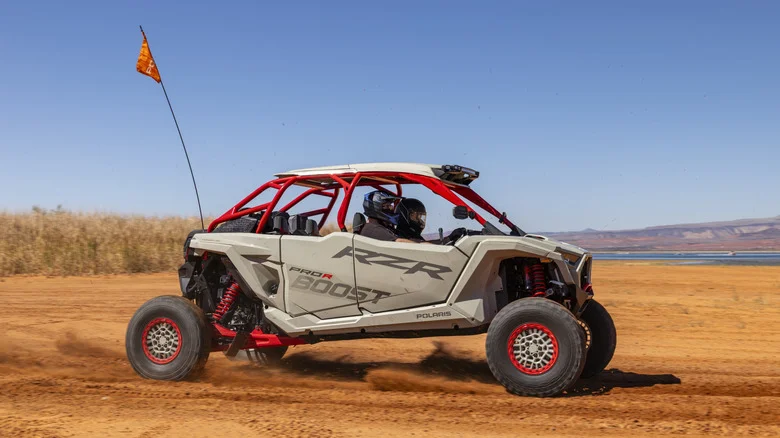
My fastest run of the day stayed below 50 mph, and there were stretches when the speedometer showed single digits. That didn’t make the ride feel slow. The combination of traction, quick response and constantly changing ground kept the driving engaging, and I ended the day wanting more time behind the wheel.
Sand, rock and one set of tires
Polaris split the drive between dune and trail riding in the morning and rocky terrain in the afternoon. The company’s route showed the machine’s range, from open sand to narrow paths and red-rock steps. The obstacles on the ride didn’t seem close to the vehicle’s limits; a more experienced driver could likely attempt terrain that I wasn’t ready to tackle. Most recreational owners may find their own comfort and skill level becomes the constraint first.
The factory tires worked well in the dunes. Paddle tires might have made the sand runs quicker and more playful, but they would have been a poor choice for the rocky trail linking the route to the dunes. I didn’t get stuck without them. For someone who wants one setup for different terrain, the standard tires make a good case for the Pro R Boost as an all-rounder.
When the route shifted to rocky trails, changing the throttle map and suspension settings took only a few button presses. Rock mode softened the throttle response, while comfort mode on the suspension helped absorb drops and uneven ground. The machine remained composed over rough sections, even without airing down the tires. Its suspension travel and ride height also meant I could focus less on threading a perfect line through every bump.
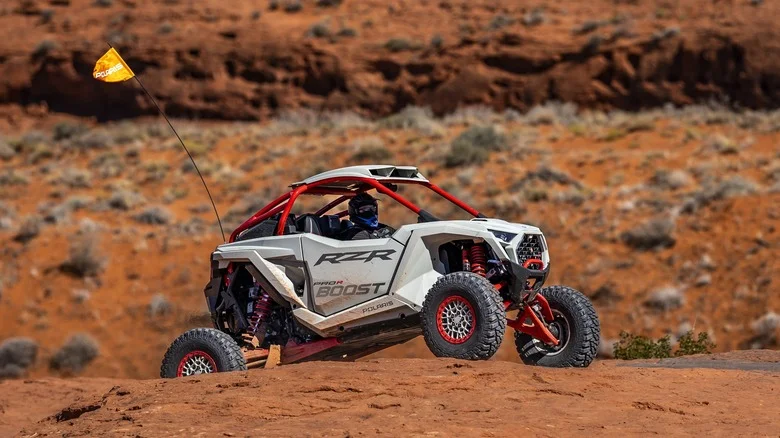
The rock steps made the engine’s usable torque especially clear. Some ledges were taller than the tires, with smooth, rounded edges that made the approach look uncertain. A short application of throttle carried the RZR over and on to the next obstacle. That mix of power, control and grip is the Boost’s strongest argument: it can move between fast sand driving and slow technical crawling without asking the owner to build two separate machines.
The price of weekend fun
The two-seat RZR Pro R Boost starts at $50,000. That puts it in competition with other expensive hobbies as much as with other side-by-sides. It lacks the comfort and convenience of a new car, and it isn’t street legal in most states. Unless you have large private property to explore, you’ll also need a truck and trailer to reach riding areas.
For a buyer comparing it with an off-road truck or SUV project, the Boost offers a purpose-built package for sand, trails and rock crawling. Its strength is range: the same machine that can carve through dunes can also work over technical terrain after a change of settings. That breadth comes with a steep entry price, and ownership makes most sense for someone who can regularly get it to places where it can be used.
Owners of the naturally aspirated Pro R may find the upgrade harder to justify. The turbo version adds 50 hp, but that increase costs a lot, and the existing machine is already powerful. For a new buyer seeking a top-tier side-by-side, though, the Boost has a strong case on performance and versatility. It’s expensive, demanding to transport and best suited to people with time for regular trips. If those pieces fit, the payoff is a machine that makes both dune runs and rock trails feel like a reason to plan another weekend outside.