2027 Volkswagen Atlas Review: More Refinement, More Features and a Hybrid on the Way
The redesigned Atlas adds a quieter ride, a more polished cabin and useful standard equipment, while keeping its three-row practicality and adding modestly to the price.
The 2027 Volkswagen Atlas has a clear job: keep families considering a three-row SUV interested in VW. It does that with a more refined cabin, a quieter ride and a stronger equipment list, while holding the starting-price increase to $2,300. The redesign doesn’t transform the Atlas into an enthusiast’s choice, and there’s no hybrid yet. But it makes a familiar, practical SUV feel substantially more finished.
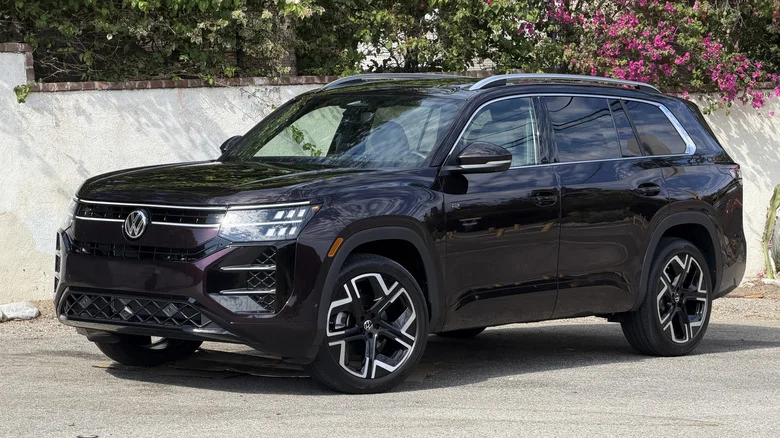
That matters because the Atlas has become central to Volkswagen’s U.S. business. SUVs now account for 80% of the brand’s sales, up from 14% a decade ago. Since the first Atlas arrived in 2017, the Atlas family—including the two-row Atlas Cross Sport—has passed 1 million sales. The three-row model alone nearly matches the compact Tiguan. After two facelifts, the outgoing Atlas was showing its age; this second generation aims to keep that sales role with a broader set of improvements.
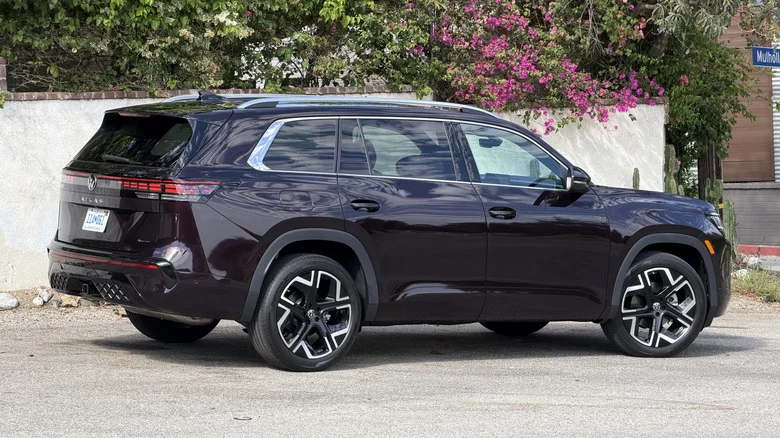
The drive described here took place in a fully equipped Atlas on Los Angeles roads, including the Hollywood Hills. The first-generation model was Volkswagen’s first vehicle designed specifically with the U.S. market in mind, and the new one remains tailored to the same large-SUV priorities: space, comfort and a substantial presence.
A familiar footprint with a cleaner look
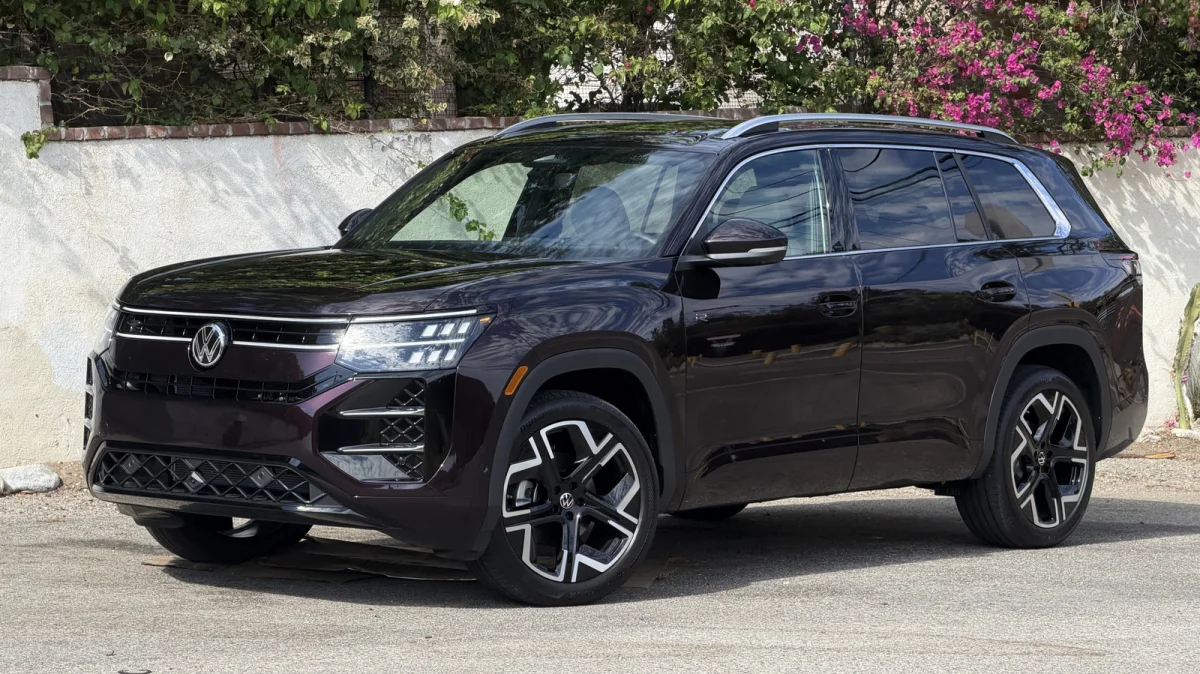
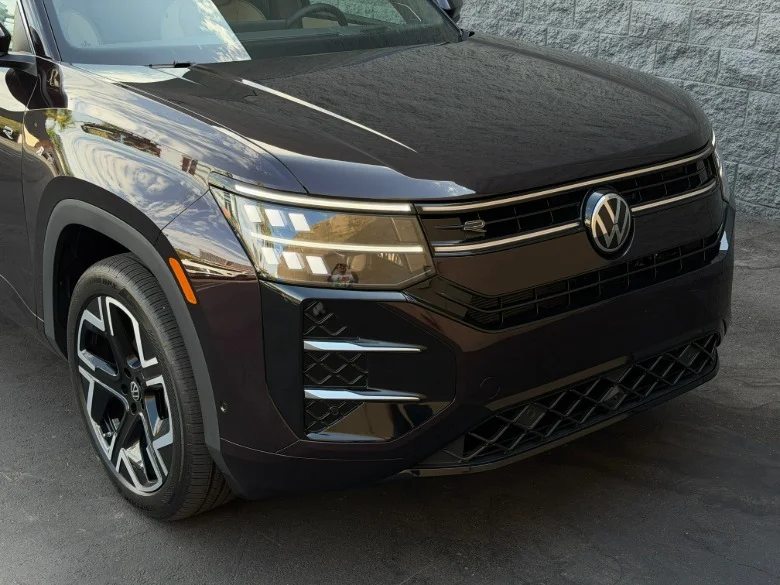
The new Atlas is slightly longer than its predecessor, but its overall dimensions and cabin space remain close to the previous model. Volkswagen has taken an evolutionary approach to the styling, with a cleaner exterior and more purposeful front end. Dual light bars and an illuminated VW badge are standard above the base trim; the top model can add projected lighting. The hood is flatter, the fender flares are more defined, and the proportions are squarer. Those details support the imposing look Volkswagen says buyers in this segment want.
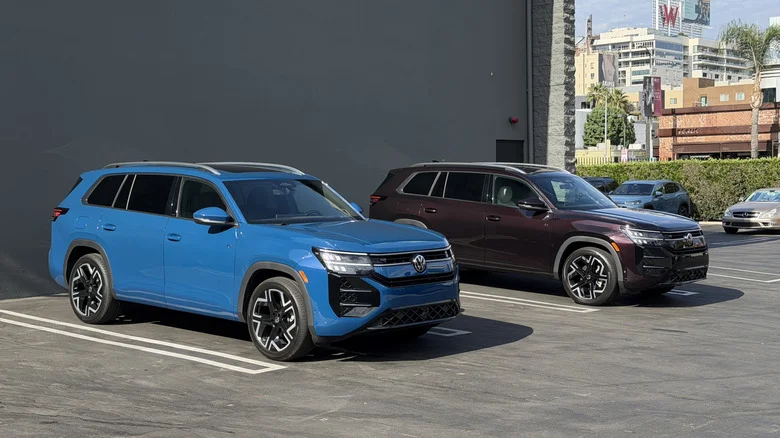
Color is a welcome bright spot. Mountain Lake Blue carries over, while Sacramento Green and Blackberry join the palette. The test vehicle wore Blackberry. Wheel choice is less persuasive: 18-inch wheels are standard, with 20- and 21-inch options, but the designs feel plain against the more distinctive bodywork.
Volkswagen’s customer profile for the Atlas is unusually specific. The company says 51% of owners are women, the average owner is 54, and the average household has three people and earns $170,000. Millennials make up 34% of buyers, compared with 31.9% for baby boomers. Those figures give some context to the model’s emphasis on an elevated driving position and a strong visual presence.
A more inviting cabin, with familiar interface flaws
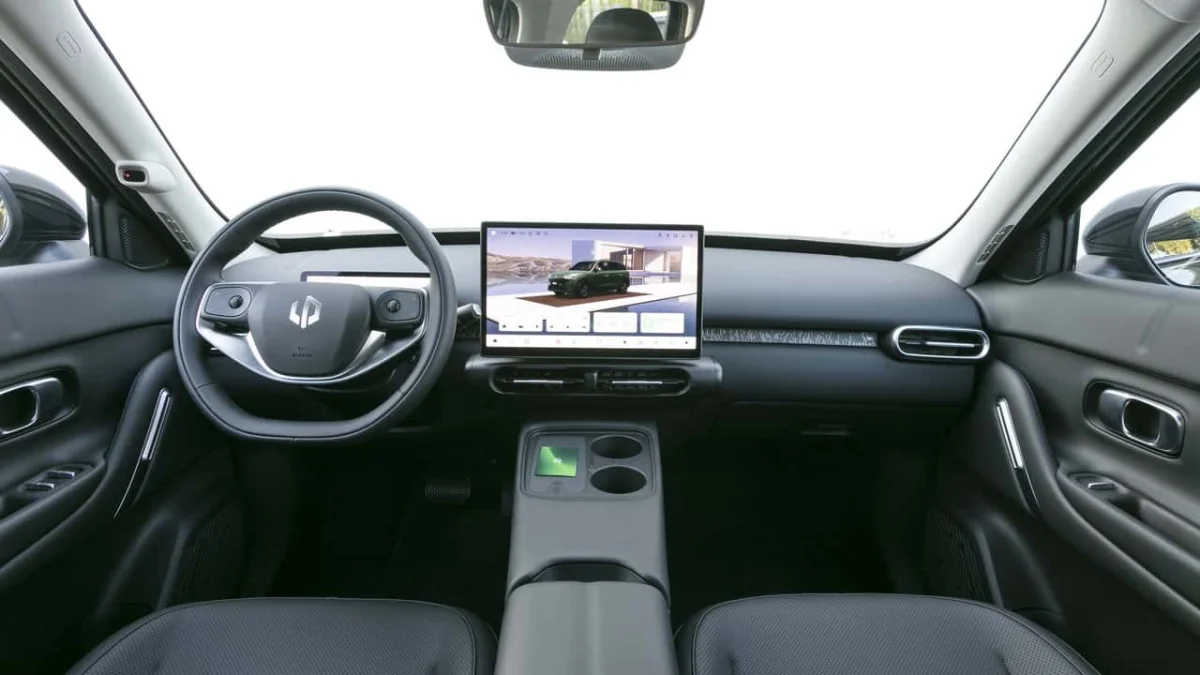
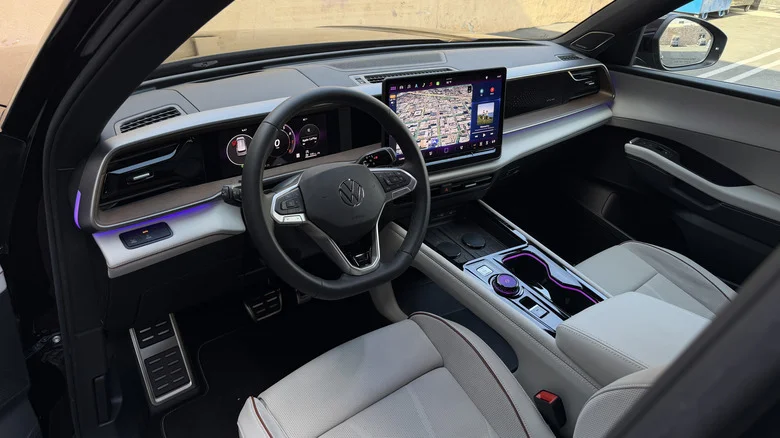
The interior feels like a significant step up in materials and design. The dashboard has a layered layout, and the center console leaves useful open space beneath its raised bridge. There’s room for a small bag, the cupholders are larger, and the storage under the armrest has grown. Two wireless phone chargers include MagSafe capability, a particularly well-executed detail for drivers who rely on wireless charging.
Screen size depends on trim. The base SE gets a 12.9-inch central touchscreen; other versions use a 15-inch display with clear graphics, a customizable home screen and menus that are manageable after a little familiarization. The touch-sensitive climate controls remain an irritant. At least the steering wheel uses physical buttons, which are easier to operate by feel.
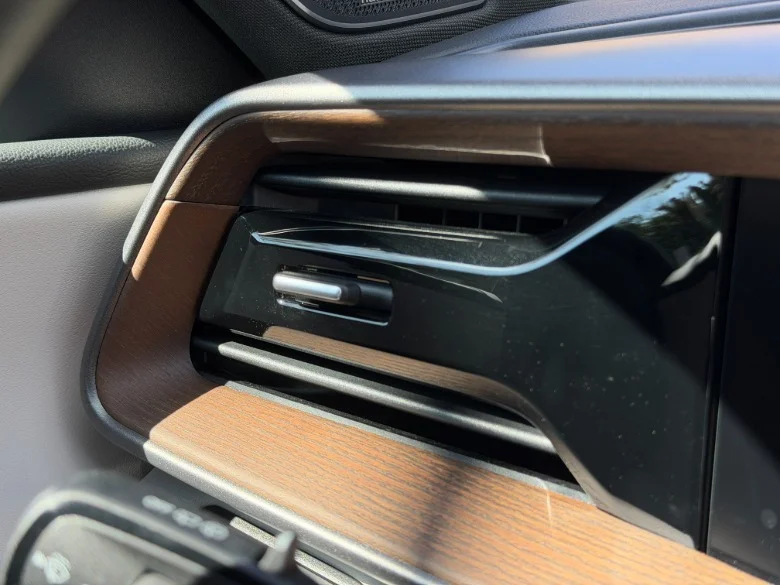
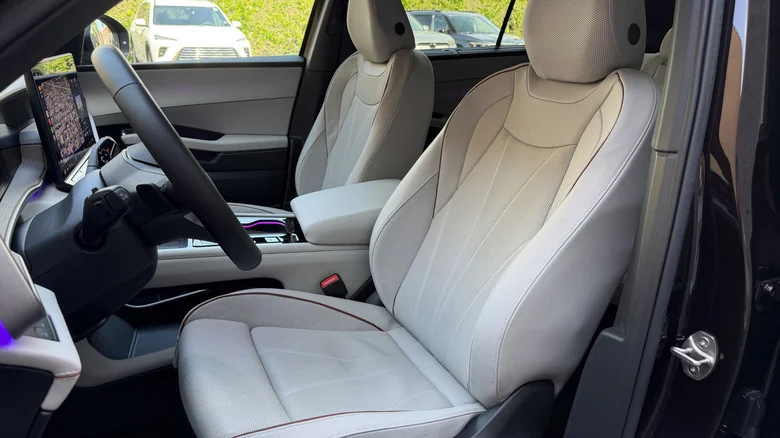
The premium trim adds off-white leather with brown piping, contrasting dashboard stitching, faux wood trim and door panels with ambient lighting. Most of the surfaces drivers regularly touch are padded. Still, the details don’t all match the cabin’s upscale intent. The faux wood pieces have a conspicuous seam, and their grain and color don’t line up. Shiny black trim and scratchy plastics remain in places, while several physical controls feel cheaper than the rest of the interior. The dual-level air vents from the previous design are gone.
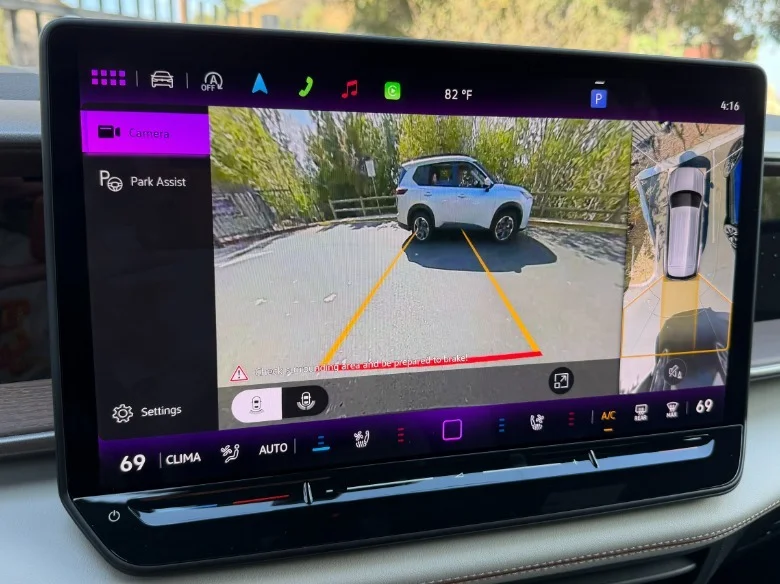
The most disappointing piece of technology is the top trim’s 360-degree camera. Its image looks poor, especially when enlarged on the big display. That’s a glaring weakness in a vehicle whose size makes a clear view around the body useful.
Turbo power with a quiet, comfortable character
Every 2027 Atlas uses Volkswagen’s EA888 evo5 turbocharged 2.0-liter four-cylinder, also found in the turbo Tiguan and related to the engine in the GTI. Here it produces 282 horsepower and 258 pound-feet of torque. That’s 13 more horsepower than the outgoing Atlas, though torque falls by 15 pound-feet. An eight-speed automatic sends power to the front wheels in the SE and SE with Tech. Four-wheel drive is a $2,000 option on those trims and standard on the two SEL R-Line versions.
Volkswagen hasn’t provided a 0-to-60-mph time. Its fuel economy estimates show modest gains over the old model. Front-wheel-drive versions are rated at 22 mpg city, 29 highway and 25 combined. With four-wheel drive, the figures are 20 city, 27 highway and 23 combined.
On the test drive, the engine felt responsive through the hills and had a pleasant sound under acceleration without becoming intrusive. The cabin stayed quiet even with the optional 21-inch wheels, and the suspension handled rough pavement comfortably. The brake pedal felt softer than ideal, but the throttle response was reassuring. Steering is not especially lively; handling is composed for a large three-row SUV.
Sport mode sharpens the steering, but doesn’t change the Atlas into a sporty vehicle. Drivers can also adjust steering response in Individual mode. A center-console dial handles drive-mode selection and also controls volume and other settings, with a small display on its face changing to match the function.
Room for passengers and gear
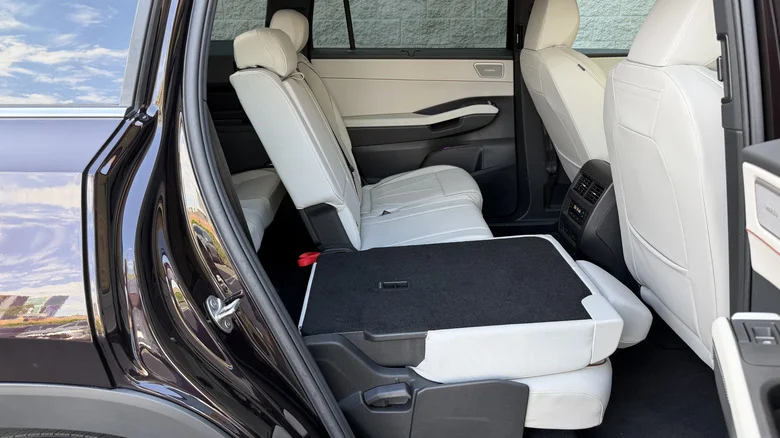
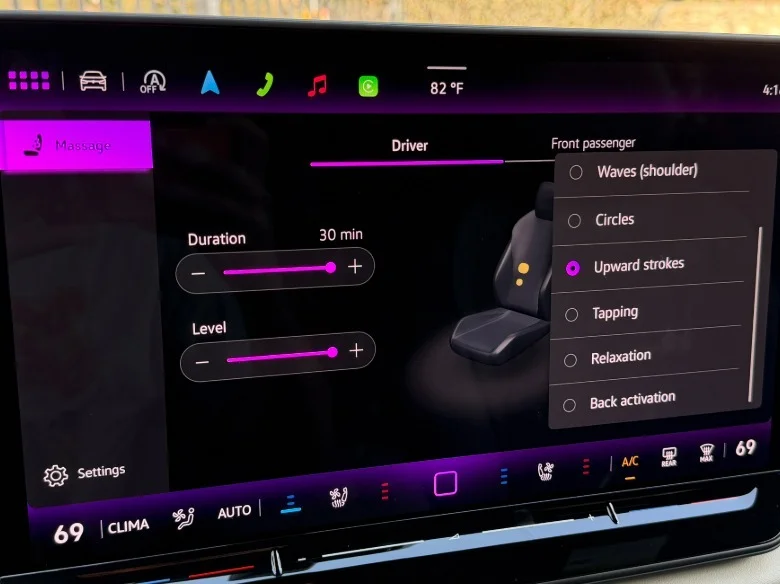
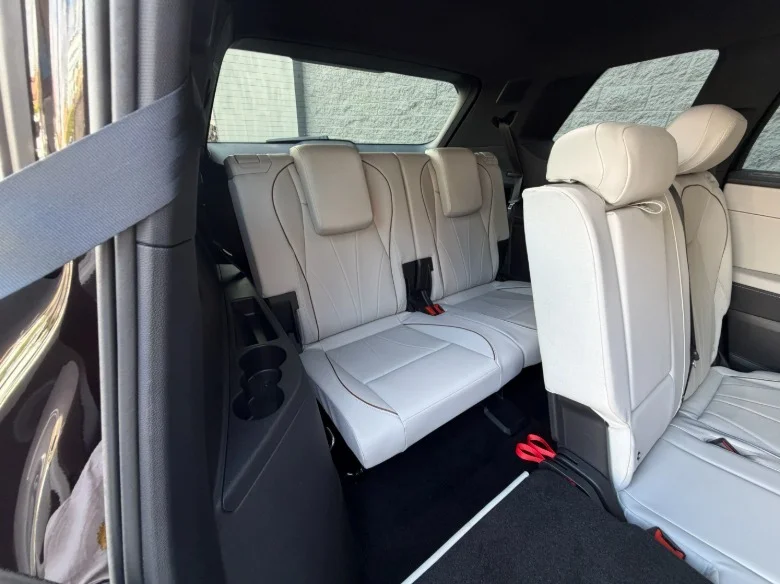
The Atlas’s high seating position, tall windows and large mirrors make it easy to see out. The hood is prominent, giving the driver the traditional SUV view over the road. The front seats are comfortable, and the R-Line’s 14-way adjustable Nappa leather seats add a massage function on the top trim. The second-row bench slides and reclines, with a 60:40 split. On the R-Line models, the outer second-row seats are heated and ventilated. Captain’s chairs are available for $695.
Access to the third row is straightforward: the second-row seats slide and fold quickly. A driver measuring 5 feet 9 inches found it easy to get in and out, though the rear seats are better suited to children than adults on longer trips. Third-row passengers get cupholders, small storage cubbies, C-pillar air vents and USB-C ports, but no seat heating or ventilation.
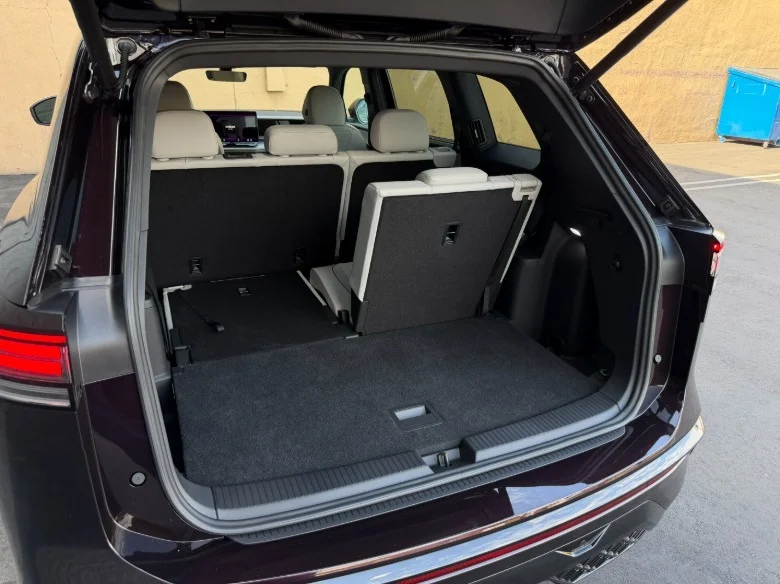
Cargo space measures 21.2 cubic feet behind the third row, 55.9 cubic feet with that row folded and 95.4 cubic feet with both rear rows down. Underfloor storage and two hatch-area lights come standard across the range.
Every trim includes heated and ventilated front seats, a heated steering wheel, a 12-way power driver’s seat, second-row sunshades, a hands-free power tailgate, three-zone climate control, 10-color ambient lighting and a nine-speaker sound system. Higher trims and options add 30-color lighting, a power-adjustable front passenger seat with lumbar support, a 14-speaker Harman Kardon system, navigation, a head-up display, front-seat massage and a panoramic sunroof.
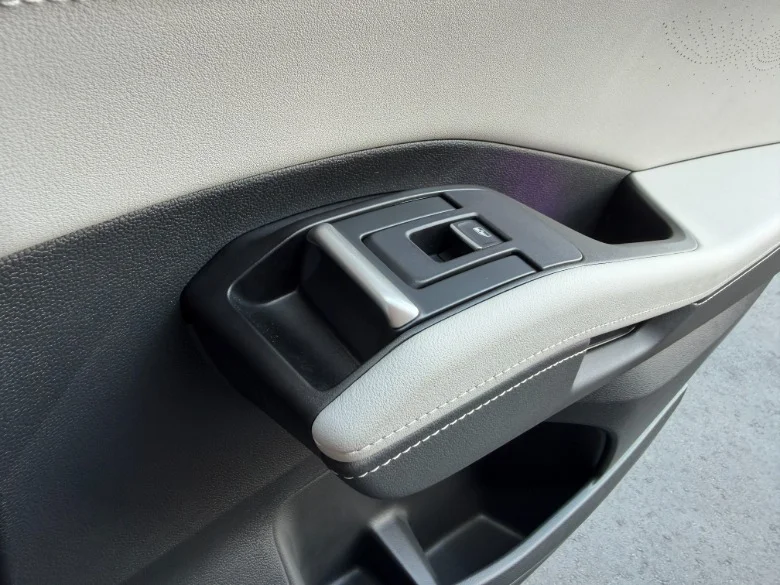
Some everyday controls are less polished. Even the top trim has a manually adjustable steering column. The unusual, inverted U-shaped door releases may take a little getting used to, while the physical window switches and mirror controls are immediately familiar.
Prices and the missing hybrid
The front-wheel-drive SE starts at $43,135, including destination. That’s $2,300 above the outgoing front-wheel-drive SE. The SE with Tech is priced at $47,135 with front-wheel drive and $49,135 with four-wheel drive. The four-wheel-drive-only SEL R-Line costs $53,635, while the loaded SEL R-Line Premium is $58,125. The Premium’s price is $2,030 above the equivalent 2026 trim.
The redesigned Atlas offers a more refined drive, a nicer-feeling cabin and a useful range of standard features for a moderate increase over its predecessor. It may not have the visual flair or technology appeal of the Hyundai Palisade or Kia Telluride, but the improvements make the Atlas a stronger contender for buyers who value space and comfort. The recent redesign of the smaller Tiguan suggests VW is finding a more convincing formula for its family SUVs.
The key gap is fuel-saving choice. Volkswagen says an Atlas hybrid is planned for the model’s mid-cycle update in a few years. Until then, shoppers comparing well-equipped versions should weigh the Atlas’s improved comfort and equipment against hybrid alternatives such as the Kia Telluride. The new Atlas is a more complete SUV today; a hybrid option could make it a stronger fit for drivers focused on fuel economy.