2027 Mercedes-Benz GLE Review: Strong Engines and Chassis, Aging Cabin
The refreshed GLE’s engines and suspension make a strong case, while its screens, cabin materials and storage lag behind newer rivals.
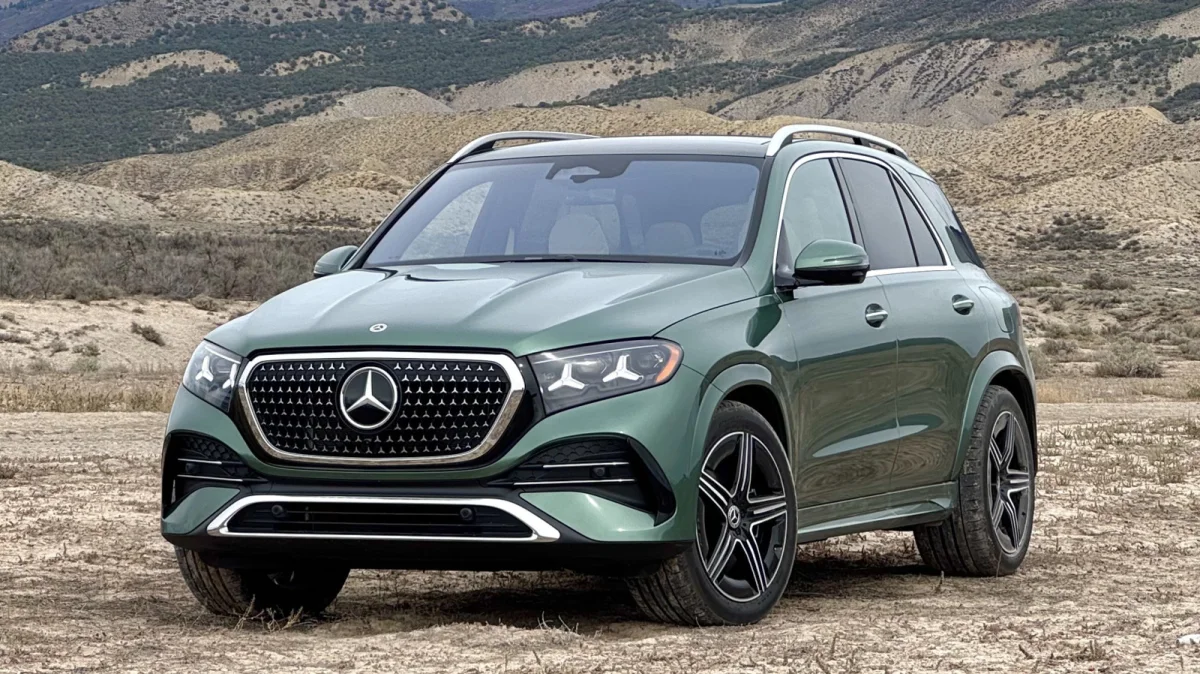
The 2027 Mercedes-Benz GLE makes its best case from behind the wheel. Revised engines and suspension give this second facelift a polished, engaging character, especially in the V8-powered GLE580. The cabin technology and some materials tell a different story: the platform is showing its age, and the new screens don’t make every task easier.
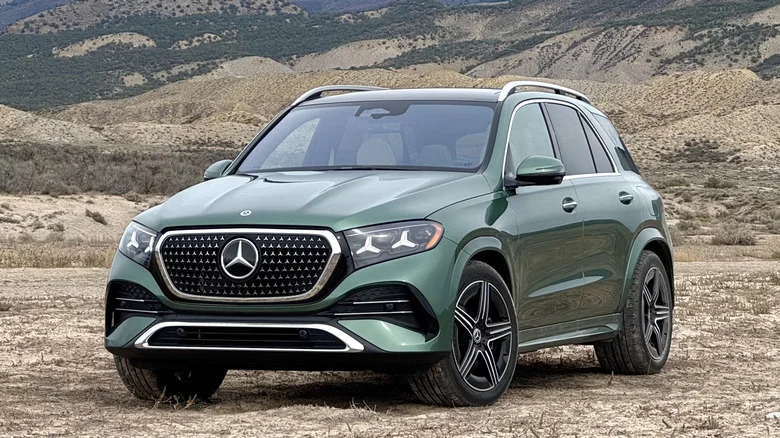
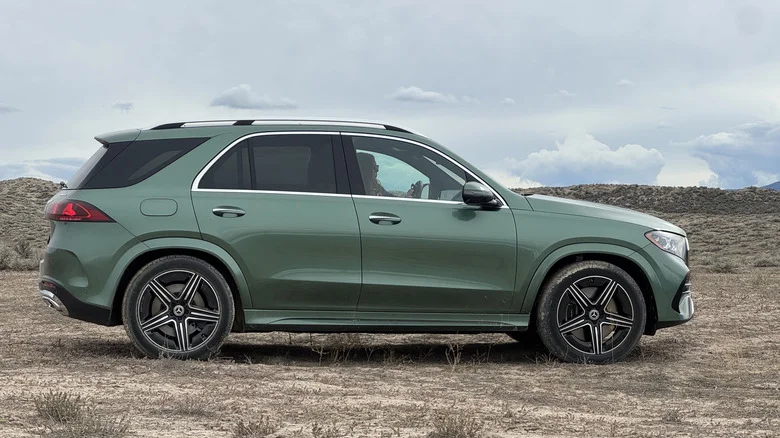
That split matters in a crowded luxury SUV class. Mercedes has been selling a midsize SUV since the 1998 M-Class, later renamed GLE. The current, fourth-generation model arrived for 2020 and received a facelift in 2023. For 2027, Mercedes has updated both the SUV and Coupe body styles, with revised styling, powertrains, suspension and technology. The result looks current from the outside, but the underlying vehicle still reveals older design choices in the cabin.
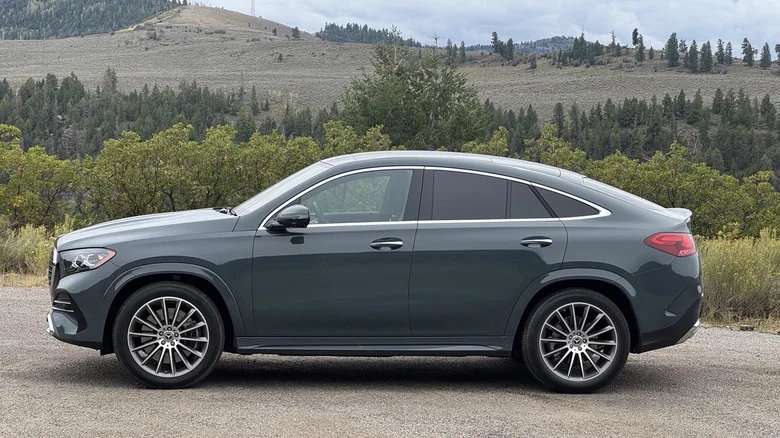
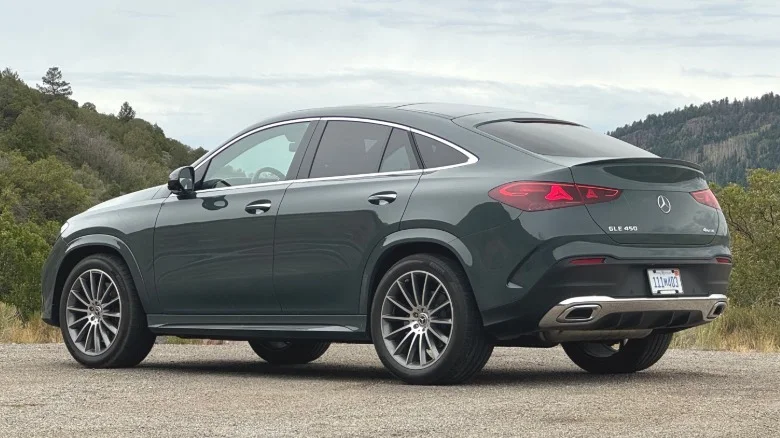
The GLE comes standard with all-wheel drive. Buyers can choose a conventional SUV or a sloping-roof Coupe, though the GLE450 is the only non-AMG powertrain available in Coupe form. The Coupe has a wheelbase 2.3 inches shorter than the SUV’s and more direct steering, but gives up rear-seat space. Here’s how the refreshed range stacks up—and where the driving experience makes the clearest difference.
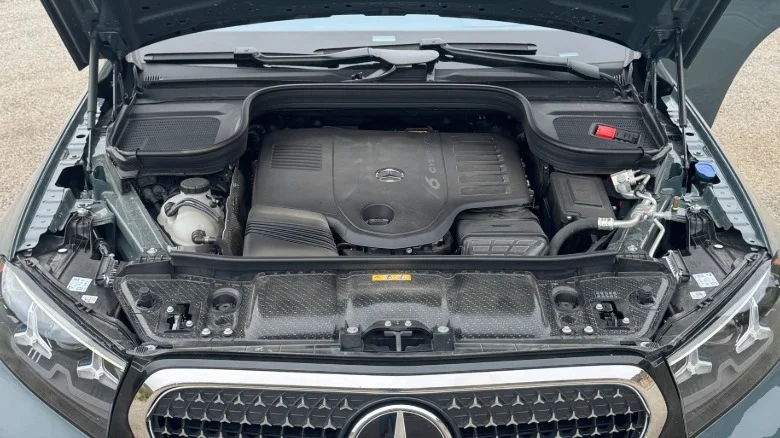
Four powertrains, with a clear price spread
The entry point is the GLE350 SUV, starting at $69,850. Its updated turbocharged 2.0-liter inline-four produces 255 horsepower and 295 lb-ft of torque. A 48-volt mild-hybrid system can add 23 hp and 151 lb-ft. I didn’t drive this version, so its real-world character remains an open question; on paper, it brings a substantial assist from the mild-hybrid system, but the source drive didn’t establish how it compares with the outgoing four-cylinder model.
The GLE450 is the only conventional powertrain offered in both body styles. Its updated turbocharged 3.0-liter inline-six, paired with a mild-hybrid system, makes 375 hp and 413 lb-ft. Mercedes quotes a 0-to-60-mph time of 5.0 seconds for the SUV and 4.9 seconds for the Coupe. The SUV starts at $76,250; the Coupe costs $82,750, a $6,500 premium.
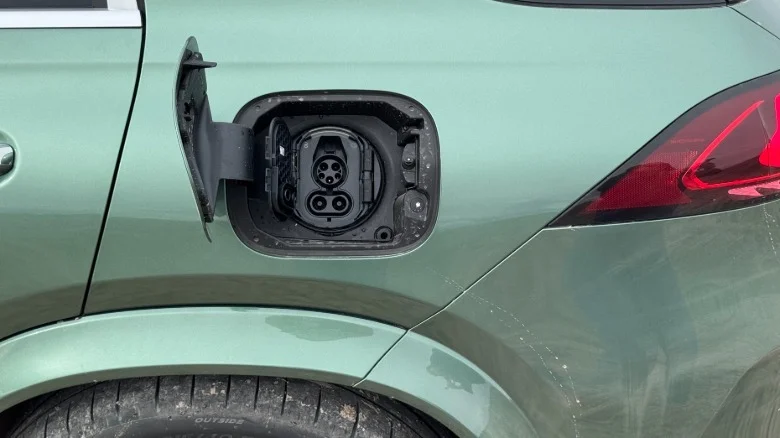
The GLE500e plug-in hybrid replaces the outgoing four-cylinder GLE450e. It pairs a turbocharged inline-six with a 181-hp electric motor integrated into the transmission housing and a 25.3-kWh battery. Combined output is 429 hp and 502 lb-ft, with a quoted 0-to-60 time of 5.3 seconds. Mercedes expects more than 40 miles of electric range. The battery can charge at up to 60 kW on a DC fast charger, with a stated 10-to-80% charging time of about 30 minutes. Its starting price is $82,450.
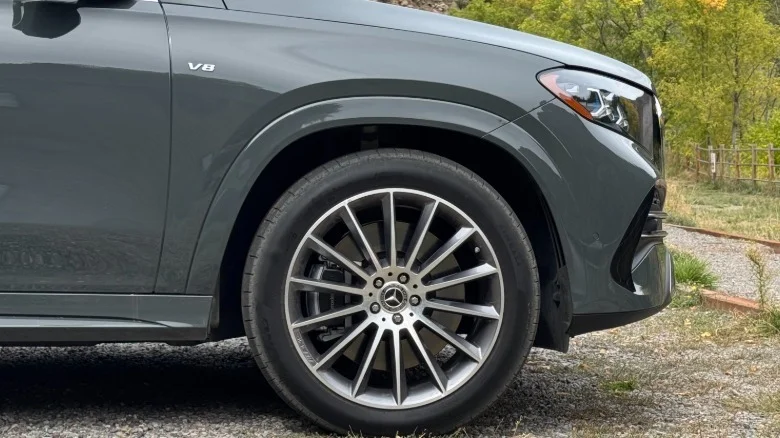
At the top of the non-AMG range, the GLE580 starts at $97,750. Its new M177 Evo twin-turbocharged 4.0-liter V8 uses a flat-plane crank and produces 530 hp and 553 lb-ft. Mercedes quotes a 4.2-second run to 60 mph, making it the quickest non-AMG GLE. That’s a steep jump from the six-cylinder models, but the V8 is also the version that made the strongest impression on the drive.
The GLE580 shows what the chassis can do
On winding Colorado roads, the 5,479-pound GLE580 felt planted and predictable. The V8 delivers its power smoothly at low speeds, then responds quickly when the driver presses deeper into the accelerator. Its sound reaches the cabin without overwhelming it, a fitting balance for a large luxury SUV. The throttle and brake responses also felt easy to judge, and a long run of downhill switchbacks didn’t bring signs of brake fade.
The optional E-Active Body Control air suspension with Intelligent Damper Control was a highlight. It kept road imperfections from disturbing the cabin and held the body remarkably flat through corners. The system is now connected to the cloud, where it can prepare for speed bumps and other hazards ahead. On the roads I drove, the GLE580 felt composed through bends without losing the comfort expected of a Mercedes.
Steering is intuitive, and the chassis responds cleanly when the road changes direction. The SUV’s size and weight don’t disappear, but the suspension and powertrain work together so cohesively that it feels more agile than its dimensions suggest. The V8 is expensive, yet the drive makes a persuasive case for spending more if performance and refinement are priorities.
The new GLE500e has a different strength: quiet, smooth operation. Its inline-six and electric motor transition so unobtrusively that the powertrain rarely calls attention to itself. Electric driving felt capable of keeping pace with traffic up to 87 mph, with enough acceleration for ordinary use. Pressing the accelerator past a soft resistance point in Electric Mode wakes the six-cylinder engine for more power. That threshold disappears in the other drive modes.
The plug-in hybrid didn’t feel short of power during my drive, though it is slower to 60 mph than the cheaper GLE450. Its ride and general driving character are close to the GLE580’s, but with less power available. For a buyer who values a hushed cabin and the option of electric driving, the GLE500e’s smoothness is its defining quality.
One feature didn’t suit me: predictive brake regeneration. It decides when to let the vehicle coast and when to increase regeneration as the driver approaches a junction or stop sign. I found the change in deceleration abrupt, as if I’d pressed the brake pedal suddenly. Switching the feature off made the car easier to manage; steering-wheel paddles let me select among three regeneration levels instead.
Coupe styling costs space and quiet
The GLE450 Coupe has a wheelbase 2.3 inches shorter than the SUV’s and is 2.6 inches lower. The lower roof makes getting into and out of the rear seats awkward, and both headroom and legroom are noticeably tighter. Mercedes says the shorter wheelbase and quicker steering give the Coupe more agility. In a brief drive, I didn’t feel a meaningful difference in handling, and both body styles have the same 39.5-foot turning circle.
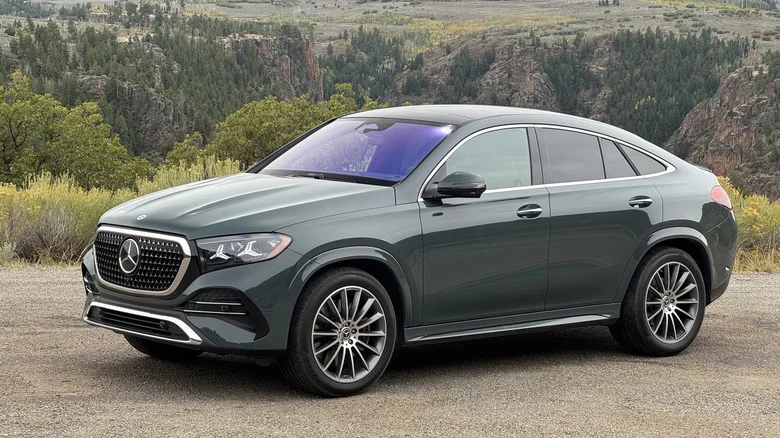
The inline-six is a strong match for either GLE450. It sounds lively and delivers enough thrust that the V8 isn’t essential for a quick, characterful SUV. The Coupe’s 4.9-second 0-to-60 time is also slightly quicker than the GLE500e’s, while the SUV reaches the same speed in 5.0 seconds.
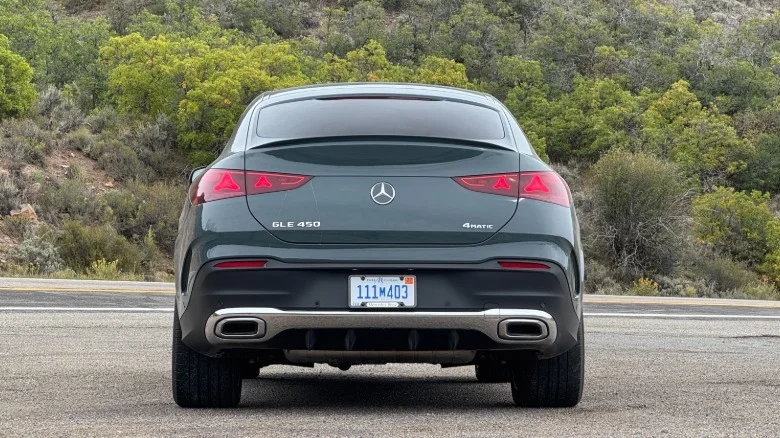
On the road, the Coupe let more tire and road noise into the cabin than the SUVs I drove on the same wheels and tires. Its sloping rear and shorter wheelbase may contribute, though the brief drive can’t pin down the cause. The sharper roofline and extra noise are trade-offs to weigh against the Coupe’s appearance. If rear-seat access and a quiet cabin matter, the upright SUV makes the more practical case.
More screens don’t solve the cabin’s age
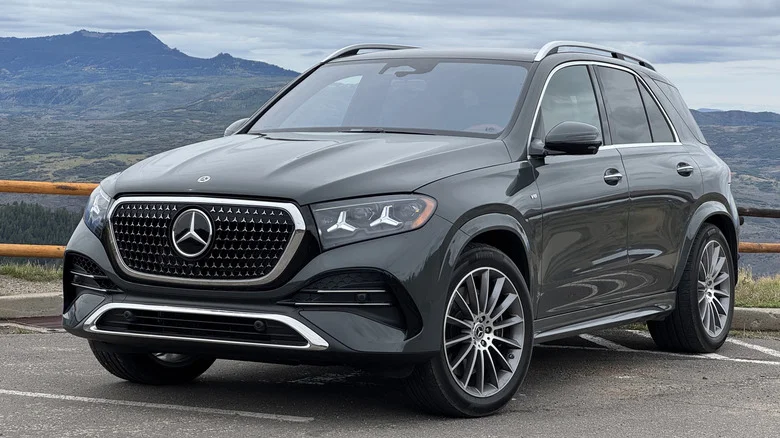
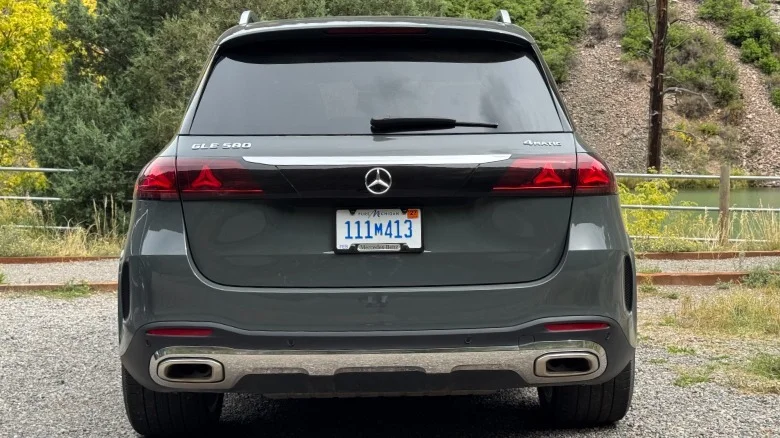
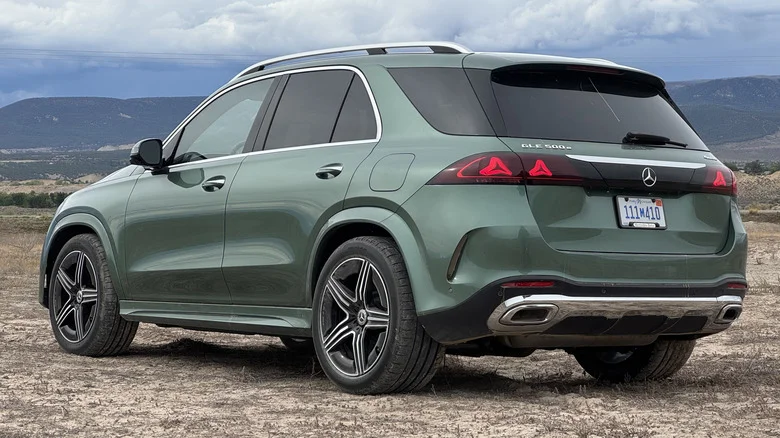
Outside, the facelift adds an illuminated star-shaped daytime running light signature, star-pattern taillights and dark plastic trim around the grille and between the rear lamps. The lights work for me; the black trim less so. The overall update is convincing, though the plastic details are more conspicuous than they need to be.
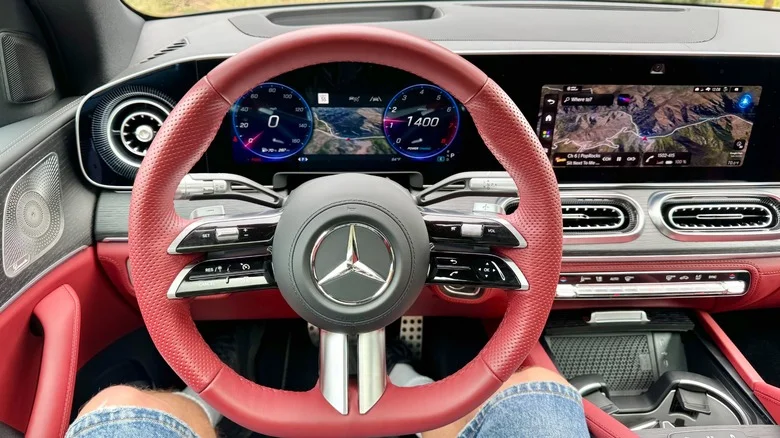
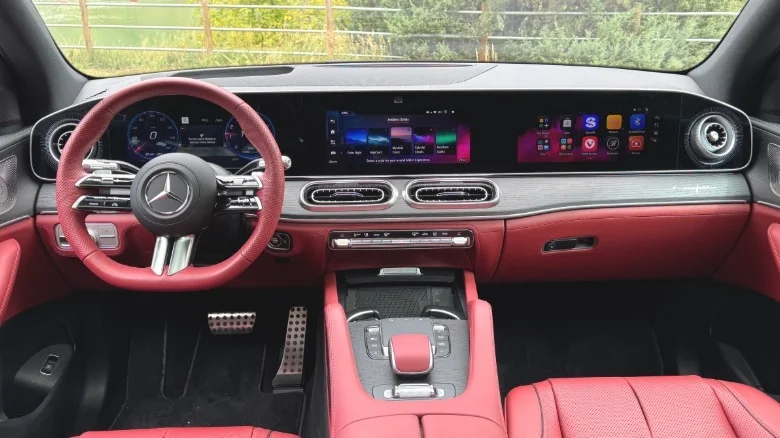
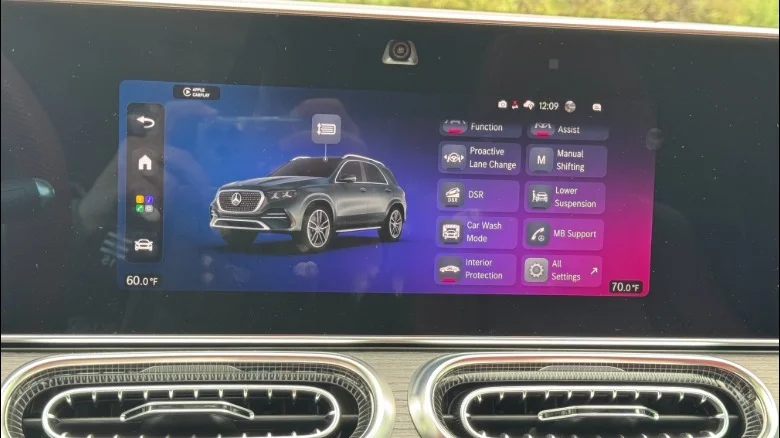
Inside, Mercedes adds its three-display Superscreen and MB.OS. The screen setup is standard across the range, including a passenger display. The GLE retains physical climate buttons and a center-console touchpad for controlling the infotainment system. Both are useful: the buttons make climate adjustments straightforward, and I found the touchpad slightly easier to use while driving than reaching for the touchscreen.
The passenger display is less convincing. It doesn’t provide access to the passenger’s seat massage and extended adjustment controls, leaving those settings on the center screen—a long reach from the other side of the cabin. Meanwhile, the 12.3-inch center display looks small and squat beneath the broad glass panel that spans the dashboard. The surrounding empty space makes the screen feel less integrated than its size alone suggests.
That screen also looks modest beside the 14.4-inch center display in the facelifted S-Class. The GLE’s cabin feels still more dated next to the new GLC EV, whose MBUX Hyperscreen measures 39.1 inches across. The GLE’s physical controls give it some everyday usability, but the display layout doesn’t make the most of the dashboard.
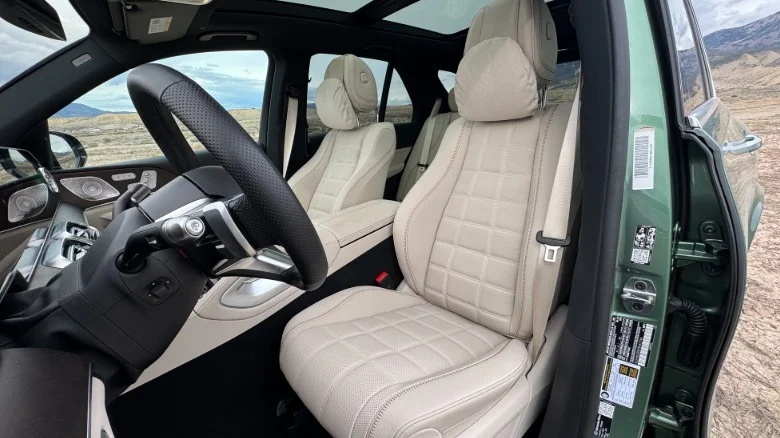
There are less visible signs of age, too. The sun visors felt flimsy, and the lower door cards use hard molded plastic. Small-item storage up front is limited: there’s a reasonably sized cubby beneath the center armrest, but the cupholders and single wireless phone charger occupy much of the remaining console space. The doors offer additional pockets.
A recent drive in a Kia Telluride priced at $60,000 made those shortcomings harder to overlook. That SUV had suede-covered sun visors, padded door cards and lined door bins—details that felt more considered than the GLE’s. The comparison underlines how much mainstream rivals have improved in cabin materials and interface design. The Mercedes’ badge and screen count don’t automatically make its interior feel more modern.
Driver assistance is still a work in progress
Each GLE has ten cameras, five radar sensors and 12 ultrasonic sensors. Mercedes says this hardware and MB.OS will eventually support MB.Drive Assist Pro, a Level 2++ system for hands-on point-to-point driving. The feature is not yet available; the company says it can be added over the air once conditions allow its rollout.
For now, the GLE’s Level 2 driver assistance handles adaptive cruise control well, though I found its lane centering less consistent than in other Mercedes models I’ve driven. The system’s future capability may add another reason to consider the updated electronics, but buyers should judge the car on what it can do today.
Mechanical polish remains the GLE’s advantage
The 2027 GLE is at its best in the parts drivers feel: power delivery, suspension control and the way the chassis settles on a rough road or through a corner. The GLE580 brings those strengths together most persuasively, while the GLE500e offers an unusually smooth plug-in hybrid experience. The GLE450 is a compelling middle ground, with a lively six-cylinder engine and quicker acceleration than the plug-in hybrid.
Its cabin doesn’t match that polish at every turn. The screens feel awkwardly proportioned, storage is sparse, and some materials fall short of what buyers might expect at these prices. The GLE’s age is especially apparent when a less expensive rival does better with door trim, sun visors and interface design.
That leaves a clear buying question: how much do you value the drive? If supple suspension, a refined engine and composed handling matter most, the facelifted GLE still has a distinctive strength. For the best expression of it, the GLE580 is the one to drive. The GLE450 makes a strong case for spending less, and the GLE500e suits drivers who want quiet electric running with a six-cylinder engine ready when needed. The cabin’s shortcomings are real, but the powertrains and chassis are what keep the GLE appealing.