Pagani Huayra 70 Anima Closes the Series With a Manual V12 and Diamond Dust Paint
The one-off Anima completes Pagani’s Huayra 70 trio with 864 PS, a seven-speed manual gearbox and a 350 km/h top speed.
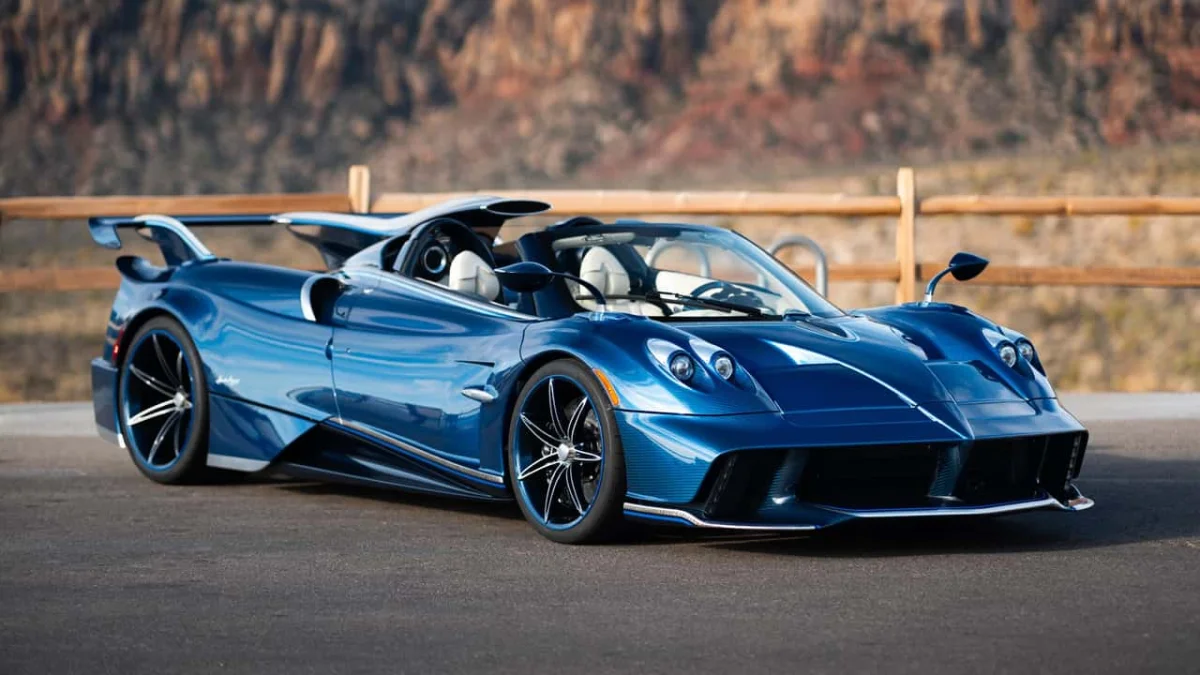
The Pagani Huayra 70 Anima closes a three-car tribute to founder Horacio Pagani with a specification that puts driver involvement at its centre: a 864 PS twin-turbo V12, rear-wheel drive and a seven-speed manual gearbox. Its diamond-dust metallic paint and expanded aerodynamic package make it the most visually distinctive member of the trio, while the manual transmission gives the one-off a clear mechanical identity.
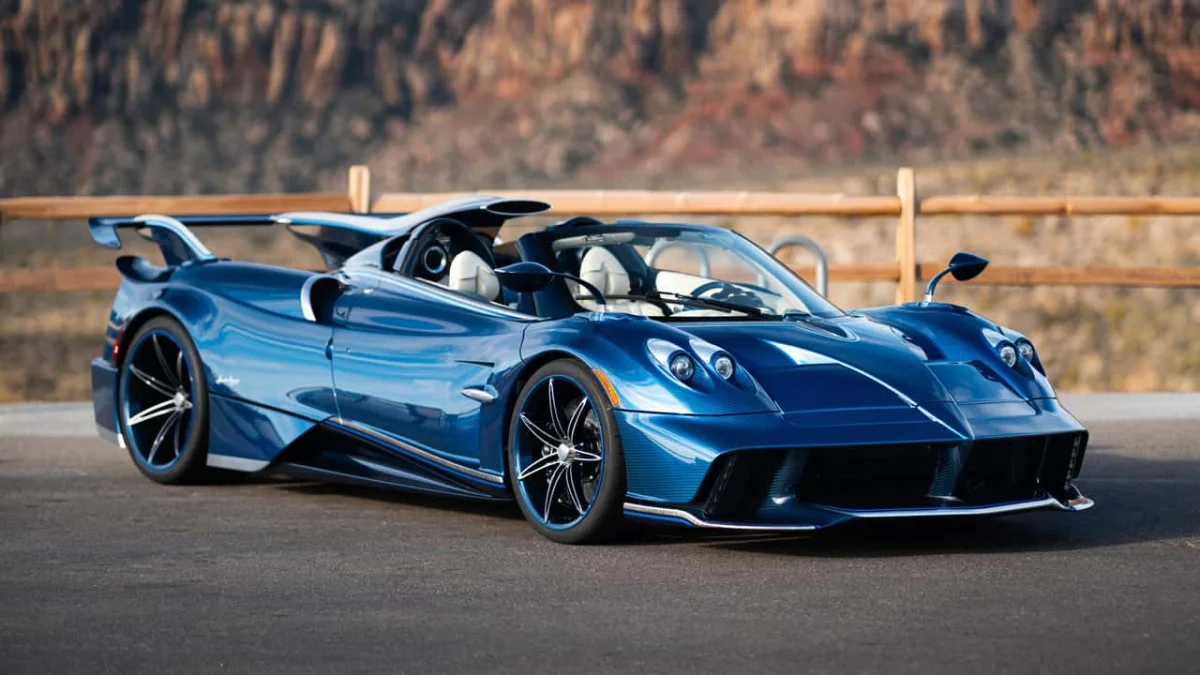
Pagani presented the Anima on October 31, 2026, at the Concours at Wynn Las Vegas. The debut completed the Huayra 70 series, following the Trionfo and Derecho. All three were shown together publicly for the first time at the Las Vegas gathering. Pagani hasn’t announced when the Anima will appear in Europe or disclosed its price.


A personal finale to the Huayra 70 series
“Anima” means “soul” in Italian, a name Pagani uses to describe the car as the physical expression of its atelier’s character. Horacio Pagani unveiled it himself, ten days before his 71st birthday on November 10. The occasion adds a personal note to a car that already stands apart through its bespoke finish and hands-on drivetrain.
The series began with the Huayra 70 Trionfo, a commissioned car for the Barchetta Collection destined for Cincinnati, Ohio. The Huayra 70 Derecho followed, making its world debut at the Goodwood Festival of Speed in July 2026. The Anima’s Las Vegas appearance brought the three cars together and gave the project a defined closing point.
The Huayra had already been followed by the Utopia, unveiled in 2022, but Pagani continues to extend the earlier model’s life through individually commissioned cars. The Anima is a strong example of that approach: it retains the Huayra’s core architecture and V12 character, then gives the car a distinct combination of materials, aero details and transmission choice.
Diamond dust, carbon and a more assertive aero package
The Anima’s bodywork mixes exposed carbon fibre with custom metallic paint containing real diamond dust. Platinum-finish trim and Inky Blue accents add contrast. Beneath the special finish, the car uses a high-strength carbon-fibre and aluminium structure, with a central monocoque made from Carbon-Titanium HP62 G2 and Carbo-Triax HP62. Chromoly steel subframes sit at the front and rear, while the body panels are carbon fibre.
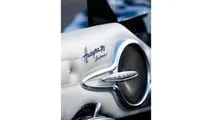
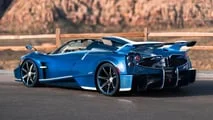
Its aerodynamic treatment is more extensive than that of its sister cars. Behind the cockpit, a large air intake incorporates a fin; individual roll hoops, a fixed rear wing, a substantial diffuser and specially vented rear bodywork complete the package. The source gives no downforce figure, so the visible additions are the clearest measure of how the Anima differs from the other two cars.

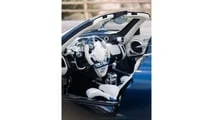
A bespoke ceramic exhaust with six white-finished outlets draws attention to the engine behind it. Inside, white leather is paired with blue details, finely machined metal and Pagani’s distinctive switchgear. The key mechanical feature sits between the seats: an exposed manual shifter and three pedals.
Manual gears for the 864 PS V12
As with the Huayra Epitome from 2024, the Anima pairs its V12 with a seven-speed manual transmission. Pagani’s choice makes the car unusual among modern high-output hypercars, where automated gearboxes are common. Here, the driver operates each shift directly, matching the car’s analogue cabin details with a powertrain that still relies on a combustion engine and rear-wheel drive.
The 5,980 cc V12 has a 60-degree cylinder angle and twin turbochargers. Developed by Mercedes-AMG for Pagani, it produces 864 PS (635 kW) at 6,000 rpm and 1,100 Nm of torque from 2,800 to 5,900 rpm. An Xtrac transverse gearbox provides seven speeds in sequential or manual form, and an electromechanical limited-slip differential manages power at the rear wheels.
The Anima’s double-wishbone suspension uses upper rockers, coil springs and electronically adjustable, interconnected dampers. Braking comes from four ventilated Brembo carbon-ceramic discs: 398 mm at the front and 380 mm at the rear. Pirelli P Zero Trofeo R tyres measure 265/30 R20 at the front and 355/25 R21 at the back.
Pagani lists a 350 km/h electronically limited top speed. The source provides no acceleration, fuel consumption or range figures, and the car’s one-off status makes conventional ownership comparisons difficult. Its price remains undisclosed, as is typical for a bespoke commission of this kind.
For buyers, the Anima’s significance is less about a new performance benchmark than the way it combines the Huayra’s established V12 layout with a rare manual transmission and highly individual craftsmanship. The Trionfo, Derecho and Anima now form a complete trio; the next point to watch is whether Pagani brings the final car to a European public appearance.
Related: Pagani Huayra 70 Trionfo, Huayra 70 Derecho, Huayra Epitome, Pagani and Huayra.