2026 Mercedes C-Class Estate vs Audi A5 Avant: Sizes, Design and Key Differences
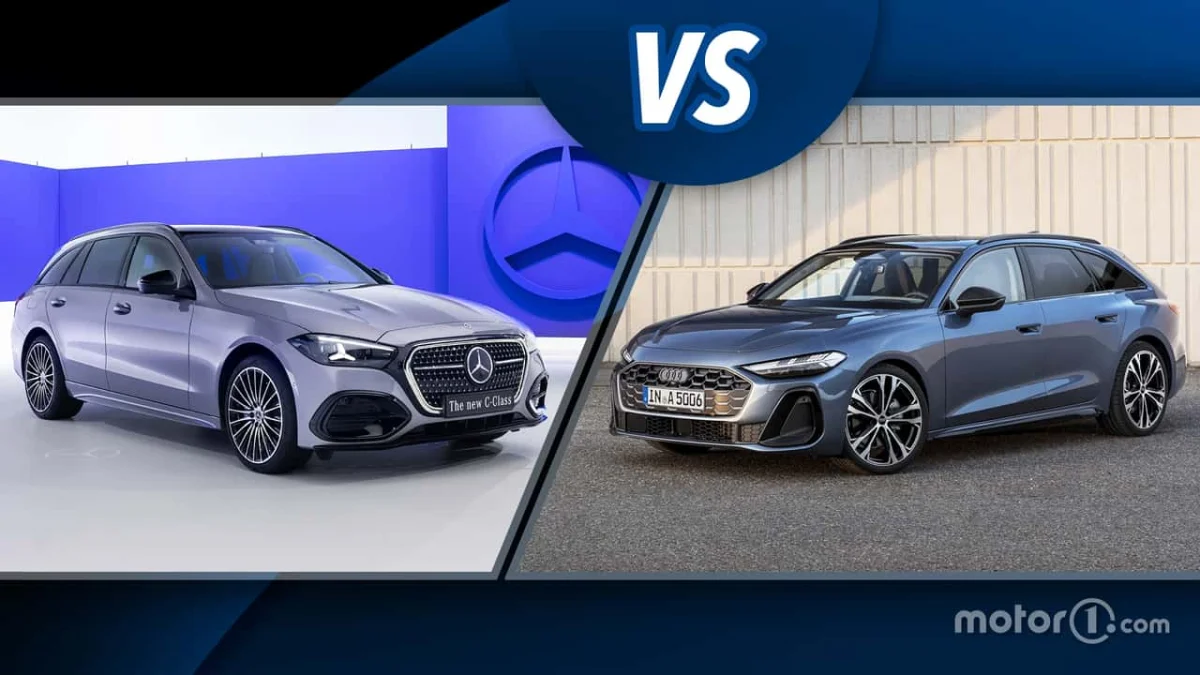
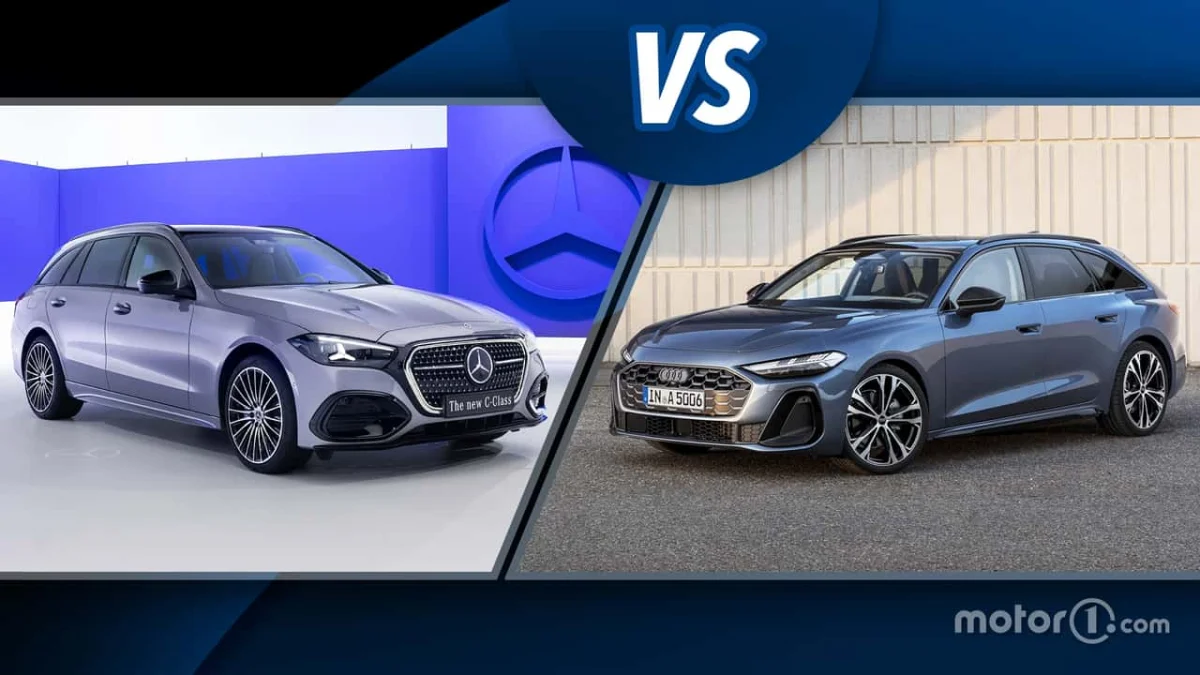
The facelifted Mercedes C-Class Estate brings updated styling and digital features, while the larger Audi A5 Avant stands out with a sportier design and a more dramatic cabin.
Mercedes C-Klasse T-Modell Facelift gegen Audi A5 Avant: Zwei Klassiker, neue Namen
Rund drei Jahrzehnte Konkurrenz haben diese Mittelklasse-Kombis zu einem festen Duell gemacht. Jetzt treffen ein überarbeiteter Mercedes und ein Audi mit ungewohnter Modellbezeichnung aufeinander. Das ist mehr als ein Vergleich zweier Familienautos: Beide Hersteller sortieren gerade ihre Verbrenner und Elektroautos neu.

Die Geschichte reicht zurück bis 1992, als Audi den 80 Avant einführte. Mercedes brachte 1996 das erste C-Klasse T-Modell auf den Markt. Seitdem gehört der Vergleich der beiden Kombis zu den vertrauten Rivalitäten der Mittelklasse.
Facelift bei Mercedes, Namenswechsel bei Audi
Im August 2026 bekam die Verbrenner-C-Klasse der Baureihe 206 ein Facelift. Mercedes rückte das Design damit näher an die elektrische C-Klasse. Wie weit die optische Annäherung geht, ist eine der Fragen, die dieser Vergleich aufwirft.
Audi hatte den A4 schon 2024 in A5 umbenannt. Die Idee dahinter: Ungerade Zahlen sollten für Verbrenner stehen. Das erwies sich als Fehlgriff; beim A6 konnte Audi die entsprechende Umbenennung gerade noch abwenden. Für den Kombi-Vergleich stehen damit zwei sehr unterschiedliche Modellgeschichten nebeneinander.
Die C-Klasse als Limousine und T-Modell
Die überarbeitete Mercedes-Baureihe gibt es auch als Limousine. Die folgende Galerie zeigt beide Karosserievarianten:
Bildergalerie: Mercedes C-Klasse Limousine (2026) und Mercedes C-Klasse T-Modell (2026)

Von Alberto Carmone, übersetzt von Roland Hildebrandt. Veröffentlicht von Roland Hildebrandt am 2. November um 07:00 Uhr. Das Titelbild stammt von Motor1.com.
Mercedes is giving the C-Class a substantial digital refresh, while the Audi counters with a more dramatic cabin and a larger central screen. The difference is clear: Mercedes is updating a familiar layout; Audi’s interior borrows more heavily from its electric cars.
Exterior dimensions and details
The 2026 Mercedes C-Class T-Modell measures 4.76 metres long, 1.82 metres wide and 1.46 metres tall, with a 2.87-metre wheelbase. Its facelift brings a larger grille that can be illuminated depending on configuration, plus headlights with a light signature inspired by the Mercedes star. Buyers can choose 17- to 19-inch alloy wheels and new paint colours.
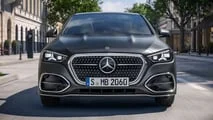
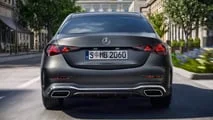


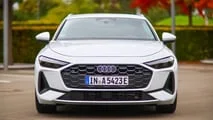
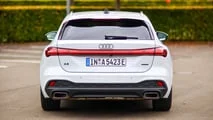
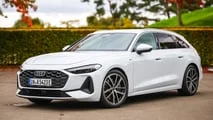
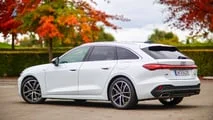
At 4.83 metres long and 1.86 metres wide, the Audi A5 Avant is larger than the Mercedes in both dimensions. Its 2.90-metre wheelbase is also longer, though both cars stand 1.46 metres tall. Audi’s front end centres on a broad Singleframe honeycomb grille, with LED headlights and, depending on trim, Matrix LED headlights and digital OLED tail-lights. Flush door handles and a sloping rear window give the profile a sportier look. Wheel sizes reach 20 inches on sportier versions and 21 inches on the RS 5.
Mercedes C-Klasse Facelift (2026)
Bild von: Mercedes-Benz
Audi A5 Avant
Bild von: Audi
| Modell | Länge | Breite | Höhe | Radstand |
| Mercedes C-Klasse Kombi | 4,76 m | 1,82 m | 1,46 m | 2,87 m |
| Audi A5 Avant | 4,83 m | 1,86 m | 1,46 m | 2,90 m |
Cabin technology
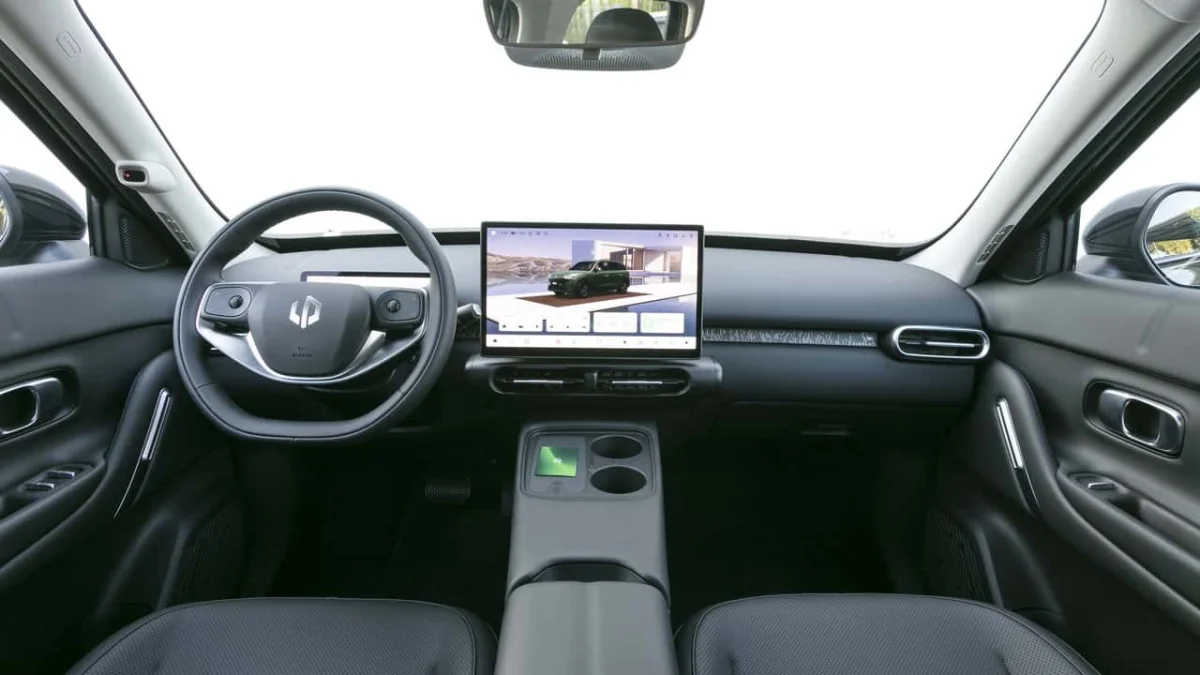
The Mercedes dashboard pairs a 12.3-inch digital instrument display with an 11.9-inch portrait-oriented central screen. The 2026 update introduces MB.OS, an updated digital ecosystem with a virtual assistant that also draws on AI. The hardware figures are straightforward; how much the new software improves the day-to-day experience remains unclear from the information here.
Mercedes C-Klasse (2026), der Innenraum
Bild von: Mercedes-Benz
Audi A5 Avant, der Innenraum
Bild von: Audi
Audi takes a more overtly screen-led approach, with a cabin design influenced by the brand’s electric models. The instrument display measures 11.9 inches and the central infotainment screen 14.5 inches. Its system runs on Android Automotive and integrates ChatGPT AI.
There’s a wider powertrain context here, too. Audi’s plug-in-hybrid RS 5 is said to be succeeding, while Mercedes-AMG’s similarly conceived C 63 failed to win over customers and has been dropped with the model update. A successor is being discussed. For a closer look at those performance models, see the Audi RS 5 and the Mercedes-AMG C 63. This comparison now turns to the more mainstream Audi A5 and Mercedes C-Class.
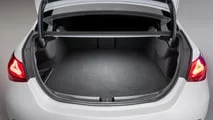
Boot space is one of the clearest practical differences between these two estates. The Mercedes C-Class T-Modell has the edge on paper, though its plug-in hybrid gives up a sizeable chunk of that advantage.
Mercedes Classe C Facelift (2026), der Kofferraum
Audi A5 Avant, der Kofferraum
With the rear seats up, the Mercedes offers 490 litres; folding them down expands that to 1,510 litres. In the plug-in hybrid, those figures fall to 360 and 1,375 litres. Audi quotes 448 litres for the A5 Avant, rising to 1,424 litres with the back seats folded. Its plug-in hybrid holds 361 to 1,306 litres.
| Model | Digital cockpit | Touchscreen | Boot capacity |
| Mercedes C-Class T-Modell | 12.3" | 11.9" | 490–1,510 litres (360–1,375 litres PHEV) |
| Audi A5 Avant | 11.9" | 14.5" (+ 10.9" for the passenger) | 448–1,424 litres (361–1,306 litres PHEV) |
Engines
Both cars cover familiar petrol, diesel and plug-in hybrid territory, but Mercedes has trimmed its diesel range to two choices: the C 200 d with 163 PS and the C 250 d with 200 PS. Petrol buyers can choose the C 200 (177 PS), C 250 (218 PS) or C 300 (258 PS). The diesels use 48-volt mild-hybrid assistance; every version gets a nine-speed automatic, while 4Matic all-wheel drive is available with selected engines.
Mercedes Classe C Facelift (2026)
Audi RS 5 Avant (2026)
Mercedes’ plug-in range tops out with the 326 PS C 300 e and the 394 PS C 400 e 4Matic. Both use a battery with 19.53 kWh of usable capacity and claim up to around 100 km of electric driving on the WLTP cycle, depending on version. Charging peaks at 11 kW on AC and 55 kW on DC; with a compatible fast charger and favourable conditions, a 10–80% charge takes about 20 minutes. The diesel plug-in hybrid has been dropped.
Audi’s line-up starts with A5 TFSI petrol engines rated at 150 or 204 PS, alongside a 204 PS TDI mild hybrid. The S5 sits at the sportier end, pairing a 367 PS 3.0-litre V6 mild hybrid with quattro all-wheel drive and a seven-speed S tronic automatic.
The cabin comparison also comes down to screen strategy. Audi offers an optional 10.9-inch display for the front passenger, while its trim combines soft-touch surfaces, fabric, leather and metal inserts around a deliberately clean dashboard layout. Early criticism of A5 build quality prompted Audi to make improvements; the original concerns are part of the model’s story, even if the revised finish is meant to address them.
Bildergalerie: Audi A5 Avant e-hybrid (2025)
Plug-in hybrid: useful range, limited charging options
The A5 e-hybrid’s 20.7-kWh usable battery gives the Avant an electric range of up to about 100 km under WLTP, depending on specification. That’s enough to make many daily trips electric, though the quoted figure is a maximum rather than a guarantee. Audi offers two system outputs: 299 PS and 367 PS. AC charging tops out at 11 kW, bringing a full charge to roughly two and a half hours. There’s no DC fast charging, so longer stops won’t replenish the battery quickly.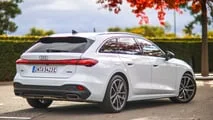

 Quelle: Motor1.com Germany
Der RS 5 Avant zeigt, wie weit die Leistungsspanne des Audi reicht: Sein Plug-in-Hybridantrieb verbindet einen 2,9-Liter-V6-Biturbo mit einem Elektromotor und liefert zusammen 639 PS. In rund 3,6 Sekunden geht es aus dem Stand auf 100 km/h; mit dem speziellen Paket sind bis zu 285 km/h möglich. Quattro-Antrieb und aktives Torque-Management an der Hinterachse sollen die Kraft auf die Straße bringen. Das ist mehr als ein schneller Kombi: Der RS 5 steht preislich und technisch deutlich über den übrigen Varianten.
| Modell | Benziner | Diesel | Plug-in-Hybrid |
| Mercedes C-Klasse T-Modell |
C 200 (177 PS) C 250 (218 PS, optional Allrad) C 300 (258 PS) |
C 200 d (163 PS) C 250 d (200 PS, optional Allrad) |
C 300 e (326 PS, optional Allrad) C 400 e 4matic (394 PS) |
| Audi A5 Avant |
2.0 TFSI (150 PS) 2.0 TFSI (204 PS, optional Allrad) S5 quattro (367 PS) |
2.0 TDI (204 PS, optional Allrad) |
e-Hybrid (299 PS) e-Hybrid (367 PS) RS 5 (639 PS) |
Preise: Der Einstieg ist ähnlich, die Spitzenmodelle nicht
Bei den Basisversionen liegen die beiden Kombis nah beieinander: Die Mercedes C-Klasse startet in Deutschland als C 200 bei 50.390 Euro. Für den C 200 d werden mindestens 54.883 Euro fällig. Wer einen Plug-in-Hybrid möchte, muss für den C 300 mindestens 68.193 Euro einplanen.
Der Audi A5 Avant beginnt mit dem 150-PS-Benziner bei 49.450 Euro und ist damit knapp günstiger als der C 200. Der Einstieg in den A5 e-Hybrid kostet 66.750 Euro. Für den 367 PS starken S5 Avant steigt der Preis auf 82.750 Euro; der 639-PS-RS 5 Avant beginnt bei 107.850 Euro. Die Preisliste macht den Unterschied klar: Audi bietet den günstigeren Einstieg, während der RS 5 in einer eigenen Leistungsklasse spielt.
Das bietet die Konkurrenz: