Four Classic Campers Head to Beaulieu in Search of the Ideal Autojumble Setup
A Transit, Land Rover, Berlingo and 1957 VW bus show four ways to turn a Beaulieu autojumble weekend into a camping trip.
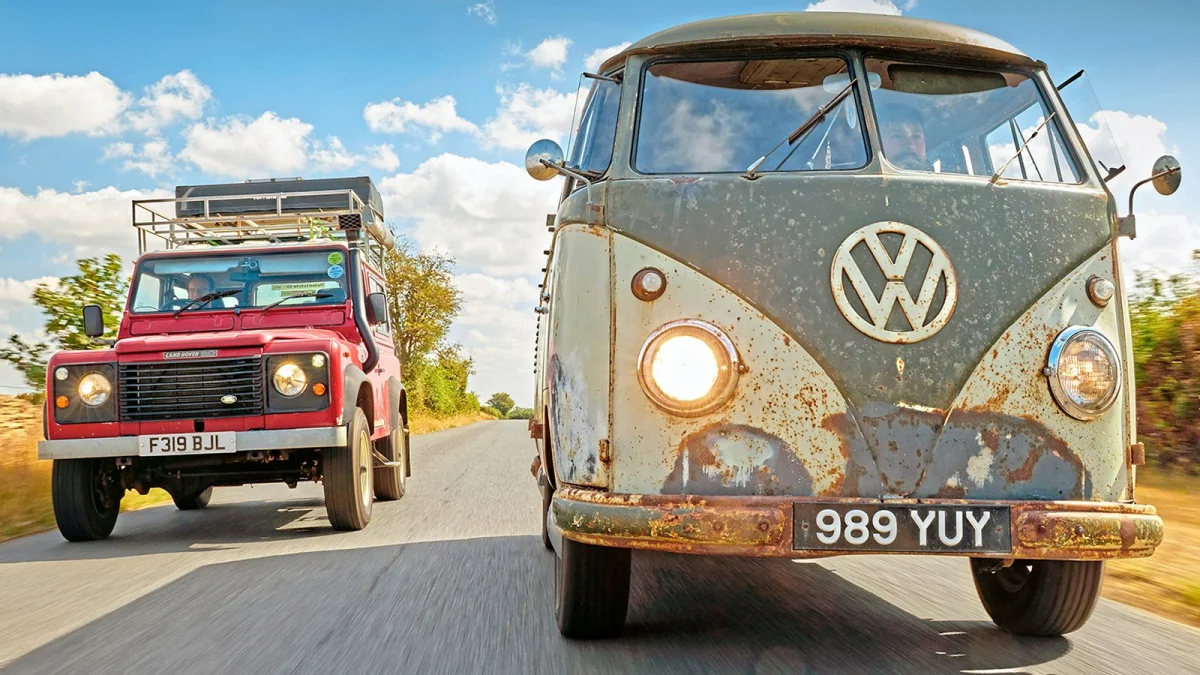
Getting to Beaulieu is part of the appeal for the Practical Classics team: the drive, the cars packed with parts to sell, and a night under canvas or inside a converted vehicle all make the International Autojumble feel like a petrolhead weekend away. This year, four very different campers made the trip, each with its own answer to the same question: how much vehicle do you need for a couple of nights away?
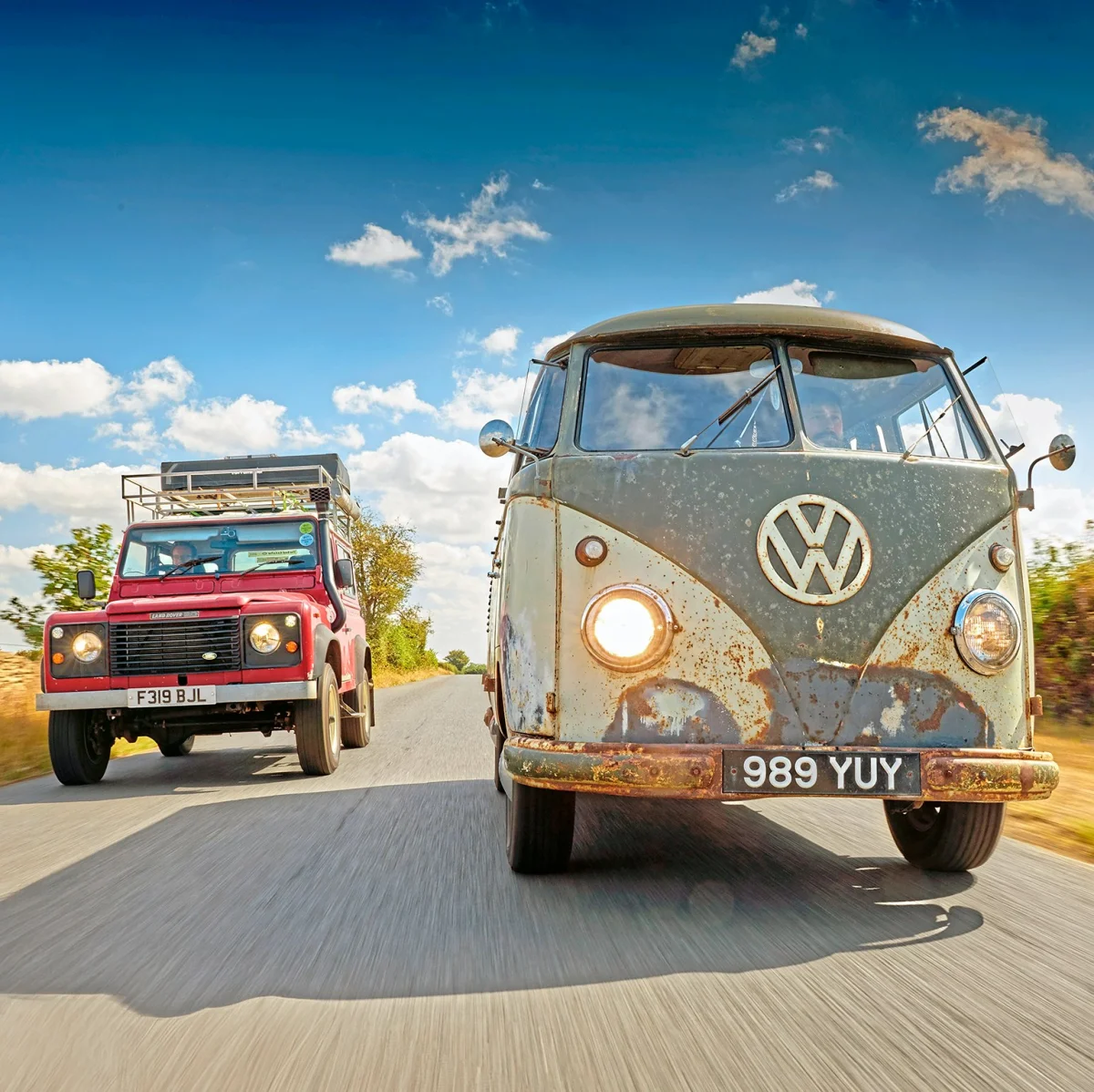
Matt and Maz headed south with Danny and James, meeting near Nether Wallop before continuing to Beaulieu. Along for the journey were Danny’s borrowed Ford Transit Auto Sleeper, Matt’s Land Rover Ninety with a roof tent, James’s everyday Citroën Berlingo with a removable sleeping platform, and Maz Marriott’s restored Volkswagen Type 2. The vehicles served as transport and somewhere to sleep, but they also reflected different ideas about cost, convenience and how often a camper needs to earn its keep.
The team’s trips to the Spring and International Autojumbles are annual fixtures. The magazine works with both events, but for its crew the draw is also the chance to meet readers and other enthusiasts. There’s the practical business of choosing what to take and sell, and the pleasure of picking a route and a car for the weekend.
Danny Hopkins: 2000 Ford Transit Auto Sleeper

Danny’s camper is borrowed from friends Phil and Denise. In return, he covers its diesel and shares wine and whisky. That arrangement sidesteps one of the bigger questions for anyone considering a dedicated camper: where to keep it, and how often to use it. Danny has owned two before, but found that a spacious conversion can become a burden if it sits unused or needs more work than expected.
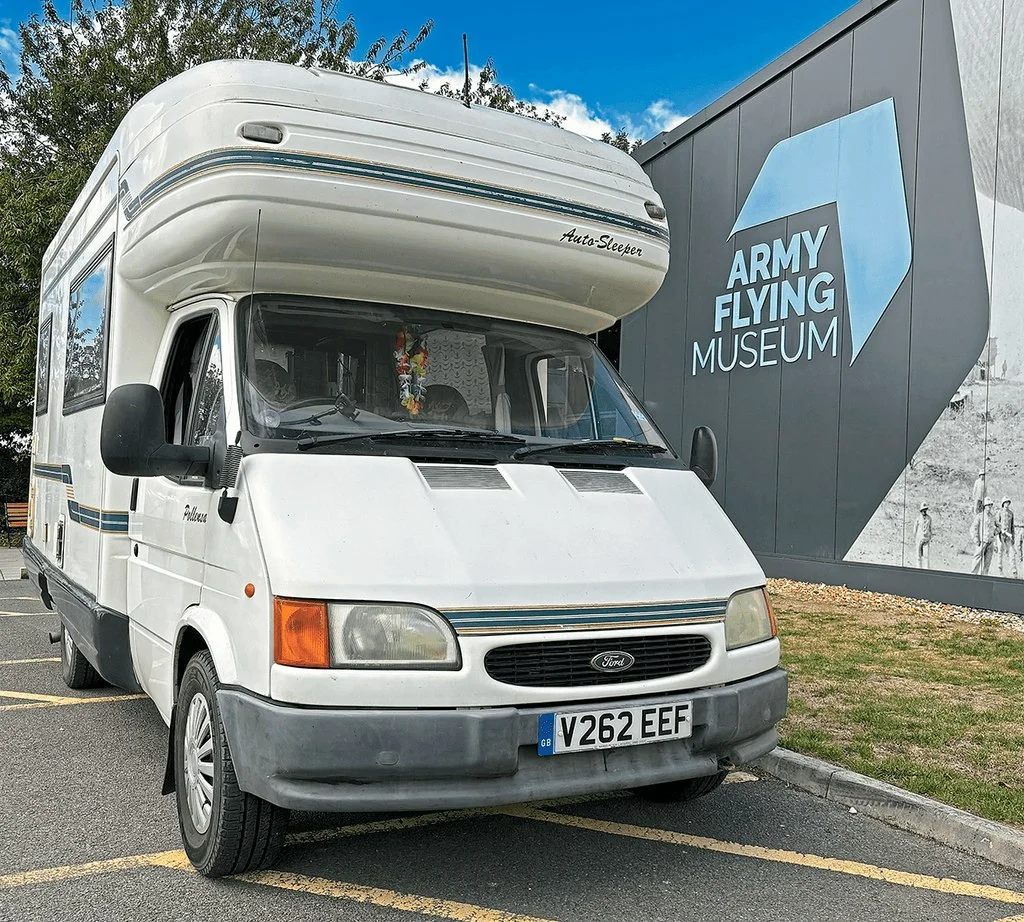
The Transit’s Auto Sleeper conversion is built as a single unit, which Danny says avoids the joins that can let water in. Its 2.5-litre turbo diesel is loud, but he values its rugged character and ability to hold 60mph on longer runs. That cruising pace makes the journey from Royston to the team’s meeting point manageable, even with old car parts loaded aboard for sale.
His earlier campers offered a sharp contrast. A compact Sherpa Dormobile called Calypso served as his home during a summer theatre tour in the 1990s. Its lift-up roof and O-series engine made it a straightforward, easy-to-live-with van. Later, he bought a Mercedes-Benz 207D Auto-Trail Sioux after the pandemic. It was large and stylish, but he rarely used it, it needed work, and its top speed of about 55mph made motorway journeys frustrating. Hills slowed it further. The Transit, by comparison, makes the distance feel practical.
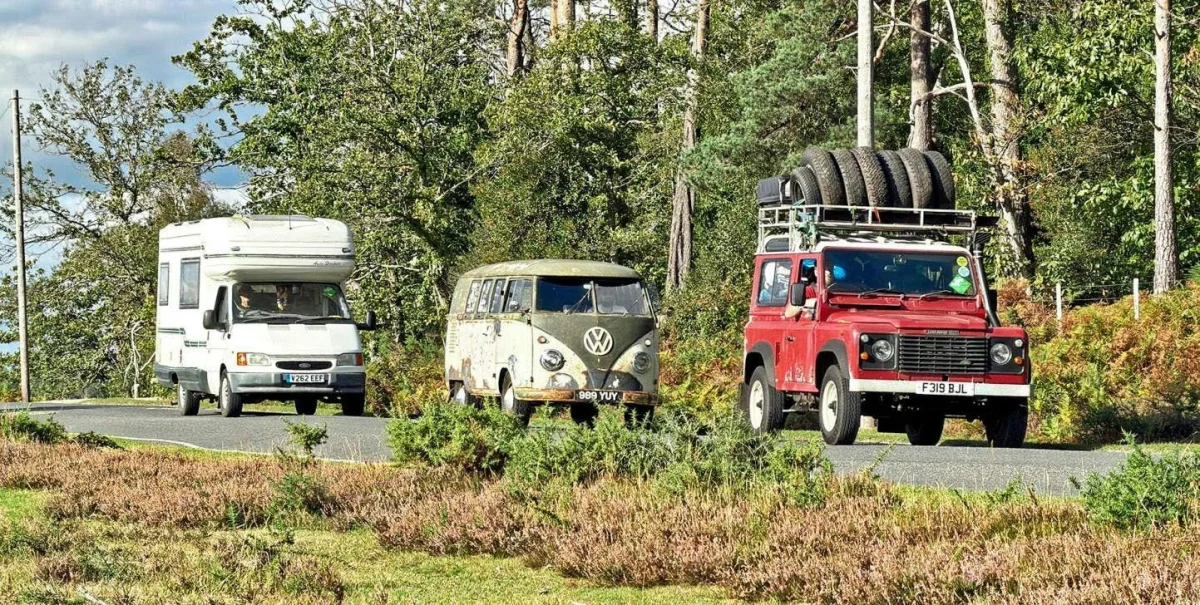
The first stop was the Army Flying Museum near Nether Wallop, in Hampshire’s New Forest area. Its collection covers five periods and branches of Army aviation, from the Royal Engineers’ early involvement between 1878 and 1912 to the Army Air Corps, established in 1957 and still active. Aircraft, gliders and helicopters filled the visit with a different kind of machinery from the team’s own diesel-powered collection.
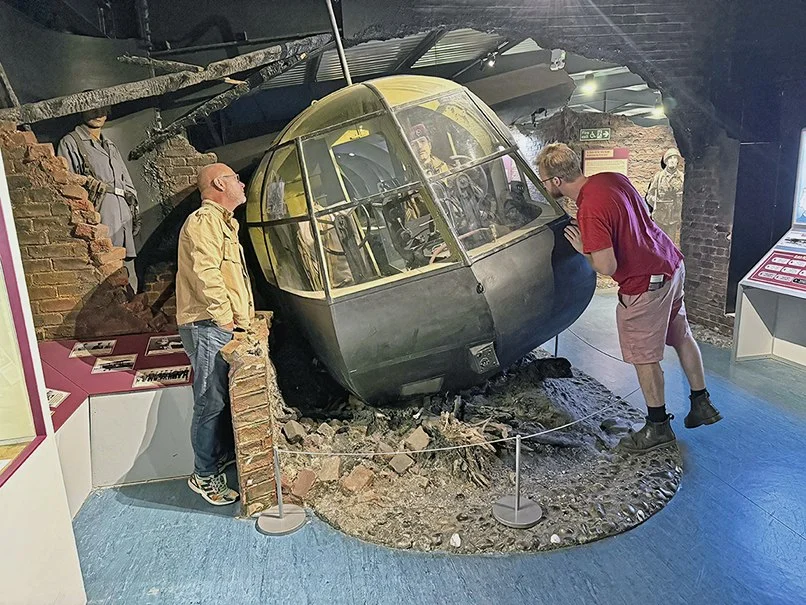
The Airspeed Horsa glider made a particular impression. Built largely from plywood, it carried Allied troops during the Second World War, including on D-Day. Its fragile-looking construction and unpowered flight gave the group a vivid sense of what a journey in one would have involved. The museum’s helicopter displays also caught their attention, including the Lynx, which was the first helicopter to perform a barrel roll.
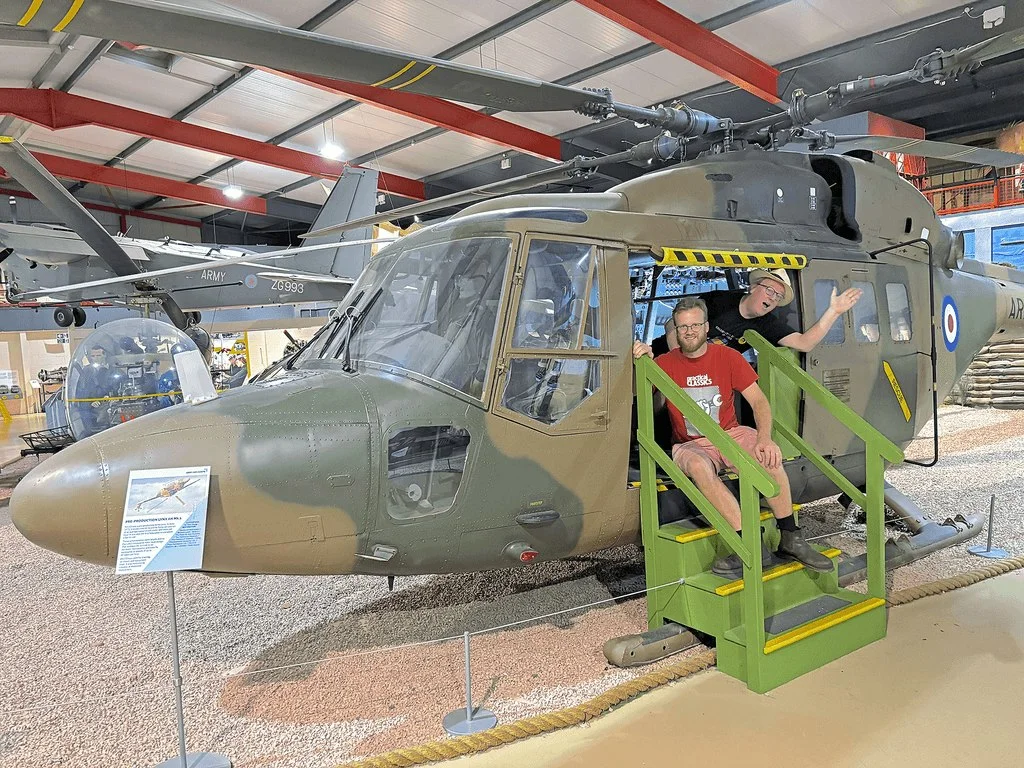
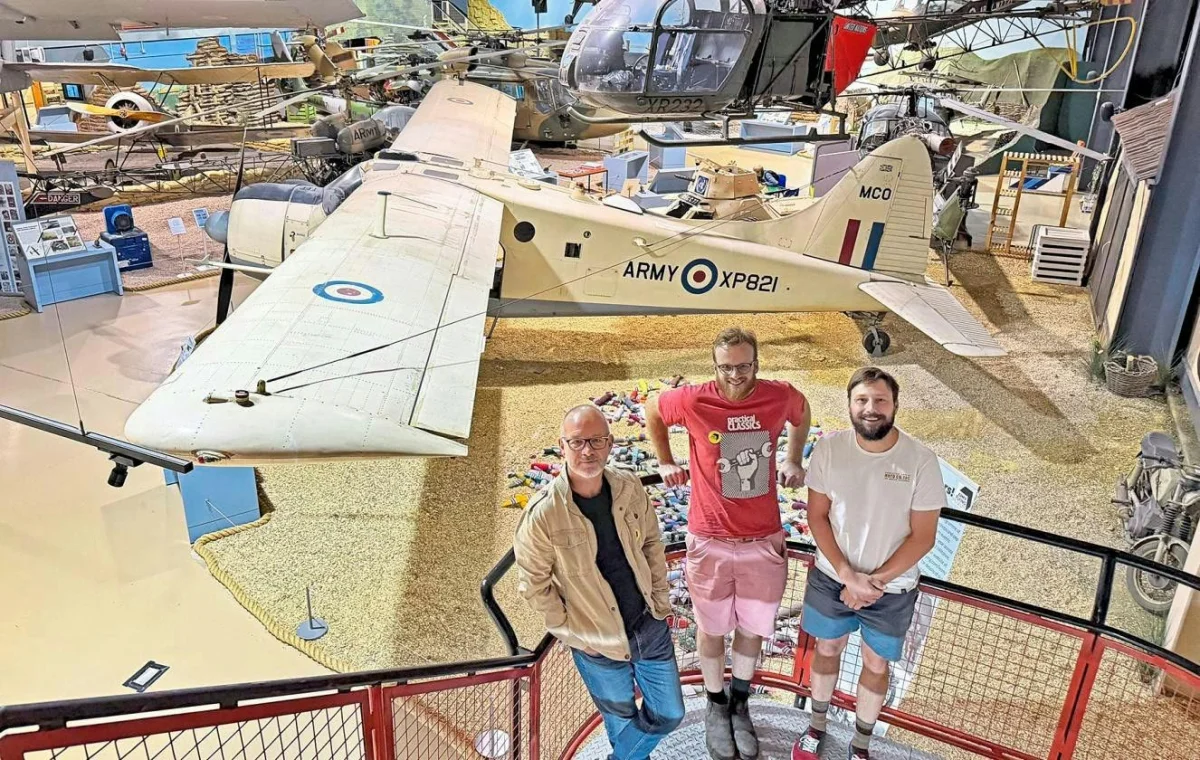
Simon “Maz” Marriott joined the convoy after taking in the displays. His 1957 VW Type 2 Microbus, with its SO23 camper conversion, would become one of the vehicles drawing visitors at Beaulieu. From the museum, the group set off south through the countryside towards the autojumble fields.
Matt Tomkins: 1988 Land Rover Ninety

Matt’s Ninety arrived at the museum late, tired and loaded to its roof with parts from past projects. The 19J 2.5-litre turbo diesel was the only engine option Land Rover never supplied to the Ministry of Defence; its lacklustre performance prompted the rapid development of the 200Tdi, which helped usher in the Defender name. With six spare Defender wheels and tyres on board, plus a roof tent above them, the Ninety had more weight to carry and less nimble handling than usual.
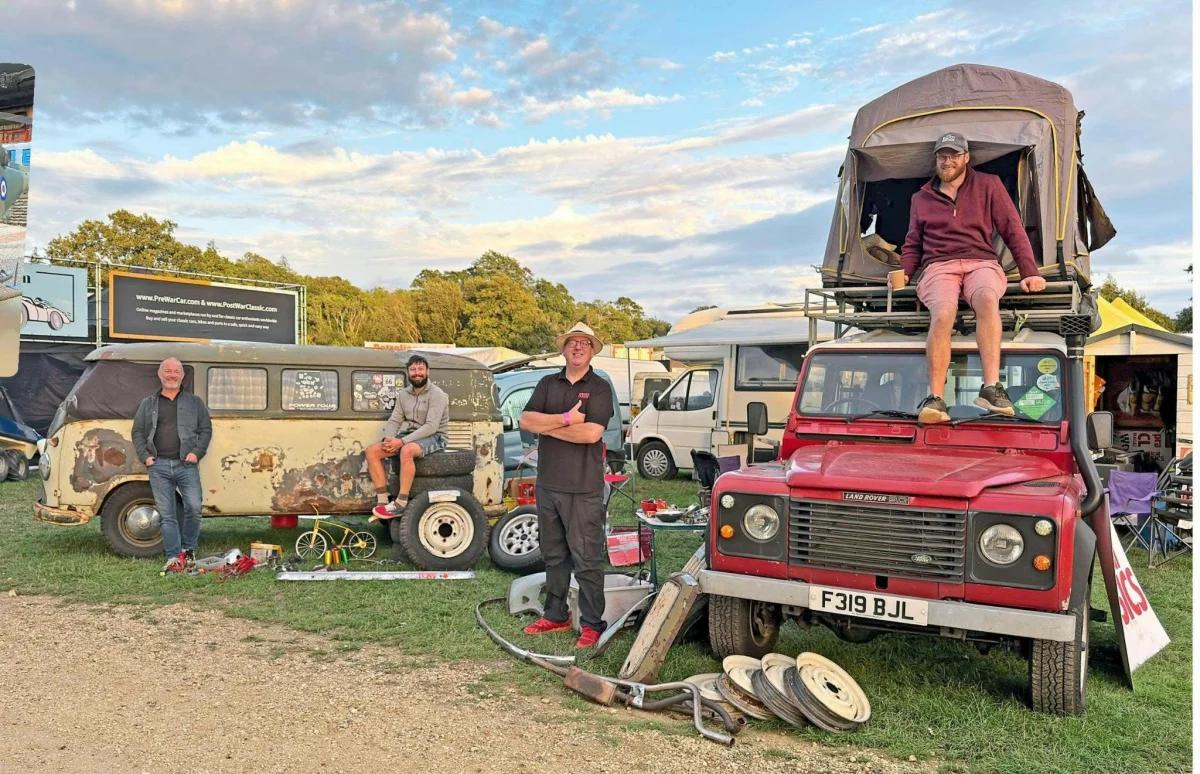
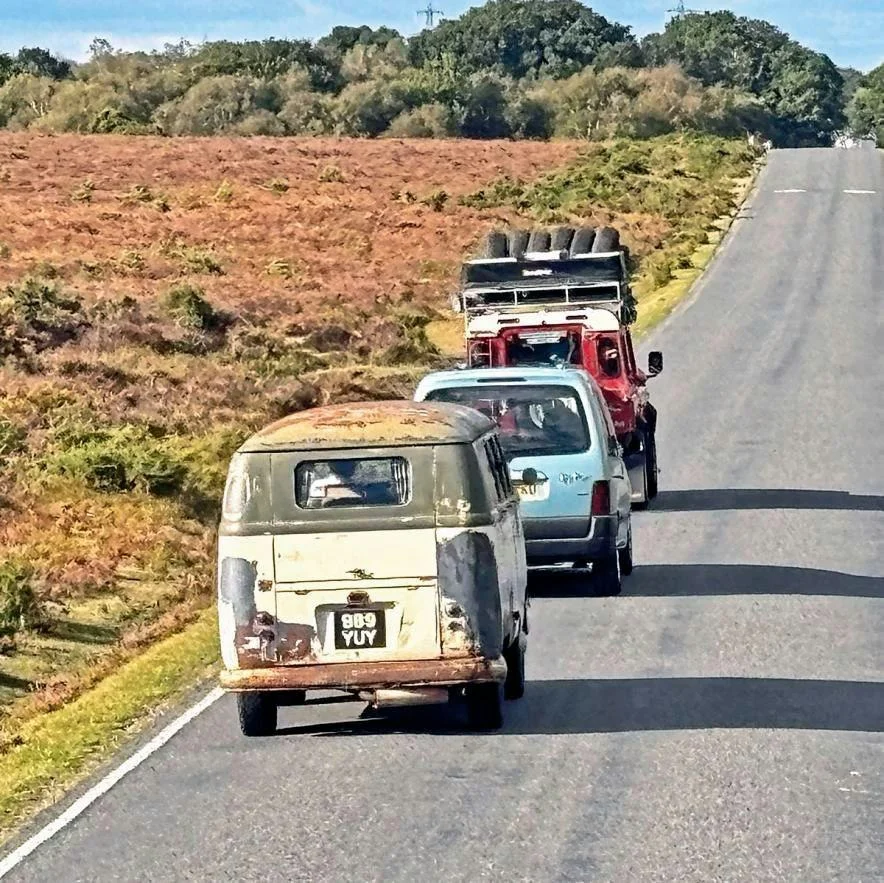
Matt joined Danny and James among the museum exhibits, then continued towards Beaulieu with Maz. He likes the Land Rover, which has been a dependable workhorse since returning to the road in 2022, but now uses a 2006 BMW X3 for longer towing trips. That has left the Ninety with a quieter, more local role. On the way south, Danny’s Transit pulled away on the hills, while cattle, donkeys and ponies roaming the forest slowed the convoy. The Ninety still looked the part beside Maz’s VW, even if its pace made the drive less relaxing.
“We head south to the Festival of Rust.”
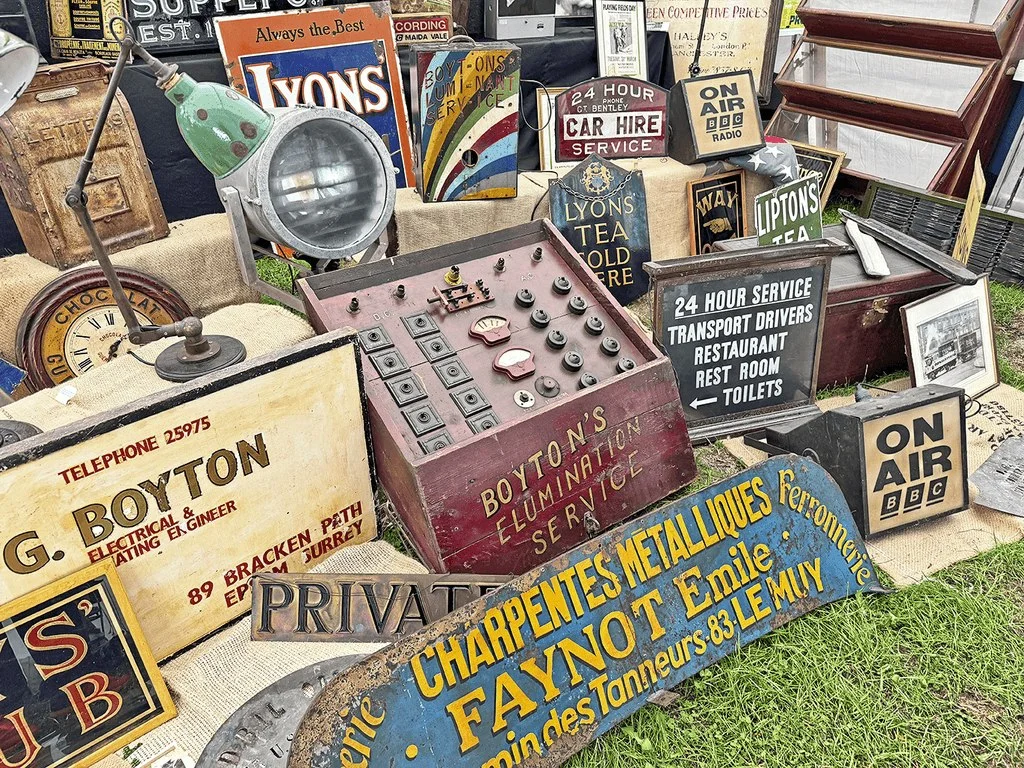
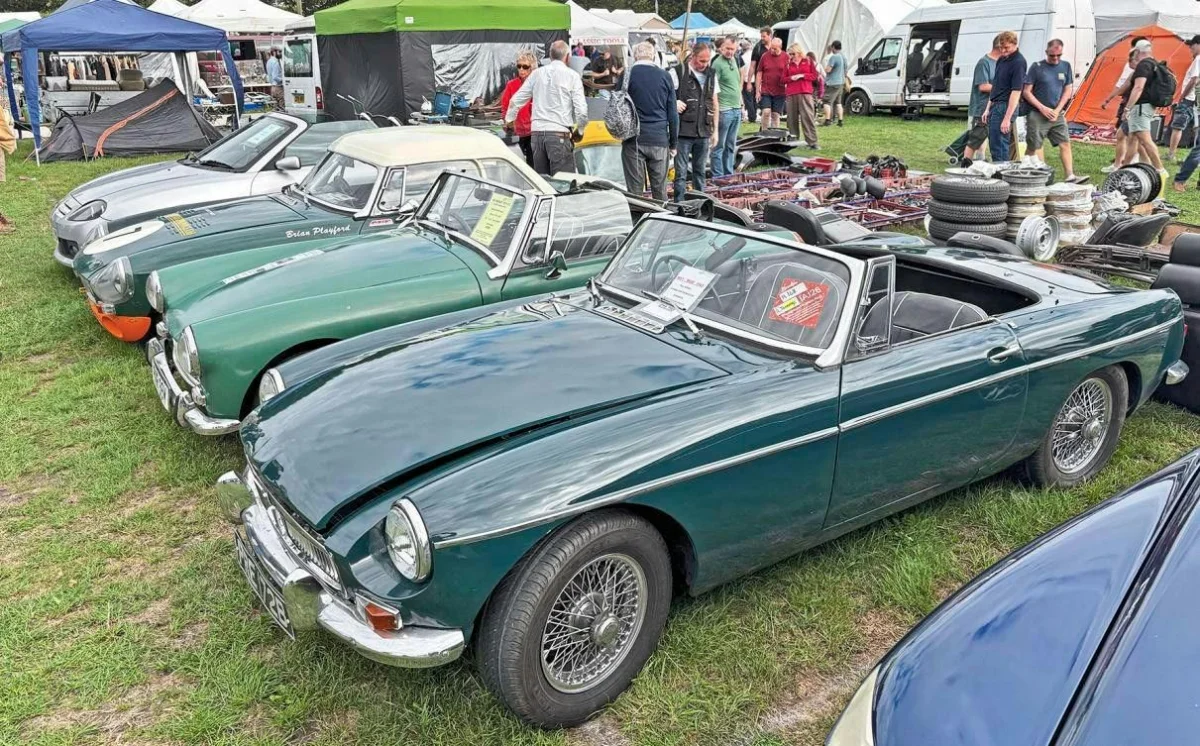
Beaulieu’s fields were already busy as exhibitors arranged their stalls. The weekend promised a mix of old parts, unusual vehicles and conversations with fellow autojumblers.
James Walshe: 2003 Citroën Berlingo

James prefers a compact sleeping setup to a full camper conversion. His Berlingo has a removable Camperize “boot jump”: a hinged wooden unit that stores in the boot, then folds out when the rear seats are lowered to create a bed platform. With the single-bed version, the other side of the cabin remains available for luggage, and there’s enough room to get dressed. Reflective plastic panels cover the windows at night.
It’s a simple arrangement, but that’s the point. The Berlingo works as everyday passenger transport and can be turned into a sleeping pod when needed. James doesn’t have to store a separate camper, climb to a roof tent in the night, or devote the whole interior to a permanent conversion. Danny’s Transit has more room and facilities; Matt’s tent keeps the cabin free. James’s setup gives up those comforts for a bed that folds away.
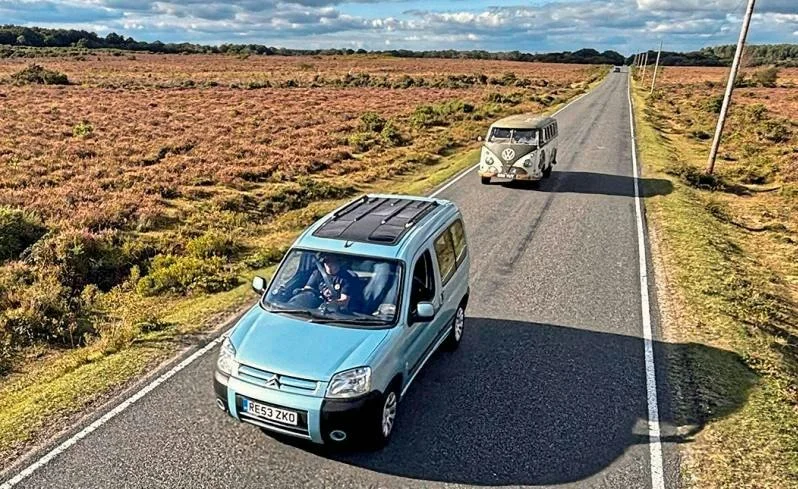
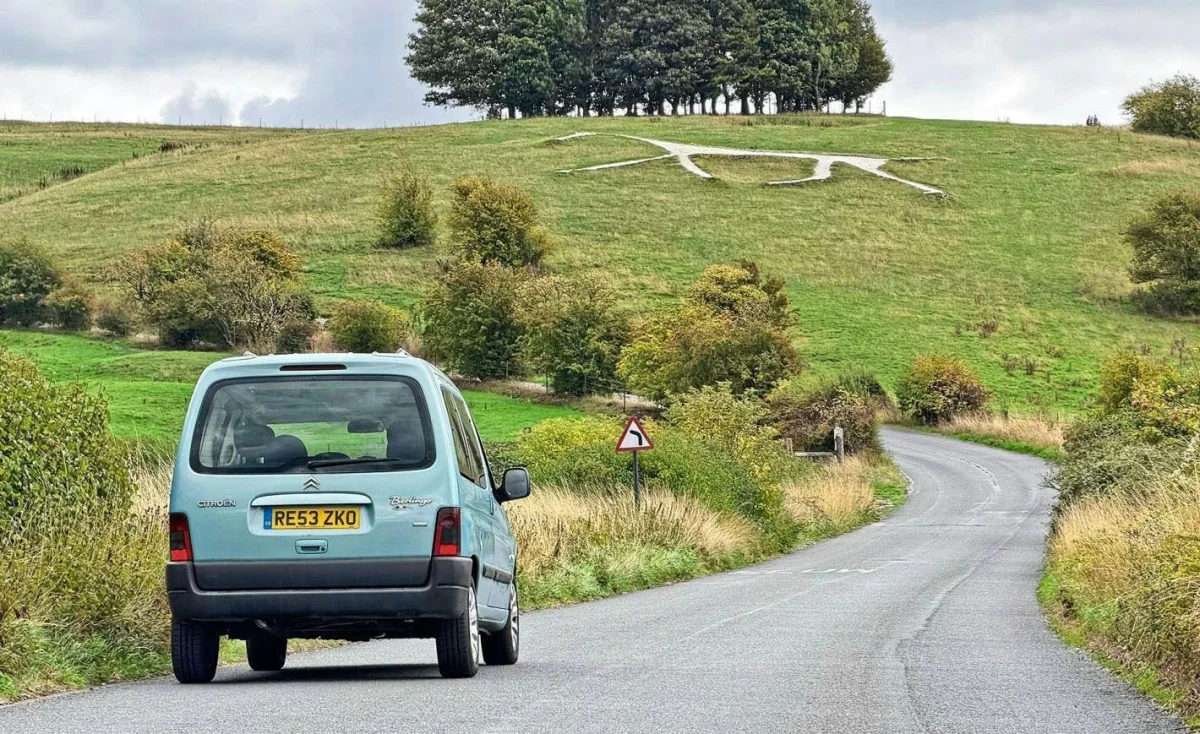
James bought the car nearly new from Steve Cropley, editor-in-chief of Autocar. He appreciates its smooth ride and sharp handling, qualities it shares with the Citroën Xsara and Peugeot 306 platform beneath it. The drive from the Cotswolds via the Marlborough Downs was part of the pleasure. The Berlingo and its Peugeot Partner sibling have since built a following among owners and clubs. The model reaches 30 years of production in 2026, and this version is still made in Argentina.
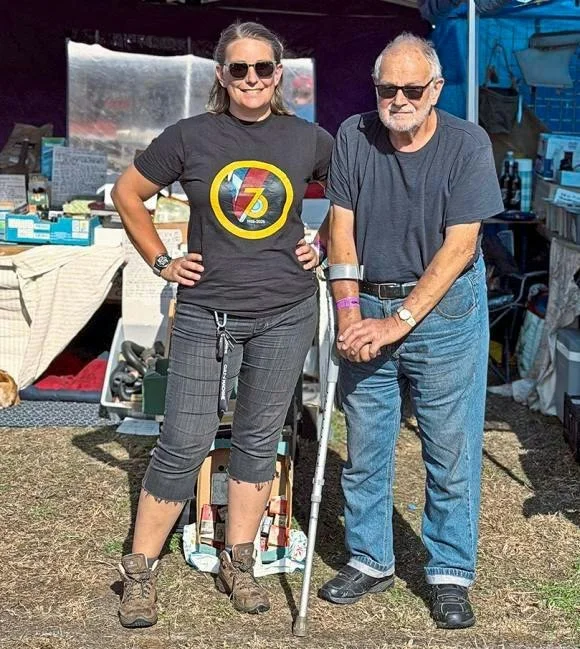
At the event, James met Alan and Sara, a father-and-daughter pair. Alan has attended every year except the first, and recalled one wet edition when tents were swept away. He also described a trader who arrived on Friday with an empty table, spent the day buying from other sellers, displayed his finds on Saturday, then left with the table empty again. That cycle of browsing, buying and selling is part of the event’s appeal.
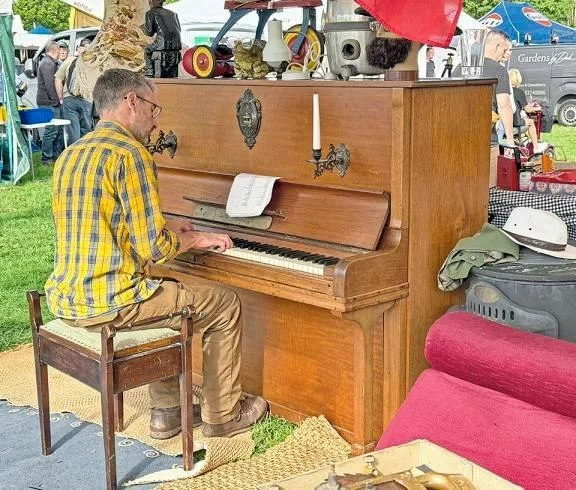
Visitors gravitated towards Matt’s Defender and Maz’s VW at the Practical Classics stand. James was content with his modest setup: for most of the month, the Berlingo is simply a useful people carrier, with the occasional trip to the tip. He says he couldn’t do without it, much like the three million fellow owners across Europe who use the model for work and family life.
Simon Marriott: 1957 Volkswagen Type 2 Microbus
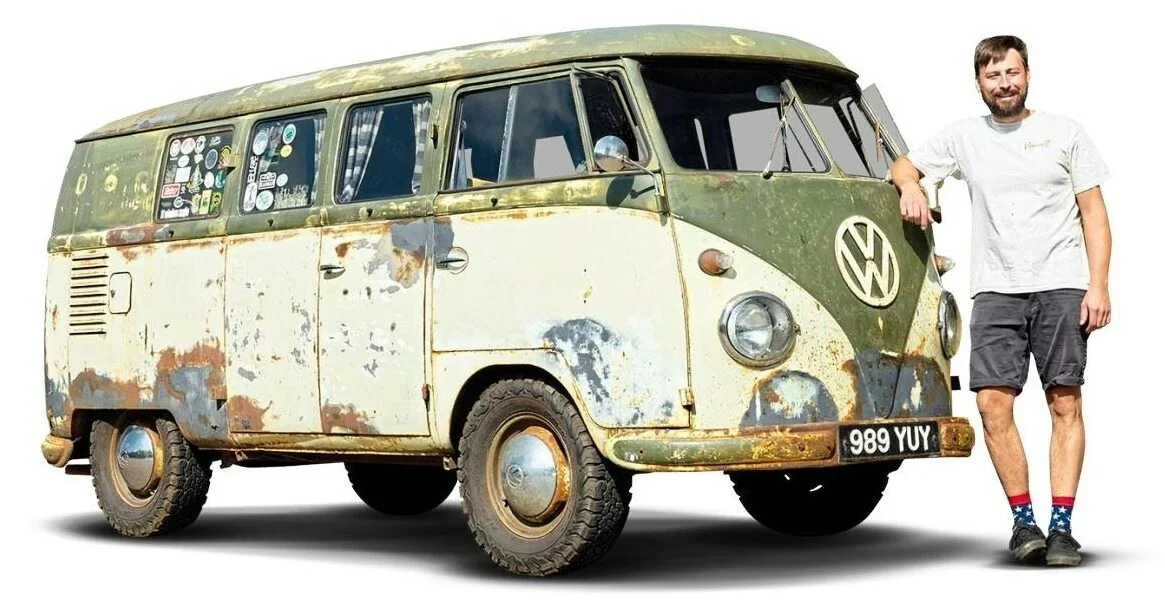
Maz’s VW story began after he moved to the United States in 2010 to study automotive restoration at McPherson College. Needing transport, he and a friend drove 2,000 miles from Kansas to Idaho to collect the bus he had found online. He paid cash and drove it back by way of Mount Rushmore and Yellowstone. It was a tough first trip in a van that had been painted blue in the 1970s and used as a school bus. At the time it was little more than a basic van with a middle seat; the SO23 camper equipment came later.
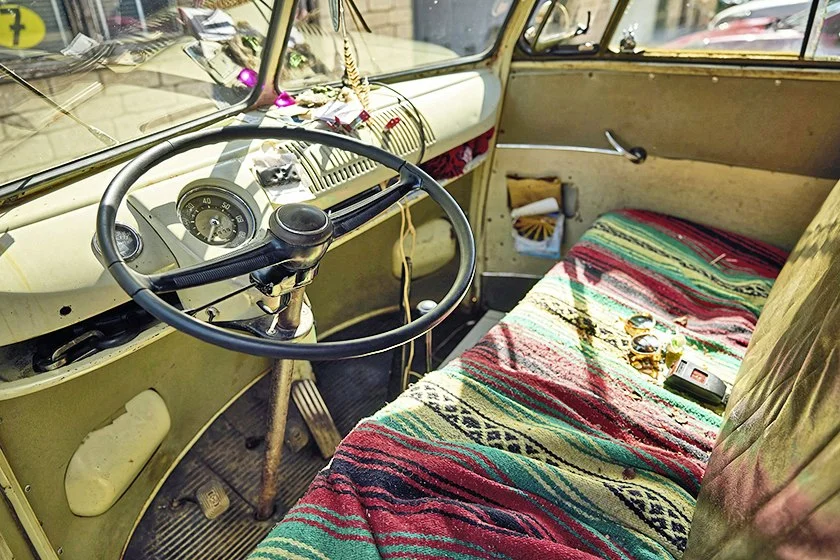
Maz restored the bus in a rented garage, uncovering its original paint beneath the blue. Following advice he had found online, he used oven cleaner to strip away the later finish, then learned that leaving it on for more than five minutes could damage the paint underneath. He also rebuilt the gearbox and brakes, fitted a twin-circuit master cylinder and replaced the window seals to help keep the interior dry.
The VW returned to the UK with Maz in 2013 and remains in regular use, including on family holidays. He has even fitted ISOFIX points for the children’s car seats. That practical role helps explain why the bus attracts attention at Beaulieu: it carries the charm of a classic camper while still serving as family transport.
Each vehicle made a different compromise. Danny’s Transit has the room and touring pace he wants, Matt’s Ninety combines load carrying with a roof tent, and James’s Berlingo keeps camping equipment out of the way in daily use. Maz’s VW adds history and character, backed by years of restoration work. For this trip, the best Beaulieu-mobile was the one its owner could live with after the weekend ended.
Subscribe to a PC Print+ Subscription today for digital access and UK delivery. View subscription offers.