Mercedes Papamobiles: Eight Cars Trace a Century of Vatican History
A Vatican exhibition runs through Jan. 31, 2027, following Mercedes papal vehicles from a 1930 Nürburg limousine to later G-Class and M-Class models.
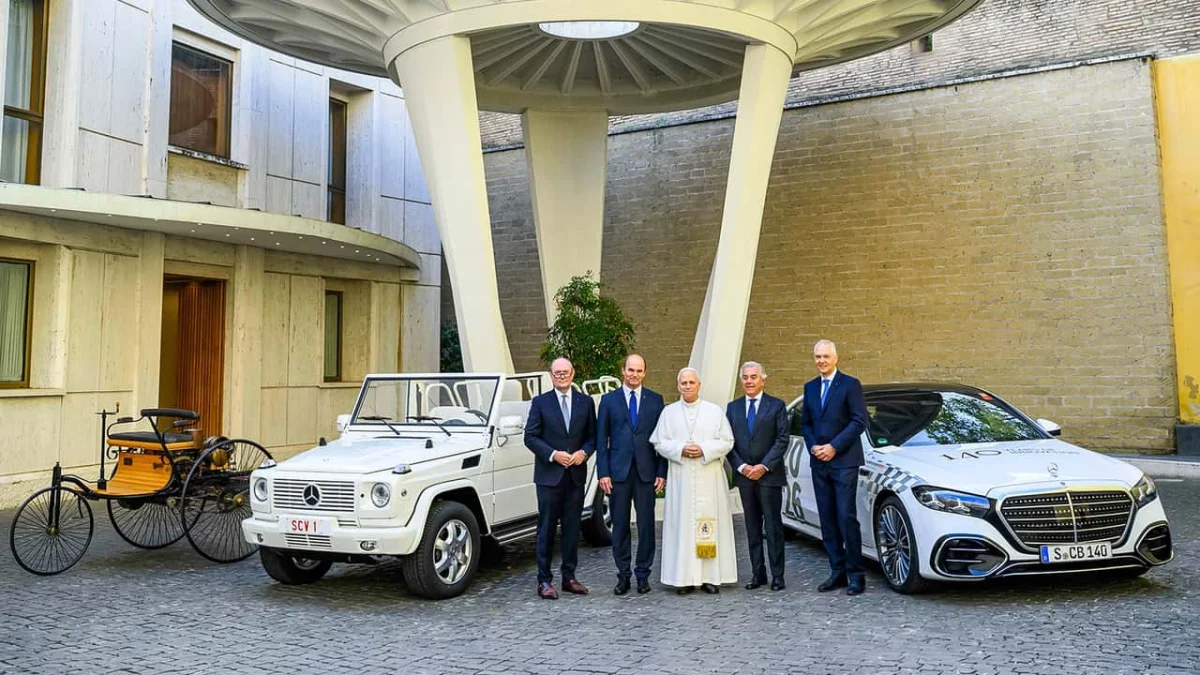
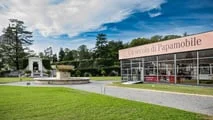
The Mercedes papal fleet is a century-long record of changing needs: formal travel gave way to vehicles built for public appearances, with visibility and weather protection shaping the design. Eight historic cars are on display in a glass pavilion near the Vatican Pinacoteca through Jan. 31, 2027, tracing the relationship back to 1930.
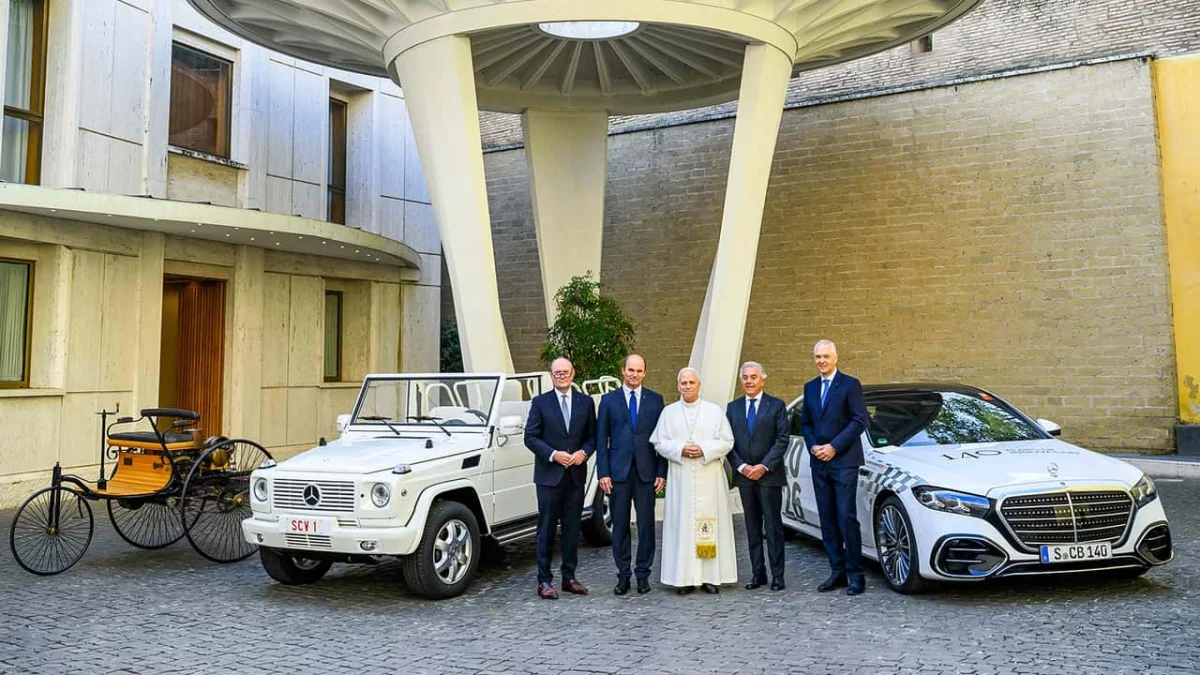
The collection moves from private, carefully appointed limousines to the instantly recognizable raised, transparent enclosure of the modern Popemobile. Each vehicle was adapted for a particular role, whether carrying a pontiff in public or transporting Vatican guests. The details show how the brief evolved around access, communication, comfort and the need for the Pope to remain visible to crowds.

From formal limousine to purpose-built cabin
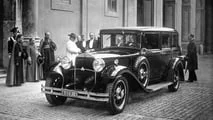
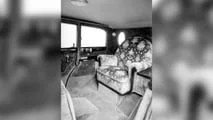
The story begins with the Mercedes-Benz Nürburg 460 (W 08), supplied in 1930 for Pope Pius XI. Its 4.6-liter eight-cylinder engine sat beneath a Pullman limousine body, but the exhibition’s emphasis is on the bespoke rear compartment. A single seat for the pontiff was trimmed in silk brocade, with selected wood and metal finishes and a decorated headliner.

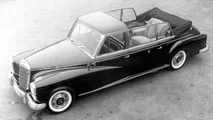
That layout reflects a traditional ceremonial car: the passenger compartment was a private, carefully finished space within a long-bodied limousine. Three decades later, the Mercedes 300 d Landaulet (W 189), delivered to Pope John XXIII, retained that formal approach while adding features for appearances. Its wheelbase was extended beyond the standard model, and the rear side windows could be removed entirely.
The 300 d also addressed the practicalities of getting in and out. Steps deployed automatically when the rear doors opened, while the Pope’s centrally placed seat could be adjusted electrically. Controls for features including climate and radio communications were within reach from the rear compartment. Those changes made the car a mobile working space as well as a dignified transport vehicle.
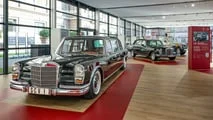
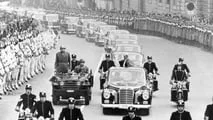
The Mercedes 600 Pullman-Landaulet (W 100), handed over to Pope Paul VI in autumn 1965, developed the same theme on a larger scale. Wider rear doors and a raised roof over the passenger area created more room around an individually adjustable seat. The car also had a cooling system and an intercom for communication with the driver. Its modifications were focused on the rear cabin, where comfort and direct contact with the chauffeur mattered during official journeys.
Not every Vatican Mercedes was a Popemobile
A 1967 Mercedes 300 SEL Pullman (W 109) makes an important distinction in the collection: not every specially prepared Vatican car carried the Pope. These six-seat limousines were lengthened by 650 millimeters compared with the production versions and fitted with larger rear doors. Their main task was transporting senior Vatican guests.
That contrast helps explain why the name Popemobile is most closely tied to a different kind of vehicle. A limousine can offer space and privacy, while a car intended for public appearances must balance protection from the weather with a clear view of its passenger. Mercedes’ move to the G-Class in 1980 marked a decisive change in that balance.
The G-Class establishes the modern silhouette
The Mercedes 230 G was developed for Pope John Paul II’s visit to Germany in 1980. Rather than adapting a conventional limousine, Mercedes placed a tall transparent dome over the rear section. It sheltered the Pope while keeping him visible to people lining the route—a defining feature of the Popemobile concept that followed.
The long-wheelbase G-Class had pearl-colored paint, gold-colored trim and a white interior. Climate control and rear lighting were tailored to the vehicle’s special operating conditions. After the attack on the Pope in 1981, a second, matching vehicle was built with armor on the basis of the Mercedes 230 GE. The exhibition thus presents both the public-facing design and a later change to the vehicle’s specification.
Mercedes also supplied a more conventional alternative during John Paul II’s papacy. The S 500 long Landaulet, based on the 140-series S-Class, reached the Vatican in 1997. Its electrohydraulic roof opened the rear compartment, and the back included a spacious individual seat. While the G-Class became the more familiar public image, the Landaulet shows that a traditional open-top limousine remained part of the fleet.
M-Class takes over the transparent enclosure
In 2002, Mercedes transferred the G-Class Popemobile idea to the ML 430 (W 163), the first M-Class version in the sequence. The transparent enclosure was integrated more closely into the body, with large windows surrounding the pontiff’s seat. John Paul II first used it at World Youth Day in Toronto that year. Like the earlier G-Class, it wore pearl-colored paint and a white cabin.
The 2012 ML 500 (W 166), used by Pope Benedict XVI, refined the same basic arrangement. Its transparent rear structure grew larger, making entry easier, while the expanded glass area improved the view of the Pope. Mercedes also revised the lighting inside the enclosure.
Across the eight vehicles, the progression is less about model generations than about changing priorities. Early cars concentrated on elegant interiors and passenger comfort; later examples made the rear compartment part of the public spectacle. The exhibit’s most useful insight for car enthusiasts is how consistently the engineering brief shaped the bodywork: extended wheelbases, removable glass, deployable steps, tailored climate systems and, eventually, a transparent raised cabin. Mercedes’ Vatican vehicles make that evolution visible in sheet metal and glass.